Amendments of the Payment Services Act Released for Public Comment

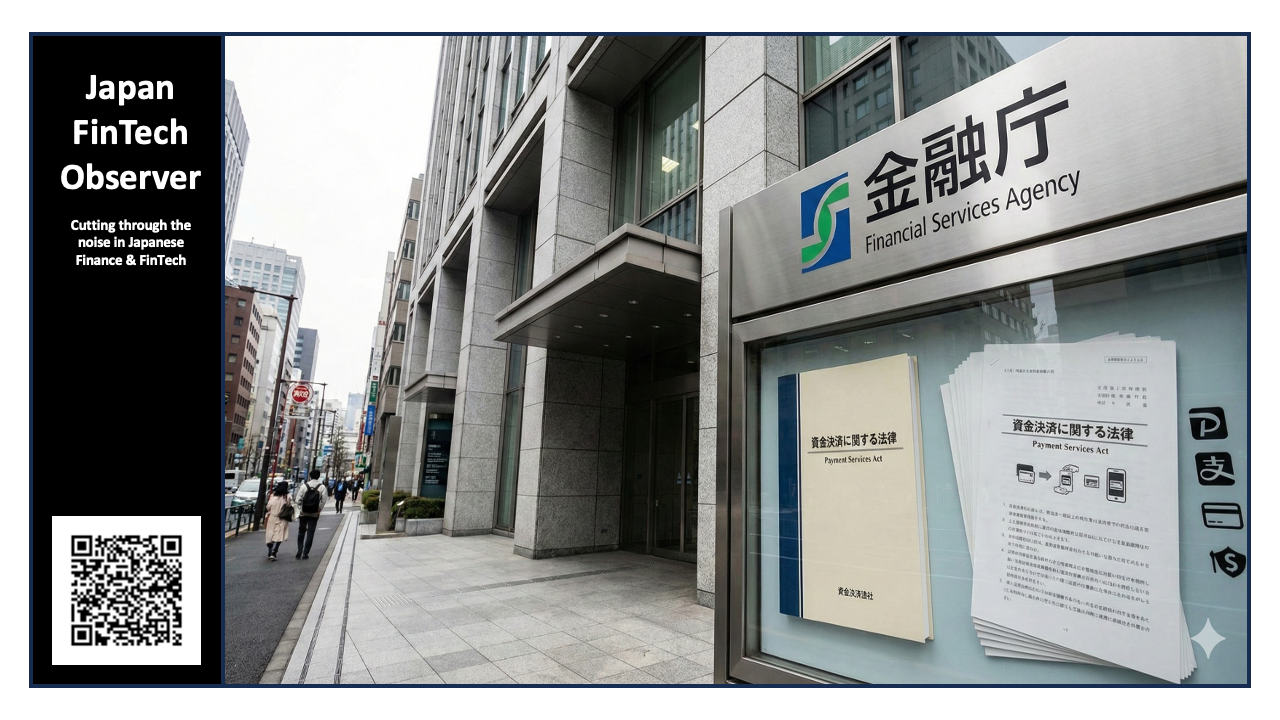
In a decisive move to modernize Japan’s financial infrastructure while fortifying consumer protections in the digital asset space, the Financial Services Agency (FSA) has released a comprehensive suite of draft Cabinet Orders and Ordinances related to the impending amendment of the Payment Services Act. Released on December 16, 2025, following the passage of the amendment law in June, these documents outline a sophisticated regulatory framework that touches upon stablecoins, crypto-asset intermediaries, and cross-border fund transfers. The regulator has opened a public consultation period extending through January 19, 2026, signaling a final opportunity for stakeholders to influence the technical standards that will govern the next generation of Japanese FinTech.
The released materials, comprising a high-level summary of the reforms and a granular "New-Old Comparison Table" of the enforcement orders, as well as 30+ individual revisions, reveal a two-pronged strategy by the Japanese government. On one hand, the administration is striving to liberalize the market by allowing more flexible asset management for stablecoin issuers and easing capital burdens for high-tier funds transfer providers. On the other hand, it is tightening the screws on the burgeoning intermediary sector, mandating strict domestic asset retention and imposing rigorous disclosure requirements to prevent capital flight and protect retail investors.
Defining the New Intermediary Landscape
A central pillar of this regulatory overhaul is the formalization of the "Electronic Payment Instrument and Crypto Asset Service Intermediary Business." As detailed in the draft enforcement order, this new licensing category is designed to capture the growing ecosystem of third-party platforms that sit between issuers and users. The amendments to Article 1 and subsequent sections of the Order for Enforcement of the Payment Services Act introduce specific definitions for these entities, effectively bringing them under the same prudential umbrella as direct issuers and exchanges.
The most significant operational constraint for these new intermediaries is found in the newly drafted Article 19-12, titled "Assets that Can Be Ordered to be Held Domestically." In a clear response to global concerns regarding cross-border insolvency risks in the crypto sector, the FSA is proposing strict ring-fencing of assets. The draft order stipulates that intermediaries must manage assets within Japan equivalent to the total value of user liabilities—specifically, the value of electronic payment instruments and other calculated debts owed to users. This provision explicitly excludes non-residents as defined by the Foreign Exchange and Foreign Trade Act, suggesting the regulator’s primary focus is the protection of the domestic Japanese investor base. By forcing these intermediaries to hold matching assets domestically, the FSA aims to ensure that in the event of a bankruptcy or global systemic failure, Japanese users have a legal claim to assets that are physically and legally located within the jurisdiction.
Furthermore, the regulations introduce rigorous governance standards regarding personnel. New clauses in Articles 19-3 and 20-2 outline disqualification criteria for directors and executives of these intermediary firms. The text specifies that individuals who served as directors, executive officers, or auditors of a corporation within thirty days prior to the revocation of its registration or license are barred from holding similar positions for five years. This "look-back" provision is designed to prevent bad actors from cycling through the industry by simply moving to new corporate entities after a regulatory enforcement action. The language is expansive, covering not just domestic revocations but also individuals who held positions in foreign entities that suffered license revocations under equivalent foreign laws. This extraterritorial consideration indicates the FSA’s intent to insulate the Japanese market from globally blacklisted executives.
Consumer Protection Through Enhanced Disclosure
The draft ordinances place a heavy emphasis on transparency, particularly at the point of contract conclusion. The newly introduced Article 19-10 mandates specific disclosures that intermediaries must make to users regarding "Specific Electronic Payment Instrument Exchange Contracts." The FSA has moved beyond general principles to specific line items; intermediaries will be required to explicitly disclose fees, remuneration, and any other consideration the user is expected to pay.
More critically, the regulations address the volatile nature of the underlying assets. The draft requires a stark warning regarding risks: if a transaction involves the potential for loss driven directly by fluctuations in currency prices or other financial indicators, the intermediary must explain the nature of that indicator and the reason why such a loss could occur. This aligns the disclosure regime for crypto and stablecoin intermediaries with the strict standards already applicable to traditional financial instruments under the Financial Instruments and Exchange Act. The objective is to eliminate the information asymmetry that often plagues retail crypto investors, ensuring they understand that while stablecoins may be pegged, the mechanisms surrounding their exchange and the fees involved carry distinct financial risks.
Modernizing Funds Transfer Services
While the regulations regarding crypto intermediaries are restrictive, the changes proposed for the Funds Transfer Service sector are geared toward operational flexibility and capital efficiency. The FSA recognizes that the rigid requirement to deposit 100% of user funds into legal affairs bureaus can suffocate the liquidity of payment providers. The amendments to Article 16 and 17 of the Enforcement Order introduce alternative asset preservation methods, specifically focusing on bank guarantees and trust agreements.
The draft text elaborates on the "Performance Guarantee Insurance Contract" and "Performance Guarantee Trust Contract." It allows Type 1 Funds Transfer Service Providers—those authorized to handle large remittances—to utilize these instruments more freely, provided they meet strict financial health criteria. The reform introduces the concept of a "Special Exception Target Funds Transfer Business." Providers qualifying for this status—those who maintain a complete preservation of user funds through the new methods and possess a "system for early and certain repayment"—will be granted a significant concession: they may bear liabilities related to exchange transactions for a period not exceeding two months.
This two-month window is a critical operational upgrade. Under the previous regime, the pressure to settle and secure funds almost immediately created immense cash flow friction. By allowing a two-month buffer for robustly capitalized firms utilizing bank guarantees or trust schemes, the FSA is effectively lowering the working capital barriers for entering the high-value remittance market. The draft detailed in the "New-Old Comparison Table" provides complex formulas in Article 17 for calculating the "required deposit amount" and the conditions under which these funds can be recovered. The ability for providers to recover deposited bonds when their trust or guarantee coverage exceeds the required threshold is streamlined, allowing for more dynamic balance sheet management.
The regulations also expand the scope of eligible guarantors. Article 16 clarifies that banks, insurance companies, and other financial institutions that meet specific capital adequacy requirements can serve as counterparties for these guarantee contracts. This creates a new revenue stream for traditional banks while providing payment startups with the credit enhancement they need to operate at scale.
Liberalization of Stablecoin Asset Management
A subtle but commercially vital change appears in the treatment of "Specific Trust Beneficiary Rights"—the legal wrapper often used for Japanese stablecoins. The press release highlights that the amendment will define the scope of assets that can back these rights. Specifically, the FSA is moving to allow the investment of backing assets into government bonds and bank deposits that allow for mid-term cancellation.
This is a game-changer for the profitability of stablecoin issuers. Previously, the requirement to hold backing assets in highly liquid but zero-yield cash equivalents made the business model difficult to sustain without high transaction fees. By permitting investment in government bonds and specific deposit types, issuers can generate a safe, low-risk yield on the float (the pool of user funds backing the coins). This aligns Japan’s stablecoin framework with the models seen in other jurisdictions where issuers generate revenue from interest on reserves, potentially allowing for lower fees for end-users and fostering a more competitive market. The draft order specifies that this liberalization comes with conditions: there will be caps on inclusion ratios and specific requirements to prevent principal erosion, ensuring that the pursuit of yield does not compromise the 1:1 redeemability of the stablecoins.
Bridging Traditional Finance and Web3
The draft reforms explicitly pave the way for traditional financial powerhouses to enter the digital asset intermediary space. The press release notes that the amendments will define the scope of business for banks, insurance companies, and their subsidiaries regarding the "Electronic Payment Instrument/Crypto Asset Service Intermediary Business."
The regulatory text indicates a desire to integrate these services into the broader financial holding company structure. For instance, the amendments regarding "Closely Related Persons" in Article 20-6 define the intricate web of relationships—subsidiaries, parent companies, and major shareholders—that constitutes a conflict of interest or a control group. By clarifying these definitions, the FSA provides legal certainty for major banking groups to launch crypto intermediary arms without running afoul of anti-trust or separation of commerce/banking rules, provided they adhere to the firewalls and governance structures mandated by the Banking Act and the new Payment Services Act provisions.
This move is expected to catalyze institutional adoption. If a major Japanese megabank can legally and clearly operate a subsidiary that acts as an intermediary for stablecoins and crypto assets, it lends immediate credibility and infrastructure to the sector. The draft regulations ensure that if they do so, they are subject to the same disclosure and asset retention rules as independent fintechs, leveling the playing field.
Cross-Border Payment Exemptions
In a nod to the realities of global e-commerce, the amendments also carve out exemptions for cross-border collection agencies. Item 2 of the press release summary notes that the government will define types of "receipt agency services" conducted across borders that will be excluded from the application of strict forex transaction regulations.
While the "New-Old Comparison Table" focuses heavily on the enforcement order definitions, the implication of this policy change is significant for international payment processors. It suggests that companies facilitating payments for goods and services—where the movement of funds is ancillary to a commercial transaction—may be relieved of the heavy licensing burdens associated with full-scale funds transfer operators. This deregulation is aimed at smoothing the friction of cross-border trade and allowing Japanese consumers easier access to global marketplaces, and vice versa for Japanese merchants selling abroad.
Procedural Context and Timeline
The procedural aspects of this release underscore the FSA’s commitment to due process. The amendments affect a wide array of existing decrees, including the Order for Enforcement of the Banking Act, the Order for Enforcement of the Insurance Business Act, and the Order for Enforcement of the Act on Specified Commercial Transactions. The "New-Old Comparison Table" meticulously tracks these consequential amendments, updating reference numbers and definitions across the entire legal corpus to ensure consistency.
For example, the table highlights changes to the Act on Specified Commercial Transactions, updating the list of exemptions to include the new intermediary businesses. This ensures that the specific consumer protection rules of the Payment Services Act take precedence over the general rules of commercial transactions where appropriate, avoiding regulatory overlap and confusion.
The deadline for public comments is set for January 19, 2026. Following the review of these comments, the government intends to finalize the Cabinet Orders and enact the reforms. This timeline gives financial institutions roughly one month to analyze the dense legal text—particularly the complex formulas regarding asset preservation ratios and the definitions of "closely related persons"—and submit their feedback. Given the technical nature of the changes regarding trust assets and bank guarantees, it is expected that industry associations representing banks, crypto exchanges, and fintech startups will be heavily engaged in this consultation process.
Conclusion
The "Reiwa 7" amendments to the Payment Services Act and the accompanying draft orders represent a maturation of Japan’s approach to digital finance. The era of "regulatory sandbox" ambiguity is being replaced by a highly codified, prescriptive regime. For the crypto and stablecoin sector, the message is clear: legitimation comes with the cost of strict asset segregation, domestic retention, and rigorous disclosure. The "wild west" days are definitively over; intermediaries must now operate with the capital discipline and governance structures of traditional financial institutions.
Simultaneously, the reforms offer a lifeline to the funds transfer industry, offering escape routes from capital inefficiencies through bank guarantees and trust schemes. By allowing stablecoin reserves to be invested in safe, yield-bearing assets, the FSA is acknowledging the economic realities necessary for these issuers to thrive.
As the comment period closes in January 2026, the global financial community will be watching closely. Japan is positioning itself not just as a regulator of crypto, but as a jurisdiction that integrates Web3 financial instruments into the heart of its banking and legal systems. If successful, these ordinances could serve as a blueprint for other G7 nations grappling with the convergence of traditional banking and digital assets. The detailed formulas and definitions released this week are not merely bureaucratic red tape; they are the structural engineering for Japan’s next decade of financial innovation.
 Norbert Gehrke