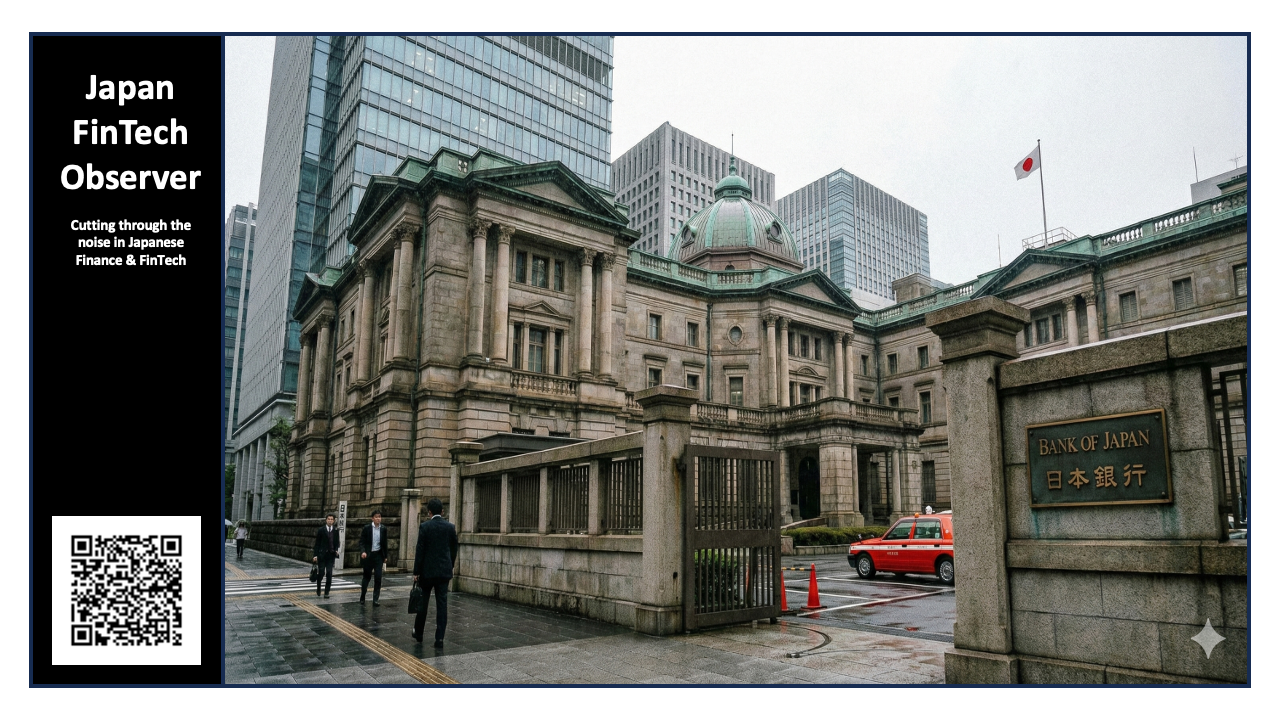
Bank of Japan March 2026 Monetary Policy Meeting

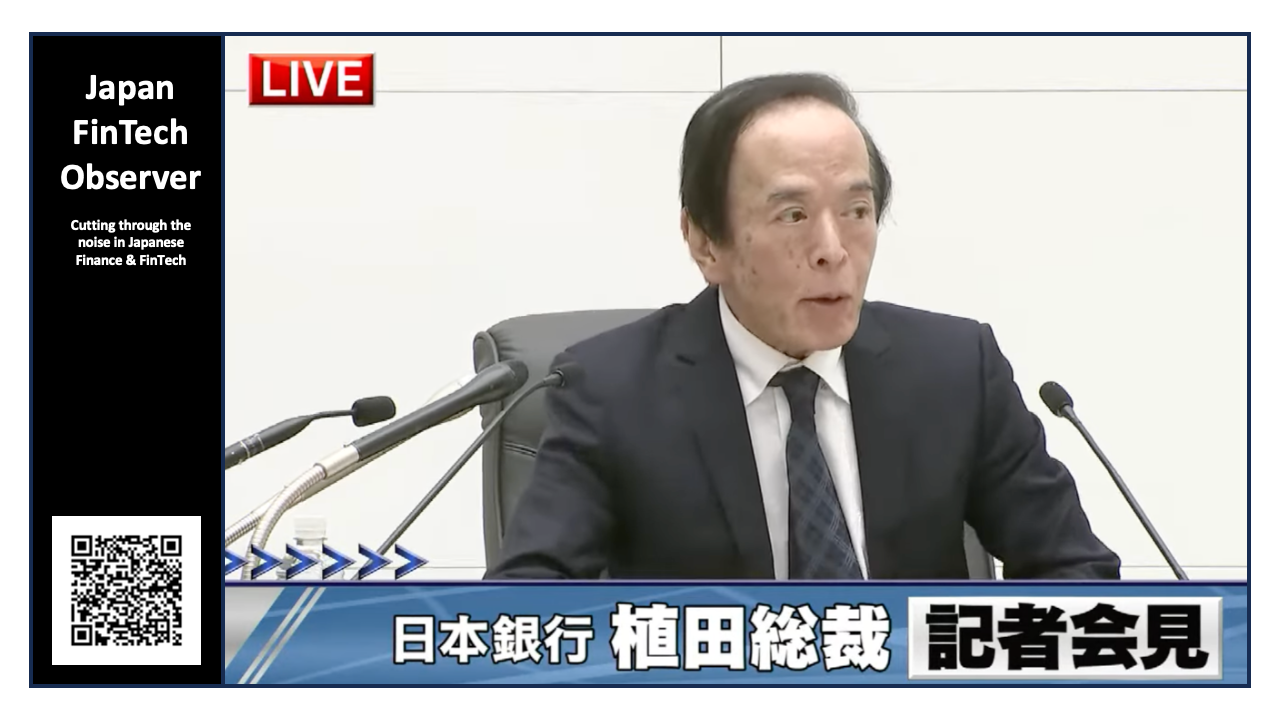
The Bank of Japan’s (BOJ) March Monetary Policy Meeting (MPM) took place against a backdrop of heightened market volatility, and the proceedings underscored the increasing tension between the "look-through" approach to temporary price shocks and the mounting fear of being caught behind the curve as external geopolitical pressures mount.
1. Opening Statement: Policy Decisions and Monetary Regulation
In an 8-1 majority vote, the Policy Board voted to maintain the uncollateralized overnight call rate at approximately 0.75%. However, a formal proposal to hike the rate to 1.0% was submitted and subsequently rejected. Proponents of the 1.0% hike argued that the output gap has closed and that the risk of "secondary effects" from overseas price shocks—specifically the potential for an unanchored wage-price spiral—required immediate preemptive action. The majority's rejection of this hike signals that the Board requires further confirmation of the stability of the domestic recovery before tightening further. This decision suggests that while policy normalization is the long-term trajectory, the "neutral" rate remains a moving target that the Board is hesitant to chase aggressively.
The decision to hold at 0.75% was a strategic choice to prioritize the durability of the "virtuous cycle" between income and spending. This cautious stance is informed by a nuanced reading of the current domestic growth mechanisms and the looming shadow of global instability.
2. Economic Assessment: Growth Trajectories and Recovery Mechanisms
The BOJ maintains its assessment that the Japanese economy is in a state of "moderate recovery," though Governor Ueda acknowledged "weakness in some areas," particularly in consumption sectors sensitive to the rising cost of living. The Bank’s outlook is predicated on the "positive cycle of income to spending," which it believes is gradually gaining momentum.
The BOJ identified three primary pillars supporting this growth trajectory:
- Government Economic Measures: Continued fiscal interventions and price-mitigation strategies that buffer the impact of high energy costs on households.
- Accommodative Financial Environments: The maintenance of low real interest rates, which continue to provide a supportive floor for corporate investment and housing demand.
- Recovery of Overseas Economies: A return to growth in major international markets, though this remains vulnerable to shifting trade policies and protectionist trends.
A significant shadow over this assessment is the escalating Iran-Israel situation. Governor Ueda specifically flagged the resulting surge in crude oil prices as a dual threat: it simultaneously creates a "deteriorating terms of trade" that drags down domestic growth while applying upward pressure on headline inflation. This complex interplay of domestic resilience and external volatility serves as the foundation for the Bank’s current inflationary outlook.
3. The Inflation Outlook: Price Stability and Risk Factors
The importance of the 2% price stability target remains paramount, but the Bank is increasingly forced to distinguish between "noise" and "trend" in the data. Current headline figures are being heavily distorted by government intervention, making a simplistic reading of the CPI misleading for policy purposes.
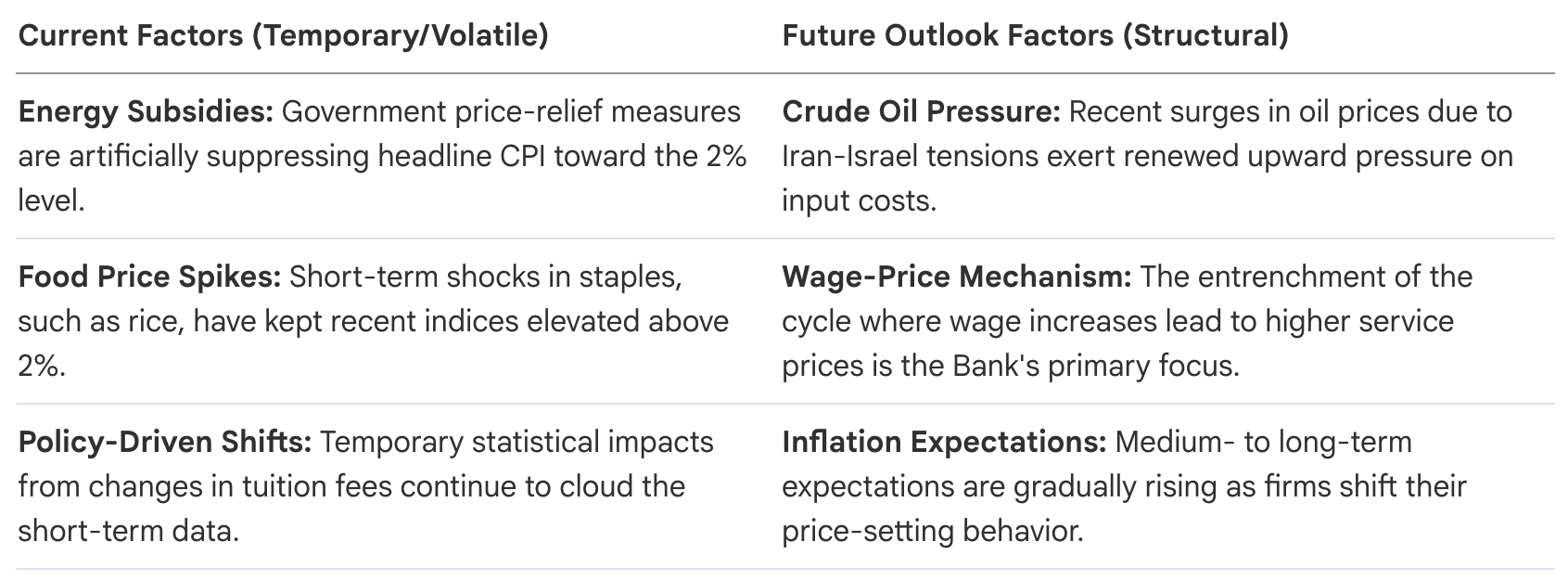
The following table summarizes the competing forces currently shaping the inflation landscape:
The "So What?": Underlying Inflation vs. Headline Figures
The crucial analytical takeaway is that the BOJ is adopting a "look-through" approach toward temporary dips in headline inflation caused by energy subsidies or the fading impact of past food price hikes. The Bank is prioritizing the Wage-Price Mechanism over Headline CPI. If the "Shunto" (spring wage) results remain robust, a temporary headline dip below 2% will not derail the current hiking cycle. The BOJ believes underlying inflation will settle at the 2% target in the latter half of the outlook period, provided that the virtuous cycle of wages remains the dominant driver.
4. Strategic Communication: Enhancements in Data Disclosure
To manage market expectations and bridge the "market lag" in understanding BOJ policy, the Bank is implementing significant technical upgrades to its data disclosure. Governor Ueda emphasized that these changes are designed to share the Bank's judgment on "underlying inflation" and avoid the "onion peeling" risk—where removing too many volatile items leaves no "core" left for analysis.
Specific technical updates include:
- Expanded CPI Disclosures: Recalculating indices to explicitly exclude policy-driven temporary factors (like tuition fee changes) to clarify the fundamental trend.
- Staff-Level Macro Estimates: The Bank will begin disclosing revised staff estimates for the Potential Growth Rate and the Supply-Demand Gap, following recent GDP statistic revisions.
- The Natural Rate of Interest: Staff are recalculating the Natural Rate of Interest using the latest data to help the market understand the "neutral" policy floor.
By providing these granular metrics, the BOJ aims to establish a shared analytical framework with the market, thereby reducing volatility. These technical enhancements were immediately put to the test as the press pivoted to the interactive Q&A session, seeking to reconcile these metrics with real-world geopolitical shocks.
5. Q&A Session: Geopolitics, Wages, and Market Dynamics
The Q&A session was dominated by the "Iran situation" and the sustainability of wage increases, with the Governor facing questions on the Bank’s historical policy lags.
- The Iran-Israel Dilemma: Governor Ueda addressed the difficult trade-off between the downside risk of "deteriorating terms of trade" and the upside risk of energy-driven inflation. He indicated that while the Bank will not react to short-term volatility, it will use a "risk management" approach to preemptively address inflation if the "angle" of the outlook shifts too sharply toward the upside.
- The Wage-Price Mechanism: Evaluating the "Shunto" results, the Governor described wage increases as "solid." To confirm the spillover to Small and Medium Enterprises (SMEs), the Bank is leveraging its Regional Branch Manager Meetings and direct hearings to gather ground-level data, ensuring the mechanism is operating across the broader economy.
- The Taylor Rule and Policy Lag: When questioned on being "behind the curve," Ueda revealed he has been "reviewing" the lessons of the 1970s oil shocks and the 2022 Ukraine invasion. Crucially, he noted that a standard Taylor Rule using current inflation yields "extremely high" rates that would be inappropriate; instead, the Bank uses forward-looking underlying inflation as the primary variable for its mental framework.
- Board Dynamics and Continuity: Addressing the appointment of new "reflationist" board members, Ueda asserted the Bank's independence and the productivity of its dialogue with the government. Notably, he addressed the administrative continuity of the Board, mentioning that Deputy Governor Uchida has participated remotely for three consecutive meetings while undergoing leukemia treatment, ensuring full participation in policy deliberation despite medical constraints.
In his closing remarks, Governor Ueda emphasized that the Bank remains in a state of high vigilance, monitoring the "depth and persistence" of the Iran-driven supply chain shocks as it prepares the comprehensive Outlook Report for April. The Bank’s path remains data-dependent, with a clear focus on anchoring inflation expectations against the backdrop of global uncertainty.
 Norbert Gehrke