BOJ Rate Hike Path Exposes Generational Divide in Japanese Household Wealth


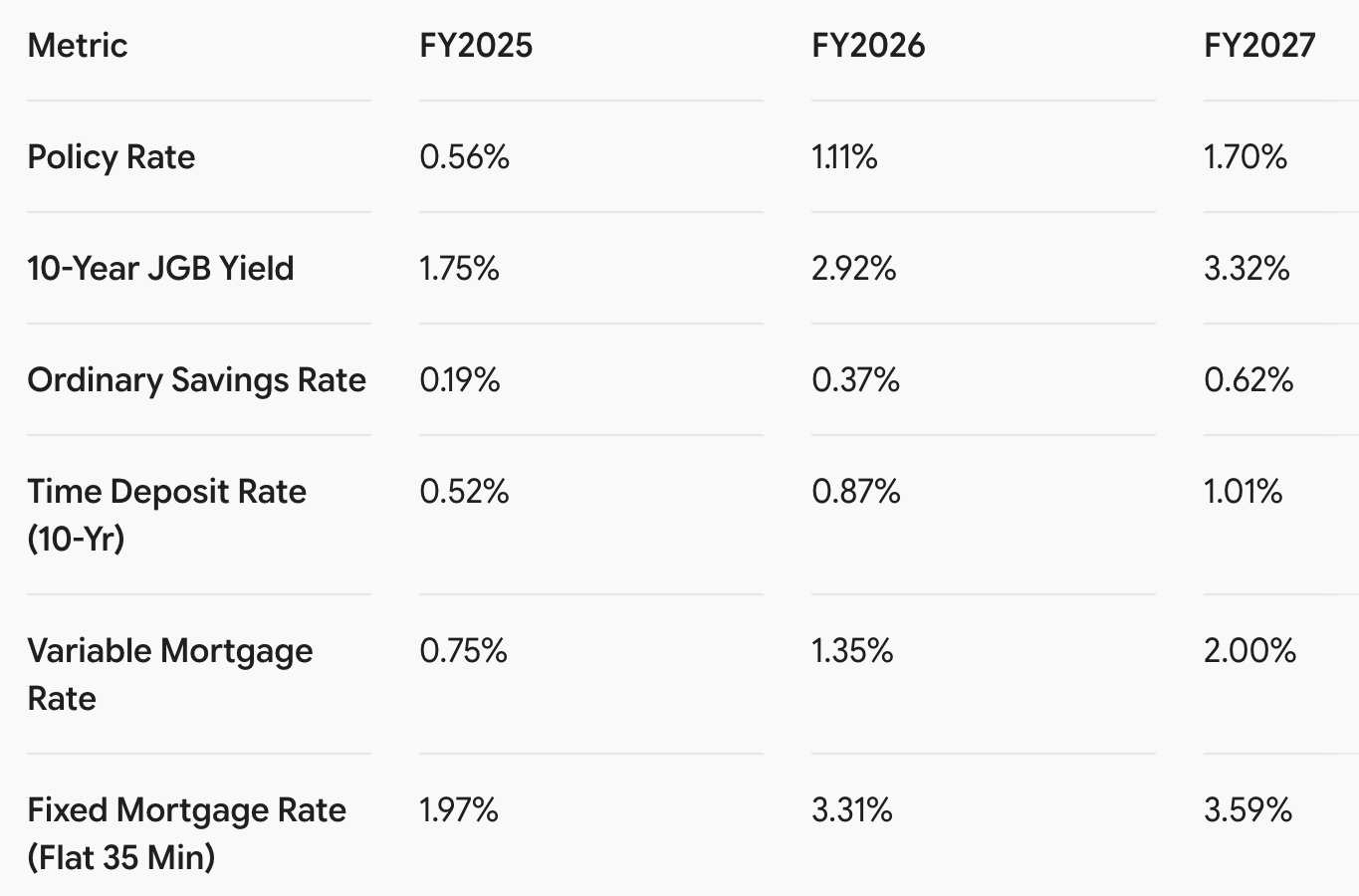
As expectations grow for the Bank of Japan to accelerate its monetary tightening cycle—with policy rates anticipated to reach 1.25% in September 2026 and rise above 2.0% by fiscal 2028—the macroeconomic balance sheet for Japanese households appears positive on the surface, but hides significant structural pressures on working-age families, according to detailed calculations by the Itochu Research Institute.
Aggregate Household Net Gains Driven by Cash Reserves
From a macro perspective, rising interest rates will act as a net positive for the Japanese household sector as a whole. The aggregate net interest income—calculated as total interest received minus total interest paid—is projected to expand by ¥0.8 trillion in fiscal 2026, ¥1.0 trillion in fiscal 2027, and ¥0.4 trillion in fiscal 2028 compared to prior-year levels.
This positive balance exists because Japanese households hold vast liquid reserves relative to debt. By the end of fiscal 2025, households held ¥1,026 trillion in cash and bank deposits, compared to ¥244 trillion in total mortgage liabilities. Even though rate increases on mortgage loans are modeled to outpace interest rate increases on basic deposits, the sheer volume of savings offsets the higher interest costs on a macro level.
Key Interest Rate Assumptions (Fiscal Year Averages)
The Generational Divide and Mortgage Pressures
Despite the top-line positive figures, the financial impact varies drastically by demographic, creating a distinct widening in asset income inequality:
- Elderly & Retiree Households (Ages 60+): Older households hold the majority of cash reserves and a higher proportion of longer-term fixed deposit accounts, which benefit most from rising yield curves. In fiscal 2026, average net annual interest income is projected to rise by +¥49,000 for households headed by someone in their 60s and +¥48,000 for those aged 70 and older.
- Older Middle-Aged Households (Ages 50–59): This group sees a moderate net benefit, averaging +¥12,000 per household in fiscal 2026 as savings balances begin to outpace remaining debt burdens.
- Younger & Working-Age Households (Under 50): Younger families shoulder the heaviest debt loads due to active mortgage payments. In fiscal 2026, net household interest balances are projected to drop by -¥31,000 for head-of-household under 29, -¥31,000 for those in their 30s, and -¥14,000 for those in their 40s.
Wage Growth Offset and Inflation Risks
While recent wage growth has leaned heavily in favor of younger workers—with base salary increases hitting roughly 4% for workers aged 40 and under in 2025—researchers emphasize that wage gains are primarily intended to compensate for cost-of-living inflation.
For instance, while a 30-something household saw average annual earned income rise by ¥32,000 in 2025, that increase is almost entirely consumed by the projected ¥31,000 hike in interest costs. If pay increases are fully absorbed by interest debt service rather than goods and services, real household purchasing power declines. The report concludes that long-term, sustained wage growth will be vital to ensure that working-age families can absorb both persistent price inflation and rising borrowing costs.
 Norbert Gehrke