IMF Backs Further BOJ Rate Hikes to 1.5%, Urges Caution on Proposed Consumption Tax Holiday

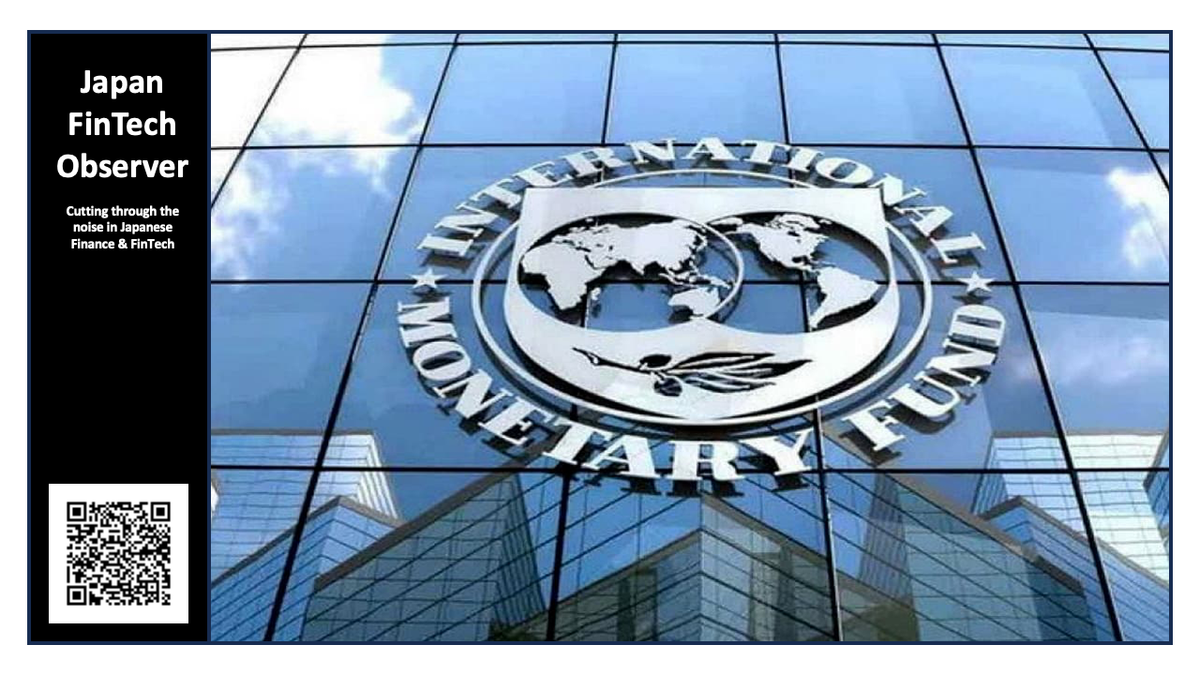
The International Monetary Fund (IMF) has signaled strong support for the Bank of Japan’s ongoing policy normalization, forecasting a path toward a neutral interest rate of 1.5% by 2027, while simultaneously warning Tokyo against eroding fiscal discipline through broad tax cuts.
In a press briefing following the 2026 Article IV Consultation, IMF Mission Chief for Japan Rahul Anand described the Japanese economy as showing "impressive resilience" in the face of global uncertainty and trade headwinds.
Monetary Policy: The Path to Neutral
The IMF’s baseline projection envisions a continued, gradual withdrawal of monetary accommodation. Anand explicitly outlined a trajectory where the policy rate rises to approximately 1.2% by the end of 2026 and reaches a neutral level of 1.5% in 2027.
"This corresponds to roughly two hikes in ’26 and one hike in ’27," Anand told reporters, though he emphasized that the precise timing remains data-dependent due to significant uncertainty surrounding the exact level of the neutral rate.
The Fund views these moves as appropriate given that Japan is currently operating with a positive output gap—producing above capacity—and facing labor shortages. Inflation, which moderated to 2.1% in December 2025, is projected to converge to the BOJ’s 2% target during 2027.
Anand also noted that the recent rise and volatility in sovereign bond yields is partially a signal that markets have gained confidence in the BOJ’s ability to anchor inflation.
Fiscal Warning: The Consumption Tax Debate
On the fiscal front, the IMF struck a more cautionary tone regarding the Japanese government’s discussions to suspend the consumption tax on food and beverages for two years to alleviate cost-of-living pressures.
While acknowledging Japan's recent strong fiscal performance—with primary deficits now among the lowest in the G7—Anand warned that the country's debt load remains the highest among major economies. He highlighted a sobering projection: Japan’s interest bill is expected to double between 2025 and 2031, coinciding with rising healthcare costs for an aging population.
"Removing the consumption tax would weaken the tax revenue base," Anand said. "Japan needs to safeguard government revenue to avoid eroding fiscal space."
The Fund advised that any relief measures should be "targeted, budget-neutral, and temporary," suggesting that a system of refundable tax credits would be a more effective tool than a blanket tax suspension for supporting vulnerable households.
Trade and Currency
Despite early fears regarding U.S. trade policy, the IMF noted that the impact of U.S. tariffs on Japan has been mitigated by a recent bilateral trade deal and robust domestic demand. Growth is forecast to remain steady at 0.8% in 2026, following a 1.1% expansion last year.
Addressing the yen, the IMF reiterated that there is "no right level" for the exchange rate. Anand observed that while yen depreciation historically drives up import costs, pass-through inflation has been limited recently, with import prices remaining largely unchanged on average through 2025.
Labor Market Constraints
The Fund pointed to severe labor shortages as a structural challenge, exacerbated by demographics. Anand encouraged the government to push for greater labor mobility and the utilization of foreign labor in acute shortage sectors, alongside heavy investment in labor-saving AI technologies, to sustain wage growth and productivity.
 Norbert Gehrke