Inside MUFG’s Blueprint for Enterprise AI-Driven Development

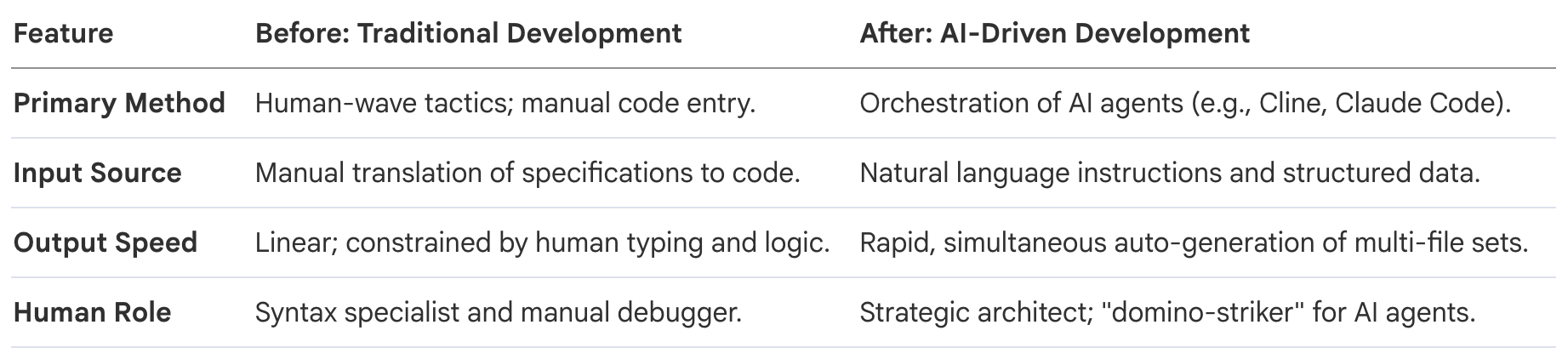
In the hyper-competitive theater of global finance, the traditional software development lifecycle is undergoing a brutal reassessment. For years, the industry relied on "human-wave tactics"—vast cohorts of software engineers engaged in the linear translation of requirements into syntax.
Today, Mitsubishi UFJ Information Technology (MUIT), the digital engine room for the MUFG group, views this model as a legacy liability. To remain relevant in a digitized market, MUIT is spearheading a transition toward "AI-Driven Development." This is a fundamental shift in capital allocation, moving away from manual OpEx toward the orchestration of high-leverage AI coding agents.
The metamorphosis redefines the very essence of the "skillful" engineer. The developer is no longer a manual laborer of code but a strategic architect who directs automated systems to synthesize complex environments.
This evolution is a calculated move to liquidate technical debt and redefine the architecture of bank-grade engineering to be AI-native, ensuring the institution’s nervous system can evolve at the speed of the market.
1. The Enterprise Frontier: Defining AI Development at Scale
Enterprise-scale AI development at a global giant like MUFG is a radically different beast than the "vibe coding" seen in Silicon Valley startups. It is defined by massive complexity and the uncompromising weight of fiduciary responsibility. MUIT has identified four critical conditions that dictate the "Enterprise" frontier of AI-driven development:
- System Scale: Codebases encompassing hundreds of thousands to millions of lines of code.
- Developer Density: Large-scale projects involving dozens to hundreds of engineers.
- Documentation Legacy: Critical system specifications often locked in "Excel Fanganshi"—the traditional Japanese "graph paper" style of documentation.
- Connectivity Constraints: Secure development environments that lack direct internet access.
The fourth condition—operating without direct web access—is a profound operational hurdle that MUIT has turned into a competitive moat. While most AI tools depend on cloud APIs, MUIT is adapting agents like Cline and Claude Code to function within air-gapped environments. This ensures total data sovereignty and the protection of proprietary banking logic. By solving for the "connectivity gap," MUFG builds a robust, internal AI infrastructure that ensures systemic stability, a challenge that few non-enterprise firms are equipped to handle.
2. From Legacy Files to Production Code: The MUFG Methodology
A cornerstone of MUIT’s strategy is the "resurrection" of dead data assets. By ingesting non-standard data types—specifically Excel and Figma—into an AI workflow, the bank transforms static documentation into live production code.
In its technical demonstrations, MUIT has refined the "pivot" from legacy formats to AI comprehension. For example, Excel files are treated as XML-based data structures, allowing LLMs to parse flowcharts and business logic directly. In another implementation, MUIT found that while Figma can export SVG, current-generation LLMs actually interpret PNG images with higher precision for UI generation. This "insider" technical nuance allows for the rapid generation of React or Angular code that maintains the rigorous design standards of a global bank.
MUIT asserts that pursuing 100% AI perfection is a strategic error and a waste of resources. Given the risks of "hallucinations," the bank adopts an "80-point" philosophy: it is more cost-effective to generate a rapid, 80% accurate output and have a human expert perform the final 20% of refinement. This human-in-the-loop model significantly reduces the Total Cost of Ownership (TCO) while ensuring fiduciary oversight.
This methodology ensures that human expertise remains the final arbiter of quality, preventing the systemic risks associated with unchecked automated generation.
3. "Agent Skills": Standardizing the AI Workforce
To scale these innovations across the bank’s vast portfolio, MUIT is standardizing "Agent Skills"—the "just-in-time expertise" for AI. These are essentially Markdown-based textbooks that provide agents with the specific methodologies and standards required within the MUFG ecosystem.
- The Old Way: Teaching humans the steps of a specific migration or development cycle.
- The New Way: Equipping AI agents with "Agent Skills" so they arrive "pre-trained" on MUIT standards. The human engineer simply "knocks down the first domino" to initiate the automated sequence.
On December 18, 2025, these skills were codified via the Agentic AI Foundation. This standardization is vital for creating a plug-and-play expertise model. Whether the task is migrating legacy PL/I code to Java or building new frontend architectures, the agent uses a standardized textbook to ensure consistency across all MUFG business units.
4. The Human Dilemma: Junior Engineer Development and the "Step-Up" Model
The rapid adoption of AI creates a pedagogical crisis: if the machine does the thinking, how do the humans learn? At MUFG, "I don't know why it works" is a catastrophic risk to systemic stability.
To prevent skill atrophy and ensure long-term stability, MUIT utilizes a two-step "Step-Up" model for junior engineers:
- Step 1: AI as Teacher (Read-Only): Juniors use AI agents strictly to explain existing code and answer architectural questions, treating the AI as a mentor.
- Step 2: Controlled Generation (Hand-over Mode): Once design intuition is proven, engineers can use AI to generate code. However, they are under a strict "explainability requirement": no code can be merged into the Scaled Agile Framework (SAFe) release train unless the engineer can explain its logic in detail.
This ensures the next generation of architects remains capable of manual intervention during system failures, maintaining the bank’s operational resilience.
5. Future Hypotheses: Navigating the "Vibe Coding" Gap
The blueprint for enterprise AI is still being written. MUIT is currently testing several high-stakes hypotheses to solve the remaining frontiers of AI development:
- Document-less Scrum: Standardizing "vibe coding" by turning the tacit, "silent" knowledge of a team into explicit text for AI agents to follow.
- Massive Legacy Analysis: Utilizing Serena (an MCP server) to navigate and analyze codebases exceeding millions of lines that currently overwhelm LLM context windows.
- MUIT Knowledge Injection: Feeding bank-specific logic—such as transaction boundaries and internal API calls—into agents via Cipher (via MCP) or MemoryBank systems.
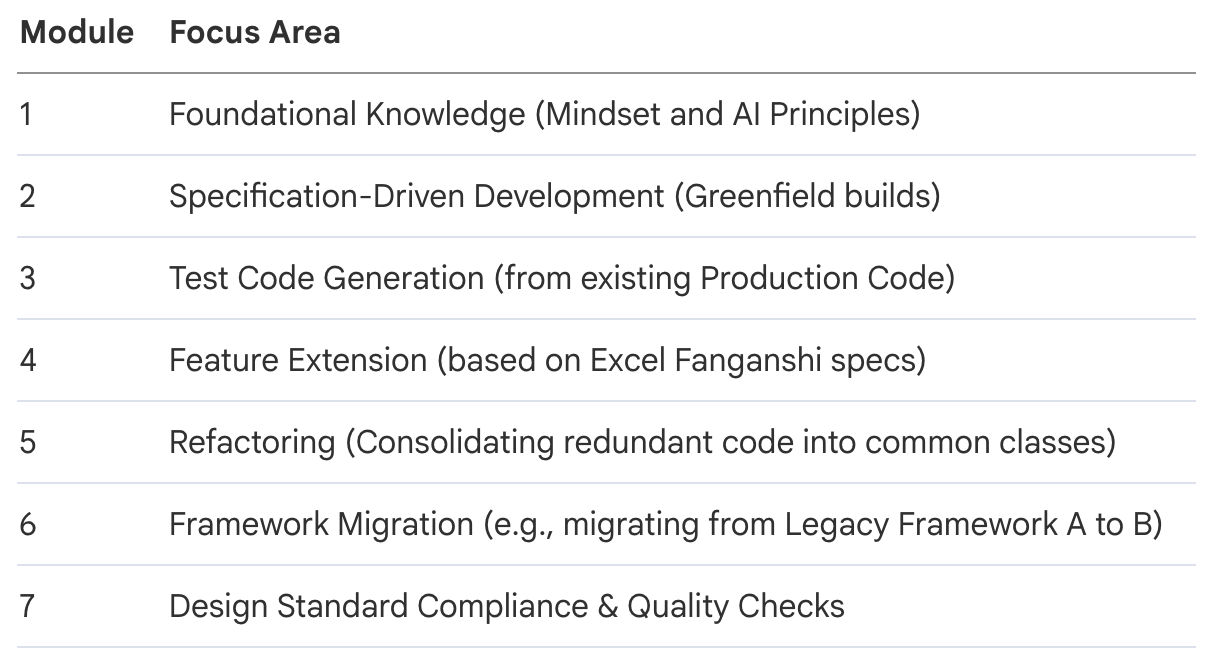
To institutionalize this shift, MUIT has established a 7-module curriculum to train its key architects:
MUIT’s commitment to this transformation is underscored by its transparency. The group actively shares its findings on the MUIT Tech Blog (Zenn.dev), positioning itself not just as a financial giant, but as a leader in the global discourse on enterprise AI. MUFG is betting that in the age of the machine, the most valuable asset is a standardized, AI-augmented human workforce.
 Norbert Gehrke