Japan FinTech Observer #144

Welcome to the one hundred forty-fourth edition of the Japan FinTech Observer.
The last full work week of the year brought a couple of significant deals (Amova, SMBC), a few new industry associations (the Business Invoice Payment Services Association, or BIPSA, the Japan Digital Decentralized Finance Association, or JDFA, and the Entertainment × Fintech Consortium), and lots of good cheer.
Our new year resolution is to accompany this newsletter once more with a weekly online forum, which we aim to host every Tuesday at 9pm JST, schedule permitting. Supported by our friends at Alpaca and ITFOR, we will also go offline and in-person again. Please check out our schedule on Luma.

Here is what we are going to cover this week:
- Venture Capital & Private Markets: SMBC Group targets JPY 15 trillion in private assets, partners with Bain and Muzinich in global push; NTT DOCOMO launches its fourth CVC fund with a size of JPY 15 billion
- Banking: SMBC raises stake in Philippines' RCBC to 24.5% in ¥17 billion deal; au Jibun Bank fortifies anti-fraud defenses with LAC’s AI-driven real-time detection system
- Payments: a policy brief on the self-regulatory framework for business invoice payment services in Japan; SBI VC Trade and Aplus to pilot USDC retail payments in Japan; Digital Garage updates ‘App Pay’ platform to bypass app store fees following regulatory shift; Nudge initiates "Entertainment × FinTech Consortium" to capitalize on the ¥13 trillion content market
- Capital Markets: Tokyo Stock Exchange unveils OTC settlement service for carbon credits to streamline bilateral trading; Sapporo Securities Exchange unveils blueprint for "PRO Frontier Market," targeting startups and regional growth sectors
- Asset Management: Amova doubles down on Southeast Asia with 100% takeover of Malaysian heavyweight AHAM
- Digital Assets: Metaplanet launches sponsored ADR program to deepen U.S. institutional access and liquidity; Bybit begins phasing out services in Japan following FSA warnings; Japanese financial consortium to pilot first tokenized deposit settlements for security tokens; introducing the Japan Digital Decentralized Finance Association
- The Last Word: The Impact Imperative
Before we go:

Venture Capital & Private Markets
- SMBC Group targets JPY 15 trillion in private assets, partners with Bain and Muzinich in global push: Sumitomo Mitsui Financial Group has unveiled an aggressive strategy to establish private asset management as a primary business pillar, targeting JPY 15 trillion in cross-asset management balances by 2031; in an announcement made on December 24, 2025, the Japanese banking giant outlined a comprehensive plan to leverage its commercial banking, leasing, and asset management divisions to capture growth in alternative investments; to unify these efforts, the group launched a new global brand, "SMBC Private Markets"
- NTT DOCOMO and NTT DOCOMO Ventures (NDV), together with NTT FINANCE CORPORATION, have announced the establishment on January 1, 2026, of the DOCOMO Innovation Fund IV, L.P. (DI4 Fund) with a fund size of 15 billion yen; the purpose of this fund is to strengthen the cooperation with venture companies that have promising services and technology
- With a portfolio of over 100 companies spanning media, commerce, and finance both in Japan and abroad, LY Corporation continues to generate synergy across a wide range of businesses; this article features In Joon Hwang, CEO of Z Venture Capital (ZVC), the corporate venture capital arm of LY Corporation; recently named to the Global Venturing Powerlist 2025, Hwang also serves as Chief Global Investment Officer (CGIO) at LY Corporation, making him a key figure in shaping the Group's global strategy
- Incubate Fund has published its "Summary of 2025"
Banking

- GMO Aozora Net Bank announced that the lifetime number of service contracts for "BaaS by GMO Aozora" has exceeded 1,000 as of December 2025
- SMBC raises stake in Philippines' RCBC to 24.5% in ¥17 Billion deal: Sumitomo Mitsui Banking Corporation has further solidified its foothold in the Southeast Asian market, announcing the acquisition of an additional 4.46% equity stake in the Philippines' Rizal Commercial Banking Corporation (RCBC); the transaction, valued at PHP 6.4 billion (approx. JPY 17 billion), raises SMBC’s total shareholding in the Manila-based lender to 24.46%; the deal was executed at a price-to-book ratio (PBR) of 1.0x
- au Jibun Bank fortifies anti-fraud defenses with LAC’s AI-driven real-time detection system: au Jibun Bank has moved to bolster its internet banking security infrastructure, announcing the deployment of "AI Zero Fraud," a proprietary detection system developed by cybersecurity firm LAC; the integration, which went live during December 2025, represents a strategic shift toward artificial intelligence to mitigate the rising risk of illicit money transfers
Payments
- The self-regulatory framework for business invoice payment services in Japan: the landscape of business-to-business (B2B) transactions in Japan is undergoing a significant transformation, driven by the rapid growth of Business Invoice Payment Services (BIPS); these services provide a vital bridge between traditional invoicing and modern cashless payments, enhancing operational flexibility for Japanese enterprises; this rapid adoption has outpaced direct legislative oversight, creating a regulatory penumbra where the service's classification—whether as a form of lending or a currency exchange—remains ambiguous, posing potential risks to market stability and user protection; this situation necessitates a harmonized, secure operational standard to ensure market integrity; in response, industry leaders have proactively established the Business Invoice Payment Services Association (BIPSA); this self-regulatory body was created to develop and manage a comprehensive framework centered on the "Business Invoice Payment Service Transaction Guidelines"; BIPSA is initially supported by 25 member firms
- SBI VC Trade and Aplus to pilot USDC retail payments in Japan: SBI VC Trade and Aplus, both subsidiaries of the financial conglomerate SBI Group, will partner to launch a proof-of-concept (PoC) for in-store payments using the U.S. dollar-pegged stablecoin, USD Coin (USDC); the pilot program, scheduled to commence in the spring of 2026, aims to establish a new commercial model for stablecoin settlement in the Japanese retail sector; the initiative is designed to capture the growing demand from international visitors (inbound tourism) while advancing the "International Financial City OSAKA" project championed by local governments
- Digital Garage updates ‘App Pay’ platform to bypass app store fees following regulatory shift: Digital Garage has made a significant update to "App Pay," its third-party payment platform for mobile applications; the new user interface features a "Link-Out" capability designed to align directly with Japan's "Act on Promotion of Competition for Certain Smartphone Software" (Smartphone Act), which came into full enforcement on December 18, 2025; the update leverages the newly enforced regulatory framework, which restricts dominant mobile OS providers from prohibiting third-party billing options
- Nudge initiates "Entertainment × FinTech Consortium" to capitalize on the ¥13 trillion content market: Nudge has announced the formation of the "Entertainment × Fintech Consortium," a strategic alliance designed to facilitate co-creation between the entertainment sector and domestic financial institutions; the initiative marks Japan’s first industry-spanning ecosystem aimed at integrating financial services with the entertainment business model; the primary objective is to move beyond traditional advertising-based collaborations (such as sponsorships) and towards deep structural integration where financial mechanisms support content creation and fan engagement
Capital Markets

- According to Bloomberg, Japan's smaller listings, defined by an offering size below USD 50 million, have fallen to their lowest level since 2013
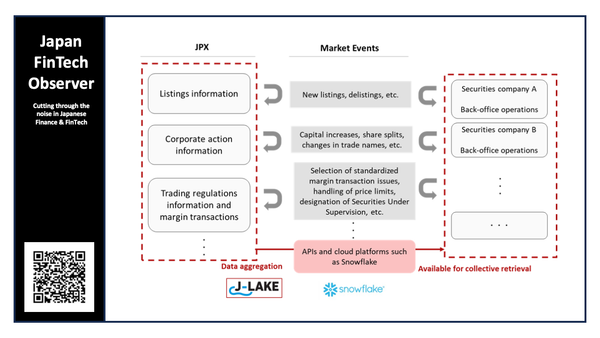
- Tokyo Stock Exchange unveils OTC settlement service for carbon credits to streamline bilateral trading: the Tokyo Stock Exchange will introduce a new clearing and settlement service designed specifically for over-the-counter (OTC) carbon credit transactions; the initiative aims to reduce the administrative burden of bilateral trading and support Japan’s Green Transformation (GX) strategy by enhancing market convenience; the service, titled the "Carbon Credit OTC Transaction Settlement Service," is scheduled to launch on March 18, 2026
- Sapporo Securities Exchange unveils blueprint for "PRO Frontier Market," targeting startups and regional growth sectors: the Sapporo Securities Exchange has officially released the regulatory framework for its upcoming professional-investor-focused equity market, tentatively titled the Sapporo PRO Frontier Market (SPFM); in a public consultation document, the exchange outlined a flexible listing structure designed to compete with the Tokyo Pro Market by lowering barriers for high-growth startups while incentivizing specific regional industries; the SPFM is positioned as a stepping stone for unlisted startups, aiming to accelerate their growth through capital access before they transition to general markets like the SSE Main Board or the Ambitious market
- The Tokyo Stock Exchange has been asking listed companies in parent-subsidiary relationships and those in relationships under the equity method to develop initiatives and make disclosures on group management and the protection of minority shareholders; to serve as a reference for such initiatives and disclosures, the TSE has published the Compilation of Cases Studies on Such Matters as Parent-Subsidiary Listings; this document is a compilation of companies’ disclosures that have received positive feedback from investors, from the perspective of group management and minority shareholder protection
- The Tokyo Stock Exchange has also published "Examples of Initiatives by Growth Market-Listed Companies That Were Well Received by Investors", a compilation of examples of initiatives that investors have evaluated as effectively meeting their expectations for Growth Market-listed companies based on feedback received from investors and other stakeholders; its purpose is to serve as a reference for executives, IR personnel, planning departments, and other related parties at companies listed on the Growth Market as they promote “management that strives for high growth"
- The Ministry of Finance has formulated the "JGB Issuance Plan for FY2026"
- The Ministry of Finance has published its "JGB Newsletter" for December 2025
- Asset Management One has published its "Japan Outlook 2026"
Asset Management
- Amova doubles down on Southeast Asia with 100% takeover of Malaysian heavyweight AHAM: Amova Asset Management has announced a definitive agreement to acquire the remaining equity interest in AHAM Asset Management, moving to take full control of one of Malaysia’s leading fund management houses; in a strategic push to solidify its footprint in Southeast Asia, the Japan-headquartered firm will increase its stake in AHAM from the current 20% to up to 100%, buying out majority shareholder CVC Capital Partners and other equity holders; the deal will convert AHAM into a consolidated subsidiary of Amova, subject to regulatory approvals in both Malaysia and Japan
- Nomura Research Institute has published its annual flagship report, "Japan's Asset Management Business 2025/26"
Digital Assets
- Metaplanet launches sponsored ADR program to deepen U.S. institutional access and liquidity: Metaplanet (TSE: 3350) has formally established a Sponsored Level I American Depositary Receipt program, a strategic move aimed at streamlining access for U.S. investors and bolstering liquidity in North American markets; the program has appointed Deutsche Bank Trust Company Americas as the depositary bank; the ADRs will trade on the U.S. over-the-counter (OTC) market under the new ticker symbol MPJPY; the instrument is structured on a one-to-one ratio, where one ADR represents one common share of Metaplanet stock
- Bybit begins phasing out services in Japan following FSA warnings: Bybit will gradually restrict accounts for its Japanese users starting in 2026 in a bid to comply with local regulatory requirements; Bybit has started notifying Japanese users that it will “discontinue services” and “gradually implement account restrictions” in an effort to comply with Japanese regulations; last year, Bybit scaled back its presence across Asia after it exited Hong Kong in May 2024, following regulatory scrutiny from the Securities and Futures Commission
- Japanese financial consortium to pilot first tokenized deposit settlements for security tokens: a consortium of six major Japanese financial and technology firms—including SBI Securities, Daiwa Securities, and SBI Shinsei Bank—has announced the launch of a collaborative project to verify real-world settlement of security tokens (ST) using tokenized deposits; the initiative aims to implement a Delivery Versus Payment (DVP) settlement scheme using "DCJPY," a digital currency backed by bank deposits; this project marks a significant step toward streamlining Japan’s rapidly expanding secondary market for digital securities
- Introducing the Japan Digital Decentralized Finance Association (JDFA): the General Incorporated Association Japan Digital Decentralized Finance Association (JDFA) has been established on December 1, 2025, led by KPMG Japan, which has run study groups on cryptocurrency ETFs; it was created to guide the growth of new financial technologies in Japan by bringing together experts from across the industry; approximately 20 financial institutions, including Daiwa Securities, Asset Management One, Mitsubishi UFJ Trust and Banking Corporation, Sony Bank, and SBIVC Trade, have expressed their intention to participate; full-scale activities will begin in January
The Last Word: The Impact Imperative

A fundamental re-evaluation of corporate value is underway, compelling leaders to measure what was once considered immeasurable. At the forefront of this shift is impact accounting, a discipline defined by the International Foundation for Valuing Impacts (IFVI) and the Value Balancing Alliance (VBA) as the practice of measuring an organization's social and environmental impacts, converting them into monetary values, and integrating this data with traditional financial information to guide decision-making. This moves beyond treating societal effects as mere "externalities" and internalizes them as core components of corporate performance.
This strategic evolution is not an academic exercise; it is being driven by powerful market forces. A 2023 PwC survey of global investors reveals an undeniable trend: 75% of investors believe it is important for companies to report on their social and environmental impacts, and 81% state that clarifying the monetary value of these impacts helps integrate trade-offs into business decisions. The message from capital markets is clear: quantifiable, transparent impact data is no longer a "nice-to-have" but a critical element in assessing long-term value and resilience.
A recent white paper, published by the Impact Startup Association, the Japan Association of New Public (Shin Koeki Renmei), and Keizai Doyukai, serves as a strategic guide for corporations navigating this new landscape. By analyzing the methodologies, benefits, and challenges observed in the pioneering implementations of impact accounting by leading Japanese companies, it provides a clear framework for turning impact measurement into a strategic advantage. The move towards impact accounting is not driven by compliance alone, but by a clear set of strategic benefits that create tangible value across the enterprise.
Please follow us to read more about Finance & FinTech in Japan, like hundreds of readers do every day. Our short weekly digest, the “Japan FinTech Observer”, is published on LinkedIn, on Medium, Substack & Paragraph, or here on our own FinTech Observer website. Only the latter provides you with the option to subscribe to individual news stories as they are published.
Should you wish to further discuss the Japanese (or Asian) FinTech ecosystem, you may book a consultation via Intro - all proceeds flow towards covering the operating cost of the Tokyo FinTech Association, and research for the Japan FinTech Observer.