Japan’s Cashless Transition Surges to 58%; METI Overhauls Metrics to Target 80% Long-Term Goal

Japan’s march toward a cashless society reached a significant milestone in 2025, with the Ministry of Economy, Trade and Industry (METI) reporting that cashless payments now account for 58.0% of total consumer spending. Total transaction value hit a record 162.7 trillion yen, fueled by a diversifying landscape of digital payment methods and a robust post-pandemic shift in consumer behavior.
The Breakdown: Credit Remains King, QR Codes Gain Ground
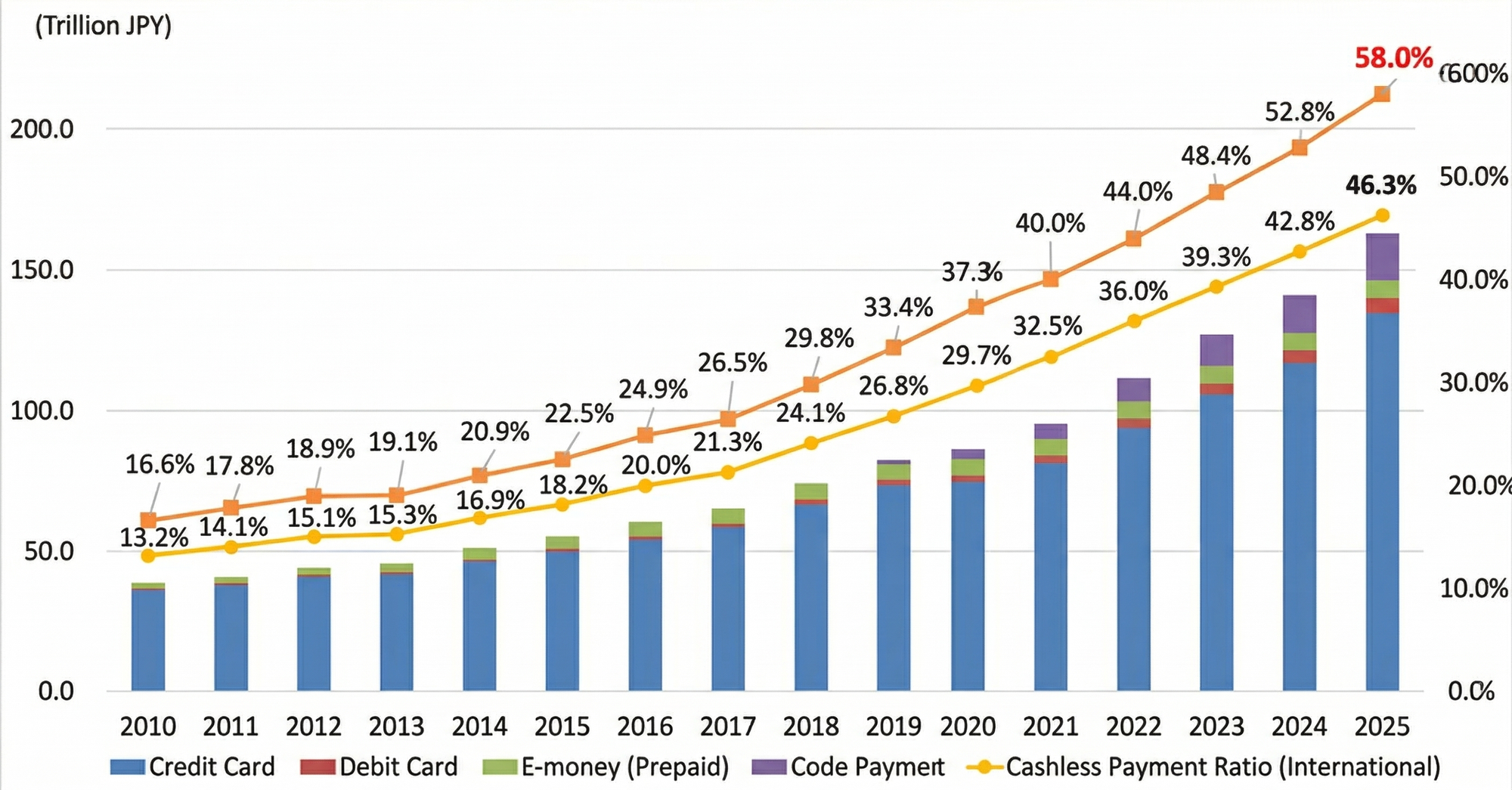
Credit cards continue to anchor the digital economy, representing a dominant 82.7% share (134.6 trillion yen) of all cashless transactions. However, the rise of "Code Payments" (QR and barcode-based apps) is the standout trend, now capturing 10.2% (16.6 trillion yen) of the market. Electronic money and debit cards maintained steady but smaller footprints at 3.7% and 3.4%, respectively.
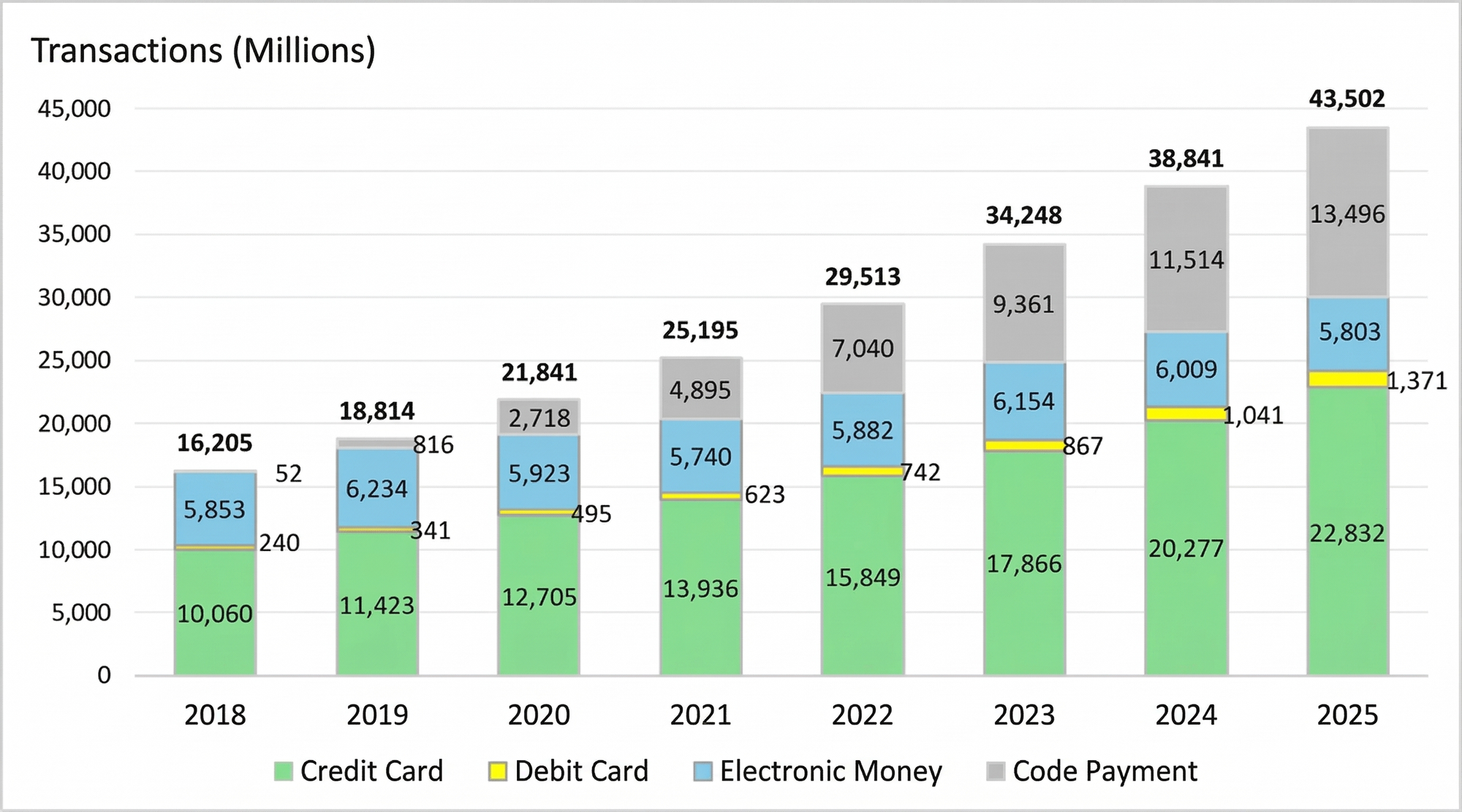
Transaction volume also saw an aggressive climb, reaching 43.5 billion individual transactions in 2025, up from just 16.2 billion in 2018. This suggests that digital payments are no longer reserved for big-ticket items but have become the default for daily micro-transactions.
The Strategic Pivot: Explaining the New Methodology
The most critical takeaway for analysts in this latest report is METI’s significant revision of how it calculates and targets cashless adoption. Following the "Cashless Promotion Examination Committee" report in December 2025, the government has moved from a single metric to a dual-index system to provide a more "consumer-centric" view of the economy.
1. The Shift to the "Domestic Index"
Previously, the denominator for calculating the cashless ratio was "Private Final Consumption Expenditure." However, this figure includes "Imputed Rent for Owner-Occupied Housing"—a statistical value representing the rent homeowners "pay themselves." Since no one can pay rent to themselves via credit card or QR code, this inflated the denominator and artificially suppressed the cashless ratio.
- The Change: The new Domestic Index subtracts this imputed rent from the total. Under this refined metric, the 2025 ratio sits at 58.0%.
- The New Target: METI has set a mid-term goal of 65% by 2030 using this Domestic Index.
2. Retention of the "International Comparison Index"
To ensure Japan’s progress remains benchmarked against global peers, METI will continue to track the International Comparison Index (which keeps the imputed rent in the denominator). Under this old-style metric, the ratio for 2025 would be lower (approximately 46.3%).
Looking Ahead: The 80% Horizon
The government’s ultimate "North Star" remains an 80% cashless ratio. By removing the "statistical noise" of imputed rent, METI argues that the 65% mid-term target for 2030 is both more aggressive and more reflective of actual Japanese lifestyle changes.
For investors and FinTech providers, the message is clear: the infrastructure is in place, the metrics are refined, and the momentum is "steady and upward." As Japan pushes toward its 2030 milestone, the focus will likely shift from mere adoption to the "cashless transaction count," measuring how deeply these tools are integrated into the daily lives of an aging but increasingly tech-savvy population.
 Norbert Gehrke