Mission to Tallinn: e-Estonia

We were delighted to participate in the "ICT & FinTech Mission to Tallinn" this past week, courtesy of Enterprise Estonia. Our first stop was the e-Estonia Briefing Centre, where we were hosted by Marek Roostar, Director of Asia Region Markets, and Petra Holm, Digital Transformation Advisor.
1. Executive Summary
Their comprehensive briefing provided our Japanese delegation with a deep dive into the mechanisms, history, and future trajectory of the Estonian digital society. Hosted at the heart of Tallinn’s innovation district, the session illustrated how a small, resource-poor nation transformed itself into a global heavyweight in digital governance.
The presentation moved beyond surface-level statistics to explore the cultural and structural "secret sauce" of Estonia: a radical commitment to transparency, the decentralization of data via the X-Road, and a unique "startup mindset" applied to government operations. The event emphasized "matchmaking"—leveraging Estonia as a testbed and gateway for Japanese enterprises aiming to expand into European markets with agility and digital efficiency.
2. Welcome Address: The Philosophy of the "Unfinished City"
The briefing took place in Ülemiste City, the largest business district in the Baltics. Marek highlighted the district's transformation from a 19th-century Dvigatel metal industry factory (a massive Soviet-era military motor plant) into a modern tech hub. The architecture deliberately blends preserved limestone ruins with modern glass structures to honor the history while looking forward.
Marek invoked the local legend of the giant living in Lake Ülemiste (located just a few hundred meters away). According to folklore, the giant occasionally wakes up and asks if the city is "finished." If the answer is ever "yes," he will flood the city. This legend serves as the guiding philosophy for digital Estonia. The work of building a digital state is never complete; it must constantly evolve, adapt, and improve. The moment the state considers itself "done," it begins to fail.
The visit was framed not merely as a tour, but as a strategic "matchmaking" event. Enterprise Estonia aims to pair the scale and ambition of Japanese companies with the speed and innovative potential of Estonian partners, facilitating entry into wider Asian and European markets.
3. Keynote: e-Estonia – Beyond Digital
A. The Origins of Innovation (Survival Strategy)
Upon restoring independence in 1991, Estonia faced a dire reality: a population of only 1.3 million, no natural resources, and a nonexistent administration. The leadership realized they could not afford the heavy bureaucracy of wealthy Western nations.
Estonia benefitted from a legacy of the Institute of Cybernetics, where academics had been building computers since the 1960s. These scientists advised the new government to skip Western legacy systems (like paper checks) and leapfrog directly to digital solutions.
The state did not build e-Estonia alone. In the 1990s, private banks and telecommunication companies drove the adoption of internet banking. To ensure they had customers, these companies funded massive digital literacy campaigns, teaching the general population how to use computers and the internet.
B. The "Secret Sauce": Core Infrastructure
Estonia’s success relies on a decentralized, secure infrastructure rather than a single central database.
Electronic ID (The Universal Key)
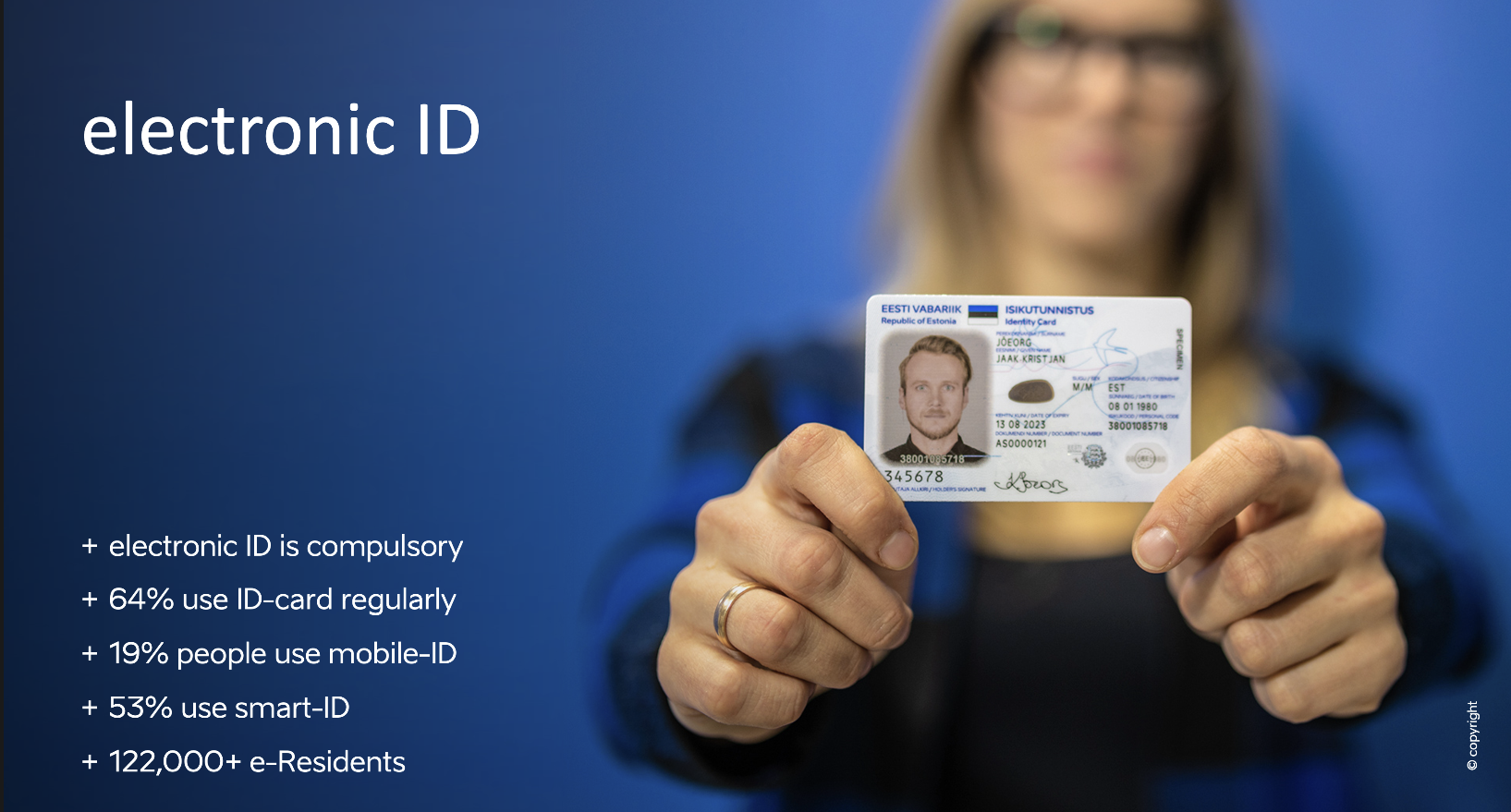
- Introduced in 2002, the digital ID is compulsory for all citizens. It is the singular key to accessing both government and private sector services.
- While the physical card remains mandatory for travel and backup, day-to-day use has shifted to mobile. Mobile-ID (SIM-card based) and Smart-ID (app-based) allow citizens to sign legally binding documents and authenticate identity securely from their smartphones.
- Today, 64% use the ID card regularly, while over 50% use Smart-ID, proving that convenience drives adoption .
X-Road (The Data Highway)
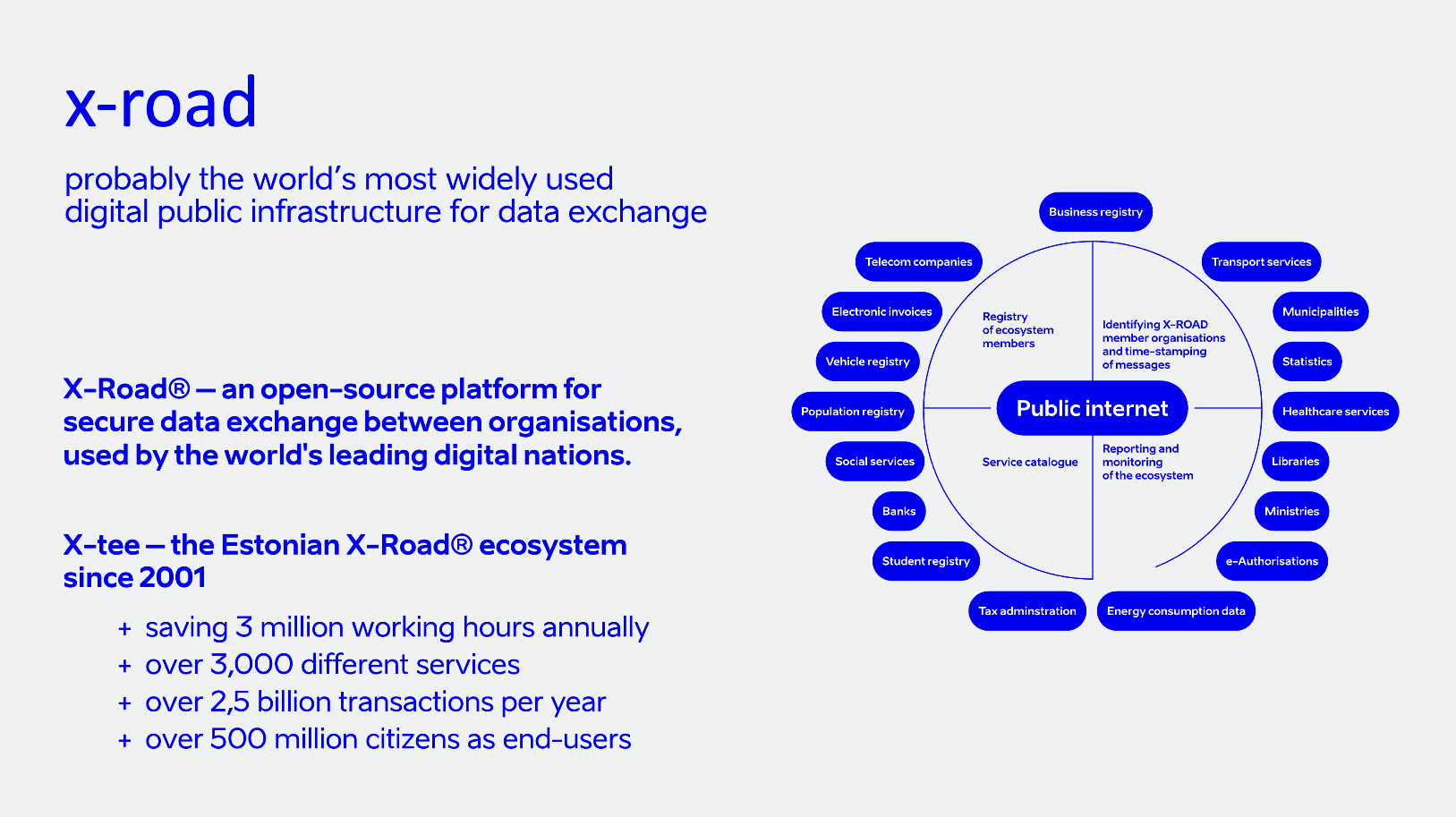
- Launched in 2001, X-Road is the backbone of e-Estonia. It is an open-source interoperability layer that connects decentralized databases (e.g., population registry, tax board, banks)
- There is no central "super database" to hack. Data moves between agencies only when requested and authorized.
- This system saves the country an estimated 3 million working hours annually by automating data exchange.
Cyber Security & Trust Architecture
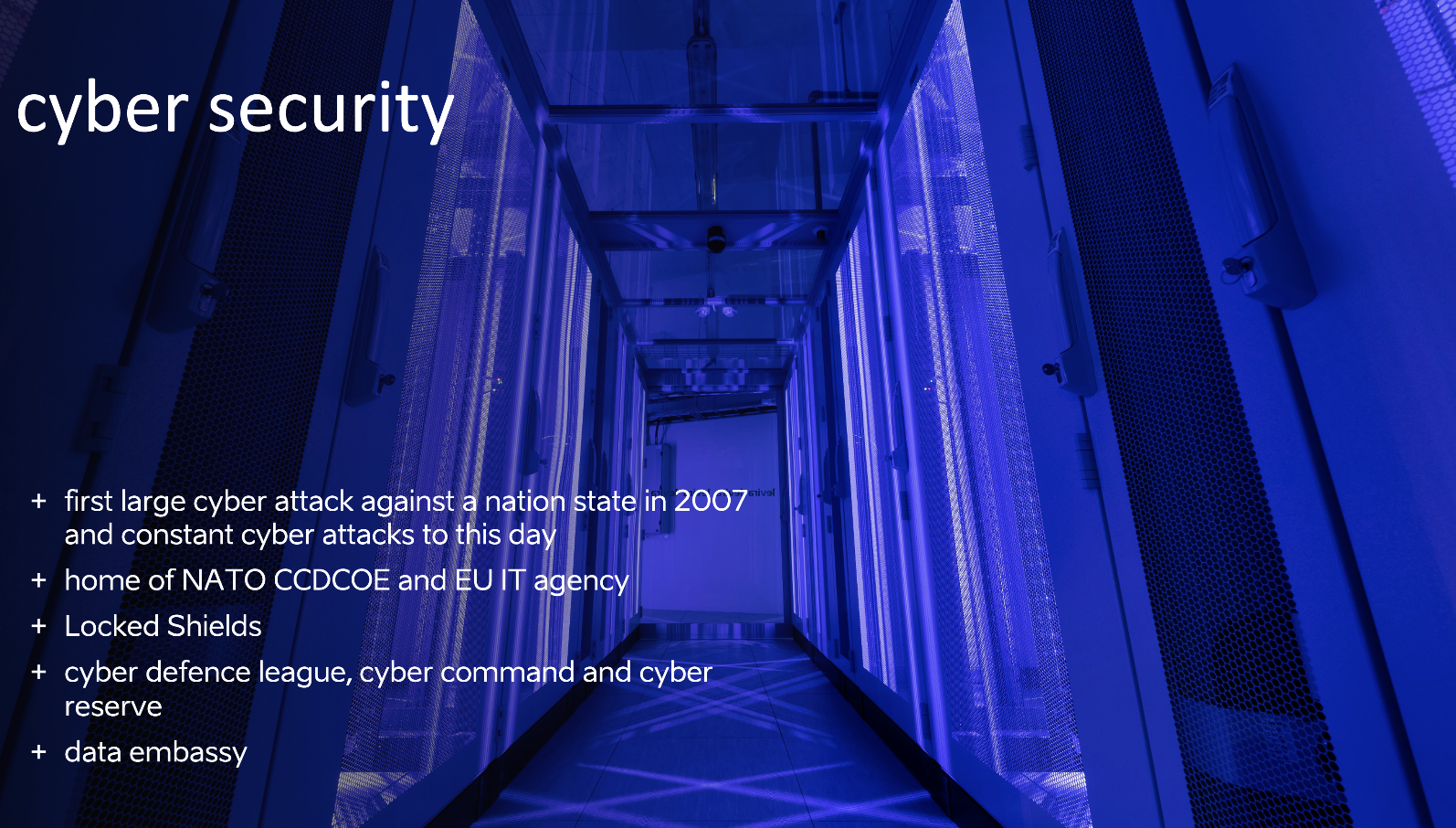
- KSI Blockchain: Estonia was a pioneer in using blockchain technology (KSI) to ensure the integrity of government registries. It creates an immutable audit trail, so no data can be altered without detection.
- Data Embassies: To protect against physical threats (invasion or natural disaster), Estonia backs up critical government data in "Data Embassies" abroad (e.g., Luxembourg). These servers have the same sovereign immunity as a physical embassy, ensuring the digital continuity of the state even if the physical territory is compromised.
C. Flagship Digital Services
The presentation detailed specific services that define the Estonian experience:
e-Tax (The First Success)
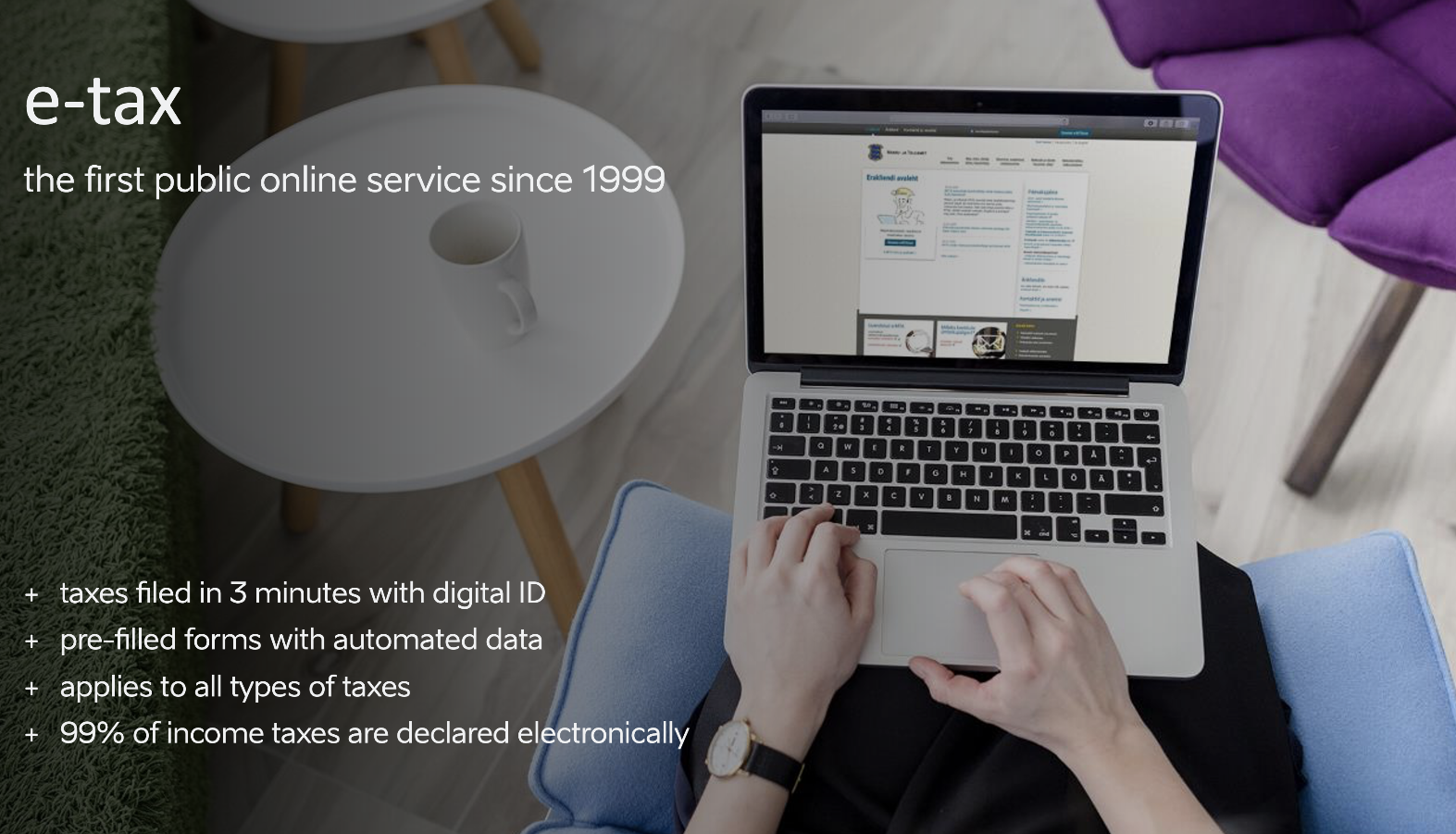
- Launched in 2000, this service allows 99% of income taxes to be declared online. The system automatically pulls data from banks and employers, pre-filling the forms .
- The process takes roughly 3 minutes. Petra noted that citizens actually compete to file their taxes the fastest to receive their automated rebates, turning a bureaucratic chore into a race.
i-Voting (Democracy Upgrade)
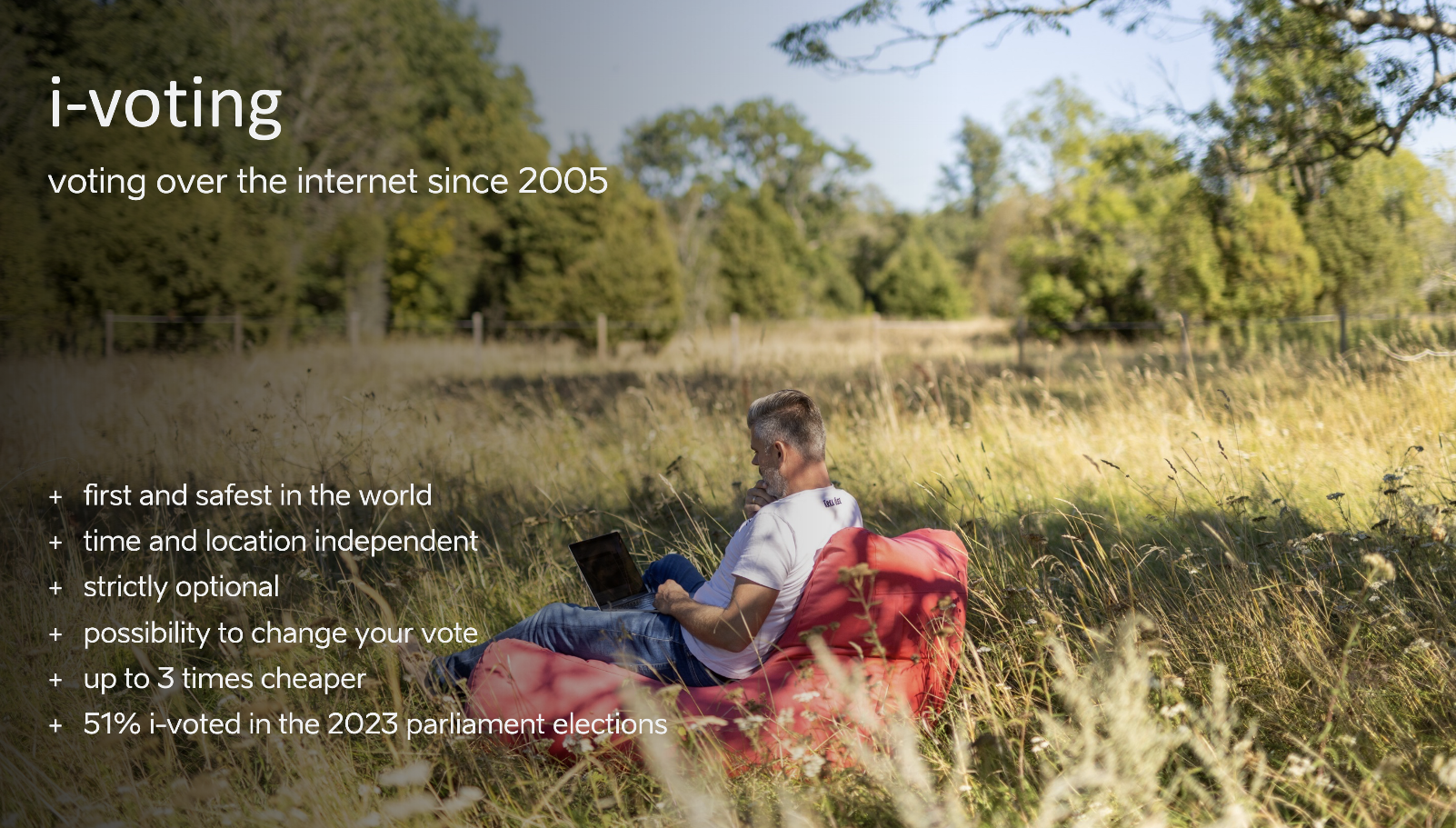
- Since 2005, Estonians have been able to vote online from anywhere in the world. In the 2023 parliamentary elections, 51% of all votes were cast digitally .
- Security Feature: To prevent coercion (e.g., someone forcing you to vote a certain way), i-voters can change their vote as many times as they want during the voting period. Only the last vote counts, nullifying the value of a "bought" vote.
e-Residency (Nation as a Service)
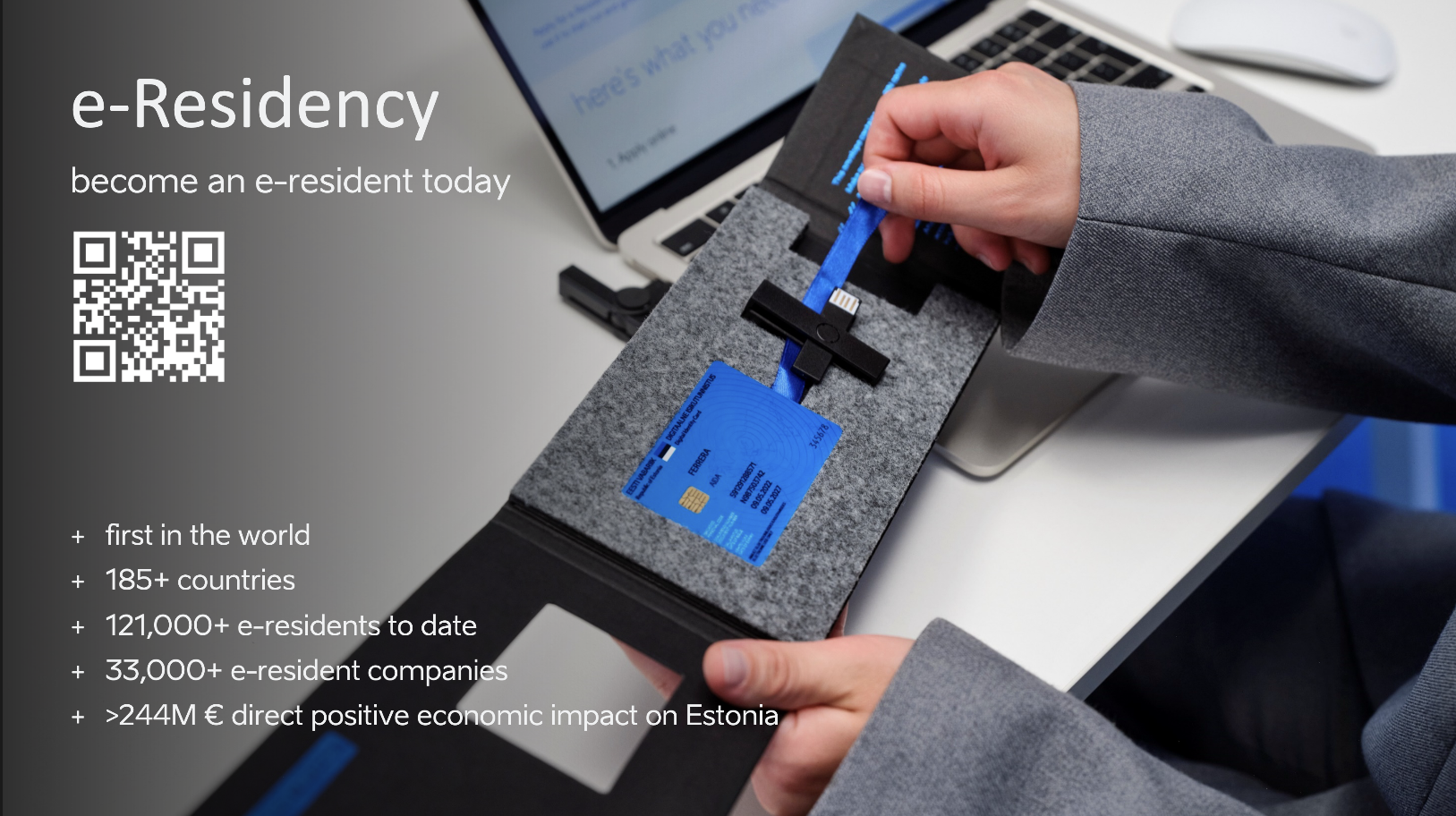
- Estonia offers a government-issued digital identity to non-residents. It does not grant citizenship or travel rights, but allows entrepreneurs to establish and manage an EU-based company entirely online.
- There are over 122,000 e-residents who have established 33,000+ companies, contributing significantly to the economy.
Proactive Services (Invisible Government)
- The state is moving from "reactive" to "proactive." For example, when a child is born, the hospital registers the birth, and the state automatically initiates child benefits and school placement options. The parents do not need to apply; they simply confirm.
4. Business Environment & Startup Ecosystem
Estonia positions itself as a friction-free environment for business:
- Ease of Entry: A company can be established online in under 3 hours. The world record, held by an Estonian e-resident, is just over 15 minutes.
- Tax Competitiveness: Estonia has ranked #1 in the OECD tax competitiveness index for several years . A key driver is the 0% corporate income tax on reinvested profits, which encourages companies to grow and spend on R&D rather than hoarding cash.
- The "Unicorn" Factory:
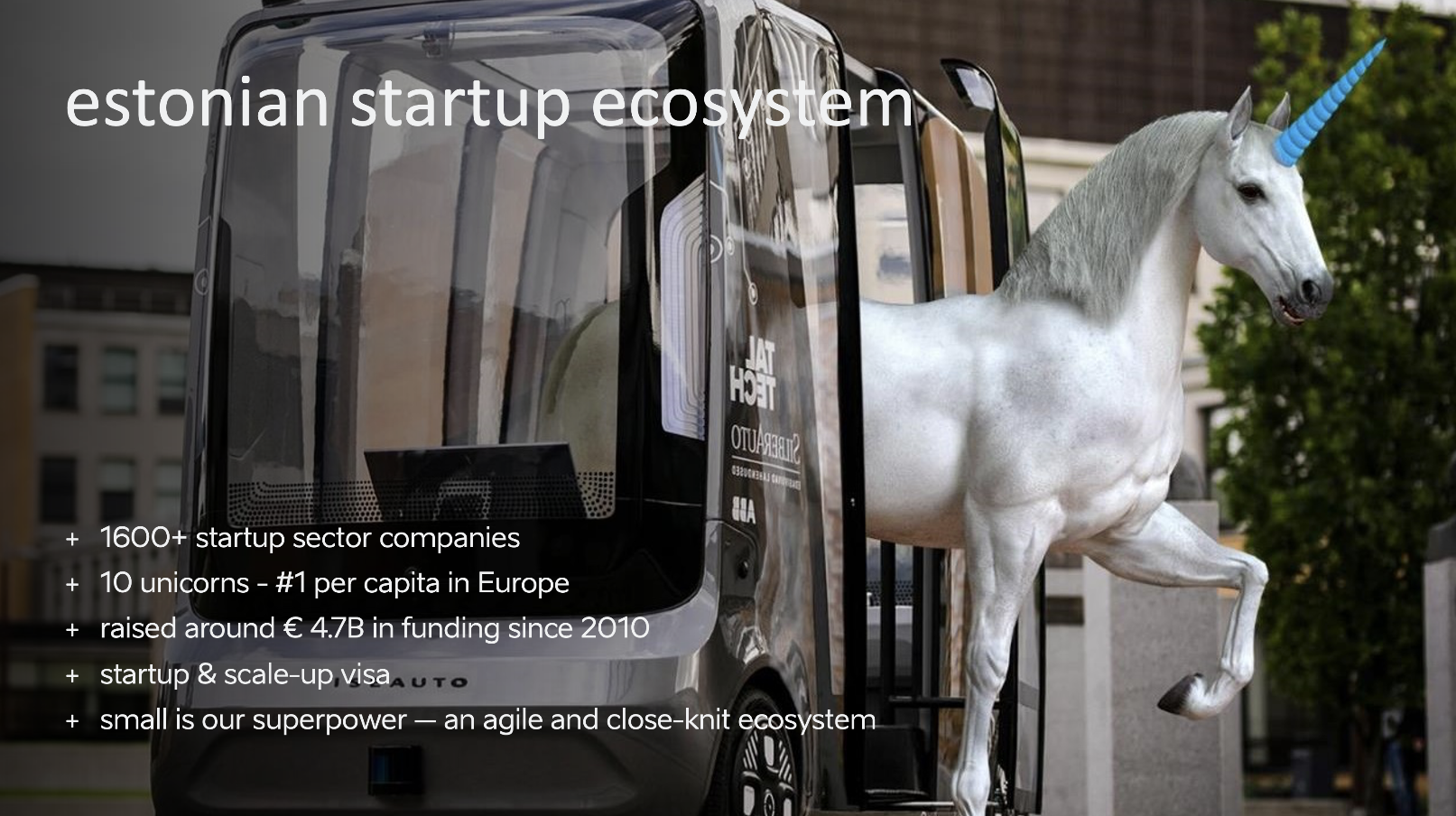
- Estonia has the highest number of "unicorns" (startups valued over $1 billion) per capita in Europe .
- Success stories include Skype, Wise (formerly TransferWise), Bolt, and Pipedrive.
- This success is attributed to the "hacker mindset"—a culture of solving complex problems with limited resources.
5. Q&A and Discussion Highlights
The delegation engaged in a candid Q&A session, revealing the cultural nuances of the digital state:
Trust vs. Control
- When asked how the government maintains trust, Petra explained the "Data Tracker" tool. Citizens can log in and see exactly which official (police, doctor, tax agent) viewed their data and when. If a query looks suspicious, the citizen can report it. This "spying on the spies" mechanism ensures accountability.
Resilience to Propaganda
- Regarding the influence of Russian misinformation, it was noted that high trust in the state acts as a buffer. Because the Estonian government is transparent about its own mistakes, citizens are less likely to believe external propaganda claiming the state is failing or corrupt.
Cultural Adoption
- Digital adoption wasn't forced; it was made the "path of least resistance." Estonians are described as culturally introverted and pragmatic. Digital services suit this temperament—people prefer banking online to speaking with a teller. Even divorce is now digital, sparing couples an awkward final meeting.
6. Future Outlook: The "Post-Digital" Era
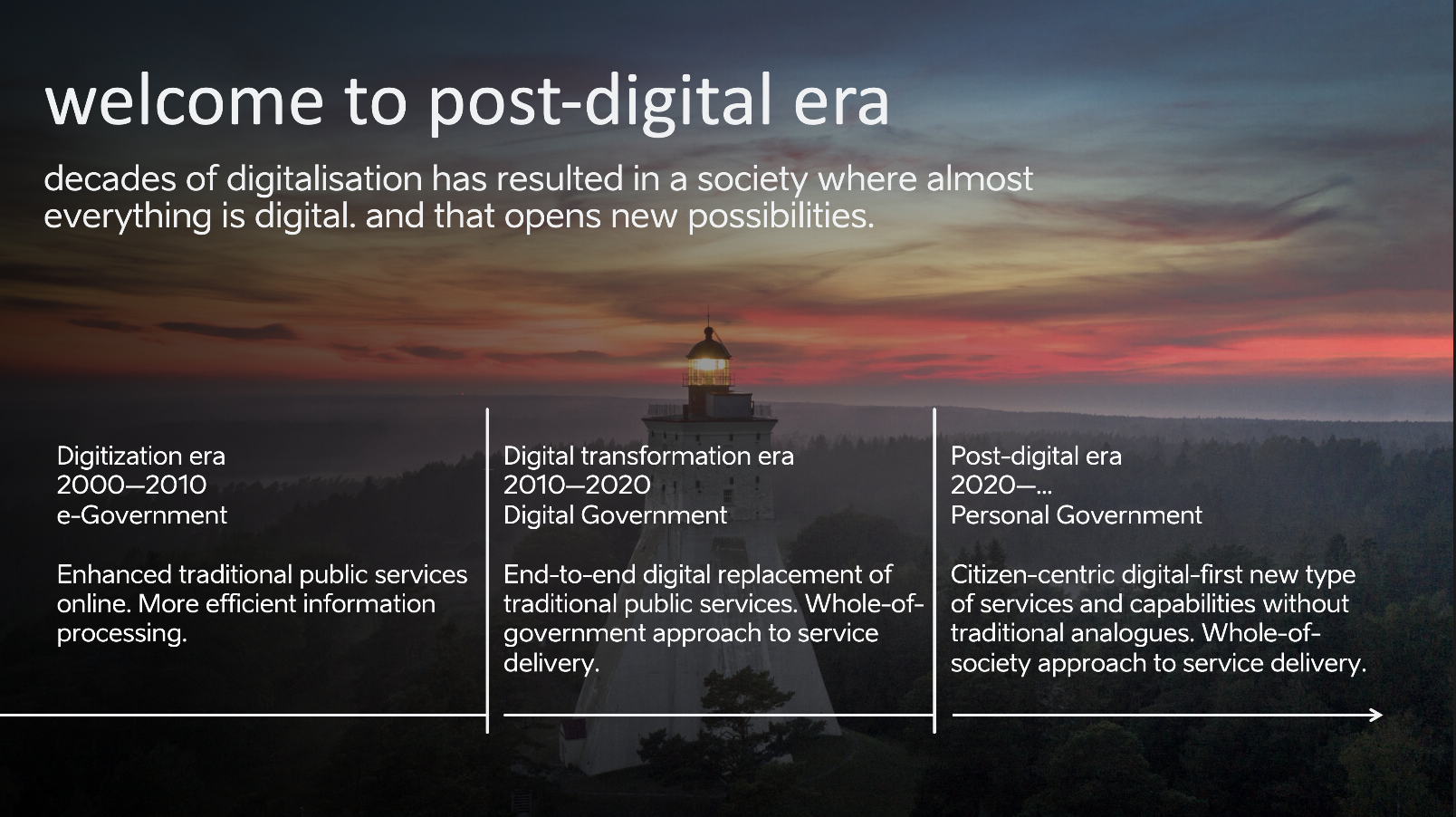
Estonia is currently transitioning from a "Digital Government" to a "Personal Government" driven by AI .
Bürokratt (AI Assistant)
- The government is building "Bürokratt," a Siri-like virtual assistant for public services. It will allow citizens to interact with the state via voice or chat 24/7, handling complex queries like "when is my passport ready?" or "how do I apply for a fishing license?".
Real-Time Economy
- The goal is to eliminate monthly reporting. By connecting business accounting software directly to the state (via X-Road), tax reporting and statistics can be generated automatically in real-time, drastically reducing administrative burden.
Personalized Medicine
- Leveraging the Estonian Biobank (which holds genetic data for 20% of the adult population), the state is rolling out preventative healthcare. Citizens will receive warnings and personalized plans based on their genetic predisposition to certain diseases.
 Norbert Gehrke