MoneyX: The AI Agent Economy and Why LINE & JPYC Are Betting on Stablecoins for the Future of Payments

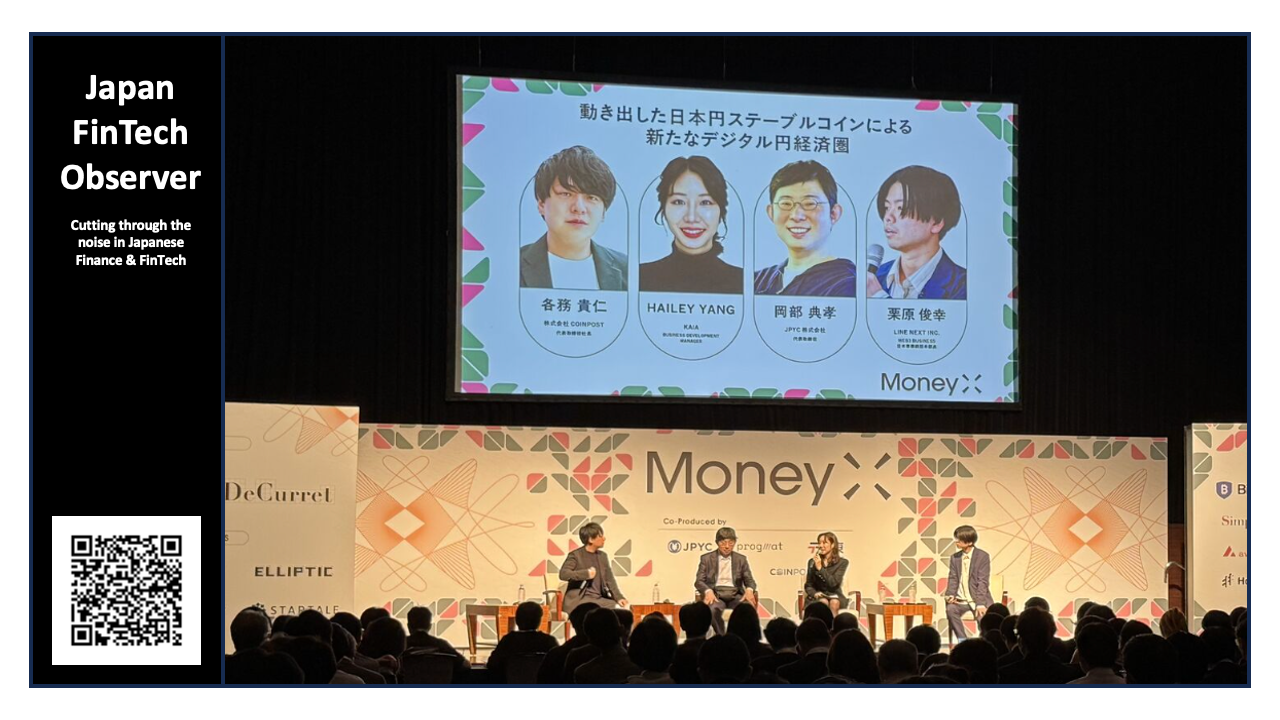
LINE NEXT announced today the integration of the yen-denominated stablecoin JPYC into its upcoming Web3 wallet, "Unify" in order to accelerate the mainstream adoption of cryptocurrency in Japan. The announcement, made during the WebX conference, signals a transition from experimental blockchain projects to tangible implementations, leveraging the ubiquitous LINE messaging app to bridge the gap between retail users and the digital economy.
From Points to Stablecoins: The "Unify" Strategy
Toshiyuki Kurihara, General Manager of LINE NEXT’s Web3 Business Japan Division, unveiled the "Unify" wallet, designed to operate seamlessly within the LINE ecosystem. Addressing the "social dilemma" of low crypto adoption, Kurihara explained that the wallet lowers entry barriers by utilizing gamification. Users can earn small amounts of JPYC through missions and games, effectively treating the stablecoin like loyalty points.
"By allowing users to earn interest on assets used in games or missions, we are creating a world where Web3 technology naturally integrates into daily life," Kurihara stated. JPYC Representative Director Noritaka Okabe added that the integration allows for friction-free exchanges between traditional loyalty points and stablecoins, bypassing strict KYC requirements typically needed for fiat-to-crypto on-ramps.
Kaia Chain to Anchor an Asian Economic Zone
A central theme of the panel was the establishment of a cross-border digital economy connecting Japan and South Korea. Okabe revealed that JPYC is seriously considering issuance on the Kaia chain—a Layer 1 blockchain associated with the messaging giants LINE and Kakao.
"While many expected us to focus on chains like Base or Arbitrum, Kaia represents the shortest path to a yen-denominated stablecoin zone in Asia," Okabe noted.
Hailey Yang, representing Kaia, emphasized that the infrastructure for this global expansion is already active, citing a recent overnight transaction volume of nearly 200 million yen by LINE users. Kaia is currently developing "Ratio," an FX engine designed to facilitate smoother fiat-to-stablecoin swaps, positioning itself as a bridge for cross-border settlements across Asia, including Indonesia and the Middle East.
The Rise of the AI Agent Economy
Looking beyond immediate retail use, the panel projected a near future dominated by "AI Agents"—autonomous software capable of executing tasks and payments. Okabe predicted that "99% of payments made by AI agents will eventually be via stablecoins," citing their programmability and efficiency compared to traditional banking rails.
The speakers described a scenario where an AI agent books a hotel in South Korea for a Japanese traveler. While the user pays in JPYC, the hotel receives Won-denominated stablecoins, with the exchange handled instantly in the background. "This technology is already feasible and will likely arrive this year," Okabe asserted.
Future Outlook: Trillions in Circulation
The panel concluded with bullish forecasts for the sector. With Japan’s stablecoin regulations already established and South Korea’s crypto taxation framework set to finalize by 2028, the infrastructure for institutional adoption is maturing.
Okabe outlined an aggressive roadmap for JPYC, targeting issuance milestones growing from billions to eventually tens of trillions of yen. "We are moving toward a world where AI agents handle the vast majority of transactions on behalf of humans, and stablecoins will be the currency of that machine economy," he said.
 Norbert Gehrke