The Silver Wealth Tsunami: How ‘Tech Meets Touch’ is Unlocking Japan’s Trillion-Dollar Aging Crisis
Japan has sailed into uncharted demographic waters. As the nation grapples with what demographers are grimly calling the "multi-death era," the Japanese financial sector is facing a slow-motion crisis that threatens to freeze trillions of yen in household wealth.
With the nation's elderly population swelling—and living longer than ever before—the intersection of cognitive decline and asset management has become one of the most pressing macroeconomic risks of the decade. Left unchecked, the "salting away" or freezing of assets owned by seniors suffering from dementia could severely throttle capital liquidity and economic vitality.
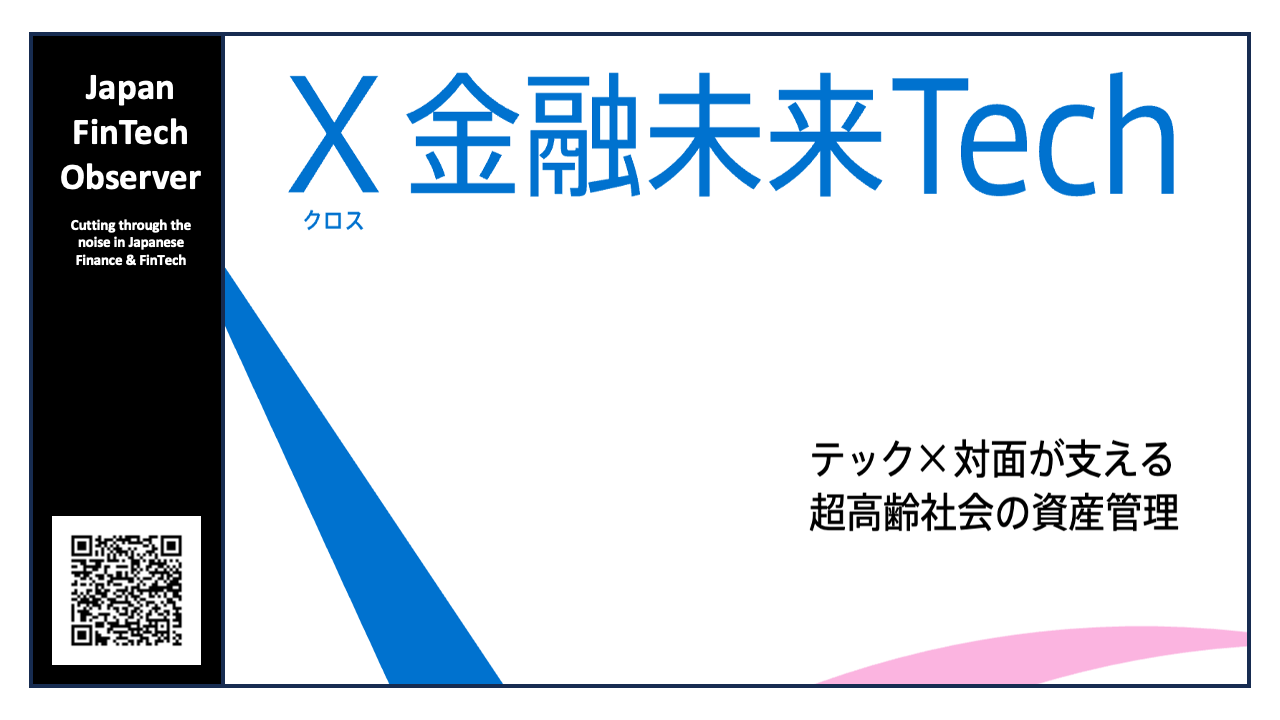
Yet, a new consensus is emerging in Tokyo's financial districts. According to a landmark Spring 2026 report out of the Japan Research Institute's "Cross Finance Future Tech" series, the solution lies not in replacing human advisors with algorithms, but in a uniquely Japanese "hybrid model." By fusing cutting-edge neurotechnology, AI-driven digital health, and the traditional, high-touch trust of local bank tellers, Japan is attempting to engineer a global blueprint for managing the wealth of a super-aging society.
Here is how the world’s oldest major economy is rewriting the rules of wealth management.
Part I: The "Multi-Death" Era and the Great Wealth Migration
To understand the scale of the challenge, one must look at the mortality data. Japan is seeing a sharp acceleration in deaths among those aged 75 and older. The National Institute of Population and Social Security Research projects this upward trajectory will continue unabated well past 2030.
For the financial sector, this demographic reality triggers an unprecedented wave of wealth transfer.
"The impact on the economy and financial markets is massive," notes Yusuke Shimoda, Senior Researcher at JRI’s Financial Research Center. However, this is not a simple generational handover. The modern Japanese family structure has fundamentally shifted. Adult children have migrated to urban centers, leaving aging parents living alone in regional towns.
When an inheritance event occurs, regional banks face an existential threat: an immediate, massive outflow of deposits as urban-dwelling children transfer inherited cash to mega-banks in Tokyo or Osaka.
To stem this capital flight, regional institutions are being forced to innovate. One emerging strategy is the "substitute will trust" (Yui-gon Daiyo Shintaku). By acting as trust agents for larger urban banks, regional lenders can facilitate seamless, pre-arranged asset transfers to children without the usual bureaucratic nightmares of probate. This creates a multi-generational touchpoint, helping regional banks retain relationships with the inheriting generation.
But cash is only half the problem. The inheritance of real estate has birthed a nationwide crisis of Akiya—abandoned, vacant homes. Urban heirs often have no use for aging rural properties, leading to neighborhood blight and collapsing local property values. In response, local governments, real estate firms, and banks are cobbling together public-private alliances. Solutions include reverse mortgages that liquidate properties posthumously and "Akiya banks" to match abandoned homes with new buyers.
Simultaneously, a new trend is emerging among the growing cohort of seniors dying without heirs: legacy donations. "There is a surging interest among the elderly in bequeathing their wealth to society," Shimoda explains. However, the anxiety over whether their funds will be used properly often stalls the process. Financial institutions are now stepping in as intermediaries, partnering with municipalities and nonprofits to create transparent, guaranteed channels for philanthropic wealth transfer.
Part II: The Cognitive Crisis and "Frozen" Assets
If the transfer of wealth upon death is complicated, managing the wealth of the living elderly is proving to be a legal minefield.
By 2040, an estimated one in three Japanese seniors will experience some form of cognitive decline. When a bank suspects a client is exhibiting signs of dementia, stringent compliance rules kick in. To protect the client from widespread financial scams—a persistent plague in Japan—the bank will often freeze the account.
While protective, this freeze creates a logistical nightmare for families who need to access those funds for the senior's medical or nursing care.
"Japan does have legal frameworks in place to protect the assets of those with declining cognitive abilities, namely the Family Trust and the Adult Guardianship System," Shimoda notes. "However, these systems are deeply flawed."
Family trusts require the senior to have full mental capacity at the time of signing, which is often too late by the time families realize it is necessary. The state-sponsored Adult Guardianship system, meanwhile, is notorious for its rigid inflexibility and high ongoing legal fees. Once initiated, families essentially lose control of the estate, requiring family court approval to sell a parent's home or alter investments. Revisions to the law are slated for 2026, aiming to make it more user-friendly, but institutional inertia remains high.
For the banking industry, the lack of standardized guidelines is causing chaos on the ground. Whether a family member can withdraw cash on behalf of a cognitively impaired parent currently depends entirely on which bank they walk into. The JRI report urges the adoption of a unified industry standard and the creation of "one-stop" municipal hubs where seniors can access financial, medical, and legal support under one roof.
Part III: The AI and Digital Health Crossover
How can the financial industry anticipate and manage these risks before a senior's mind fails? The answer is migrating from Silicon Valley to Tokyo: Digital Health and Artificial Intelligence.
Yoichi Taya, Senior Expert at JRI’s Advanced Technology Lab, points out that the global digital health market is witnessing explosive growth, fueled by generative AI and large language models (LLMs). In the West, companies like Hippocratic AI and Willis Towers Watson are already utilizing wearable data—heart rates, sleep patterns, and physical activity—to build predictive mortality risk scores for life insurers.
"Japan's financial sector is on the cusp of an epochal shift," says Taya. "By harnessing the highly accurate, secure AI technologies developed in the strict regulatory environment of the healthcare sector, Japanese banks can build a sustainable business model tailored to a super-aging society."
In practice, this means AI agents and voice-recognition interfaces that can patiently guide seniors through asset management, available 24/7. It means highly personalized financial products linked to health data, and predictive algorithms that alert families to cognitive risks before assets need to be frozen.
By utilizing its unique position as the world's most advanced aging society, Japan has the opportunity to turn its demographic deficit into an exportable technological asset. If Japanese banks can perfect AI-driven senior care models, they can export these systems globally as the rest of the developed world catches up to Japan's median age.
Part IV: Neurotech – The New Financial Vital Sign
The most futuristic—and perhaps most controversial—frontier in this battle is "Neurotech."
Satoshi Nishishita, a Senior Researcher specializing in advanced tech, highlights how wearable devices are evolving from fitness trackers into early-warning systems for Mild Cognitive Impairment (MCI).
"Dementia doesn't happen overnight; it is a gradual deterioration," Nishishita explains. "With about 15.5% of Japanese seniors currently exhibiting MCI, early detection is the holy grail. If we can detect the signs early, we can delay the onset of full dementia and execute financial safety measures like Family Trusts before it's too late."
Neurotechnology uses biometric signals—such as heart rate variability, pupillary response, and even brainwave patterns tracked via specialized wearables—to estimate cognitive health. An algorithm analyzes this data and feeds it back to the user or their designated caregivers.
While the technology is already being piloted in medical settings (such as diabetes management in Aichi Prefecture), adapting it for everyday financial security comes with steep hurdles.
The first is data robustness. A biosensor that works perfectly in a sterile laboratory must be proven to work amidst the noise of a senior's daily life.
The second, and more daunting, is regulation. Global frameworks, particularly the EU AI Act enacted in late 2024, classify AI systems that process health and biometric data as "high-risk." For Japanese financial institutions looking to utilize this tech, navigating strict domestic and international data privacy laws is paramount. The financial industry will need to adopt cutting-edge Privacy-Enhancing Technologies (PETs) to ensure this highly sensitive biometric data is never weaponized or leaked.
Part V: The "High-Tech, High-Touch" Synthesis
If the technology is available, what is stopping its immediate rollout? The answer lies in human psychology.
In a roundtable discussion featuring JRI experts, the core obstacle was identified: the emotional wall. "Even if a family approaches a senior with end-of-life planning or cognitive tracking, the immediate reaction is often defensive," says Shimoda. "Seniors feel like their children are just waiting for them to die. This emotional rejection is the single biggest barrier to smooth asset transfer."
Because of this psychological resistance, pure technological solutions—forcing an 80-year-old to download an app or log into an AI portal—are destined to fail in the near term.
The prescription offered by JRI is a "Hybrid Strategy: Tech x Face-to-Face."
"The solution I want to propose is a hybrid model deeply suited to Japanese culture," says Taya. "Regional banks and credit unions have built deep, decades-long relationships with their elderly clients. The heavy lifting—the AI cognitive assessments, the neurotech data crunching—should happen invisibly on the backend. But the delivery of that information must be done face-to-face by a familiar, trusted bank representative."
Imagine a scenario where a senior client walks into their local branch for a routine chat. Behind the scenes, the bank's AI has analyzed their recent transaction history and voice patterns during the conversation, noting slight cognitive delays. Instead of an automated alert, the trusted bank manager gently brings up the idea of setting up an "opt-in" safety net, ensuring the client that their wealth will remain safe and under their control.
This is not about maximizing fee revenue; it is about macroeconomic survival. As Nishishita points out, detecting cognitive decline early is a vital defense against the rampant financial fraud targeting the elderly.
"Finance is the lifeblood of social activity," concludes Taya. "How financial institutions address this challenge will determine the future of the Japanese economy. Supporting seniors so they can utilize the wealth they've built on their own terms will ultimately keep the economy turning and fulfill the banking sector's social mandate."
The Global Blueprint
As the world watches, Japan is serving as the ultimate laboratory for the intersection of aging and capital. The year 2026 marks a turning point where the focus has shifted from merely managing the elderly to empowering them through invisible technology and profound human empathy.
If Japan can successfully tear down the psychological walls surrounding aging, and seamlessly integrate neurotech and AI with the traditional bank teller, it will have engineered a solution to a trillion-dollar problem. And it will be a solution the rest of the aging world will desperately need to buy.
 Norbert Gehrke