Digital Garage Scales FinTech Infrastructure with Dual Push for SME Payment Solutions and AI-Driven Agentic Commerce

Digital Garage has announced two significant expansions of their digital financial and commerce services.
The first concerns a partnership with the Bank of Kyoto, where Digital Garage integrates a B2B card payment function into the bank's "DX Connect Gate" platform to help small businesses improve cash flow and digitize invoice processing.
The second introduces "DG Agentic One," a pioneering platform designed to optimize e-commerce for AI agents that autonomously handle product search and purchasing. This comprehensive solution features tools for data structuring, AI search optimization, and secure multimodal payments, including future support for stablecoins.
Together, these initiatives reflect the company’s strategy to modernize regional financial infrastructure and lead the transition toward an AI-driven global economy. Through these innovations, Digital Garage aims to bridge the gap between traditional business practices and next-generation digital commerce.
1. Modernizing SME Liquidity: The Bank of Kyoto Partnership
Digital Garage is attempting to bridge the structural productivity gap in Japan’s regional economy by digitizing the B2B payment tail. Regional small-to-medium enterprises (SMEs) have historically been constrained by a reliance on traditional bank loans for working capital and an entrenched dependence on analog, manual invoice processing. DG aims to address these inefficiencies by integrating its BIPS feature into the "Kyoto FG with DX Connect Gate."
This partnership provides a practical "Digital Transformation (DX) of Cash Flow." By utilizing credit card rails, businesses can extend their payment deadlines by up to 60 days, offering a buffer against seasonal capital shortages. Crucially, the system allows the buyer to pay via card while the supplier receives a standard bank transfer, maintaining existing business relationships without requiring the supplier to adopt new merchant technology.
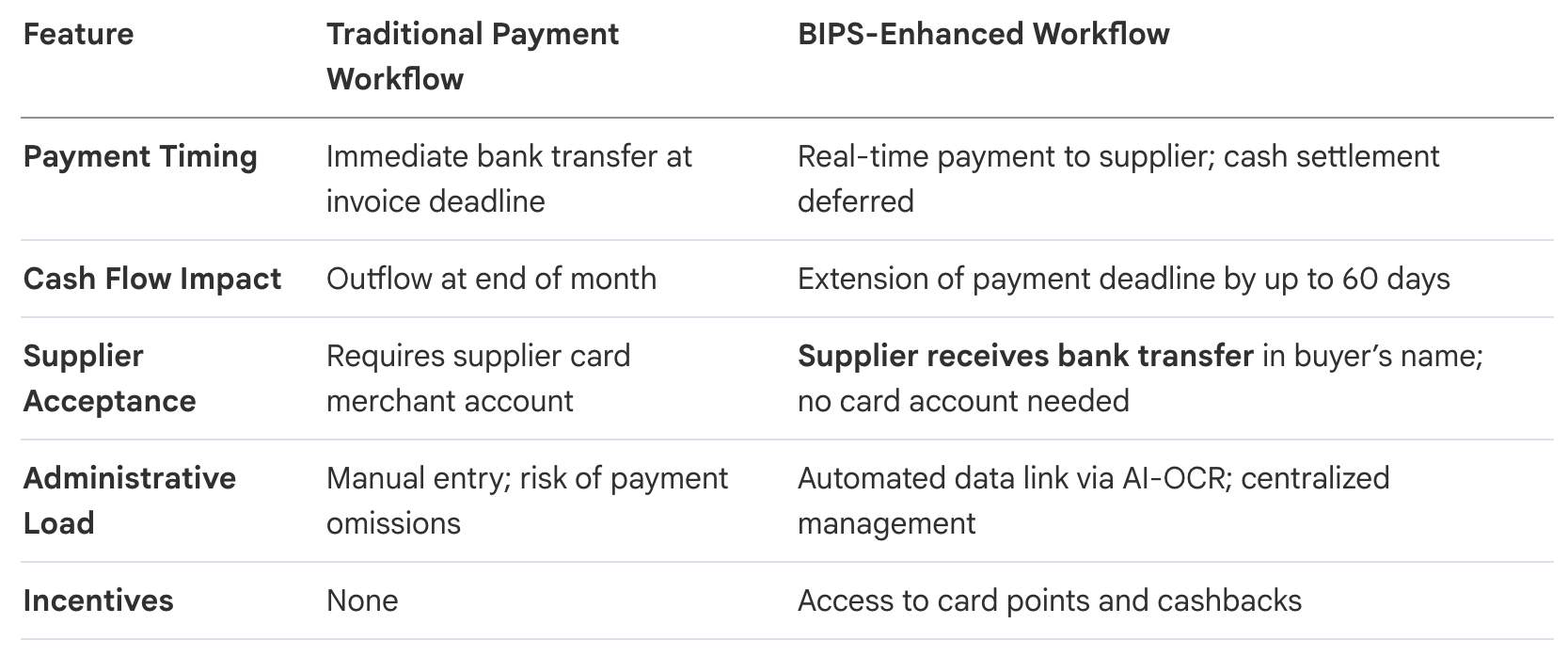
This modernization is powered by the "Kyoto FG SeamlessLink" ecosystem, which employs AI-OCR to digitize physical invoices and eliminate operational silos between accounting and payment execution. This regional success serves as a blueprint for a national rollout, where DG intends to leverage these financial touchpoints to feed the broader data requirements of its emerging AI infrastructure.
2. The Rise of Agentic Commerce: Launching "DG Agentic One™"
As DG secures the current payment landscape, it is simultaneously architecting the future of global trade: the transition from "search-and-buy" to "AI-agent-driven" transactions. "DG Agentic One™" addresses a market where an estimated 25% of global EC sales—and ¥15.6 trillion in the Japanese market alone—will be mediated by AI agents by 2030. In this "zero-click" era, the strategic risk for EC operators is no longer search engine ranking, but total invisibility to autonomous agents that handle discovery, recommendation, and settlement.
2.1 Technical Hurdles for the AI-Driven Operator
To remain discoverable, EC operators must overcome significant technical barriers that "DG Agentic One™" is designed to bridge:
- Data Structuring: Transforming flat product catalogs into structured data optimized for AI machine learning.
- Semantic Information: Adding proprietary meaning and brand context that AI can interpret beyond simple keywords.
- Standardized Protocols: Adopting Universal Commerce Protocol (UCP) and Agentic Commerce Protocol (ACP) for agent-to-machine communication.
2.2 The Five Pillars of the Platform
- DG Agentic One DataFeed: Synthesizes product masters with proprietary data to generate AI-optimized semantic information.
- DG Agentic One GEO (Generative Engine Optimization): Ensures products are recommended by major AI engines like ChatGPT and Google AI Overviews, shifting the focus from SEO to AI visibility.
- DG Agentic One MCP (Multi-protocol Connection Platform): Acts as the protocol gateway, allowing EC sites to connect to AI agents via UCP/ACP standards without requiring massive internal system overhauls.
- DG Agentic One Commerce: A new architectural framework that adds an "AI Agent Front-end" to the traditional Human-centric Front-end and Back-end, facilitating a waste-free transition to next-gen systems.
- DG Agentic One Payment: Currently in development, this utilizes DG’s payment infrastructure for AI-led settlement, with planned integration of the DG SPS™ stablecoin platform to enable autonomous, cross-border value transfer.
3. Corporate Vision and Market Outlook: The "Financial Infrastructure" Mandate
These advancements are the culmination of the "DG FinTech Shift," accelerated by the April 2025 integration of DG Business Technology (DGBT). Group CEO Kaoru Hayashi frames this as the "Second Act of the Data Society," a period where the evolution of AI redefines industrial structures. Hayashi views DG’s role as the essential bridge between payment-financial infrastructure and the AI economy, ensuring Japanese industry maintains a competitive moat against global platformers.
Market stakeholders should look to DGBT President Kazunori Shimizu’s targets as a primary KPI: the company aims to handle ¥3 trillion in transaction volume through the Agentic Commerce market by 2030. By resolving the high technical hurdles of AI integration, DGBT intends to be the primary engine allowing businesses to leverage existing system assets while entering the autonomous commerce arena.
As Digital Garage continues to deploy its stablecoin payment services (DG SPS™) and expand its regional banking network, its strategic value lies in its ability to manage the movement of both data and capital across the legacy and AI-driven economies. Its 2026 launches signal a transition from a payment processor to a foundational architect of 2030’s global commercial infrastructure.
 Norbert Gehrke