SBI Holdings Orchestrates Additional Push into Digital Assets via bitbank Acquisition and Visa Partnership


SBI Holdings has communicated a three-pronged strategic initiative designed to cement its dominance in the Japanese digital finance sector. By executing a Letter of Intent (LOI) to acquire bitbank, establishing a landmark Memorandum of Understanding (MOU) with Visa, and launching a high-yield crypto-reward credit card, the group is signaling its continued transition from a traditional internet-based financial conglomerate to a vertically integrated digital asset powerhouse.
This "triple-play" strategy sets the bar high in the institutionalization of digital assets in Japan. By simultaneously securing battle-tested exchange infrastructure, aligning with global payment rails, and embedding crypto-assets into retail consumer habits, SBI is building a comprehensive ecosystem that bridges legacy finance with the blockchain era. The primary entities driving this expansion include:
- SBI Holdings: The parent group orchestrating the overarching "Financial Innovator" strategy.
- bitbank: A major domestic crypto exchange renowned for its high security standards.
- Visa Worldwide Japan: The global payment technology partner providing next-generation infrastructure.
- SBI VC Trade: The group’s consolidated crypto exchange arm (following its April 1, 2026 merger with BITPoint Japan).
- Aplus: The consumer finance and card-issuing subsidiary within the SBI Shinsei Bank Group.
This strategic alignment ensures that SBI controls the entire value chain—from the "vault" where assets are stored to the "rails" that move them and the "wallet" used by the end consumer.
Market Consolidation: The Move to Acquire bitbank
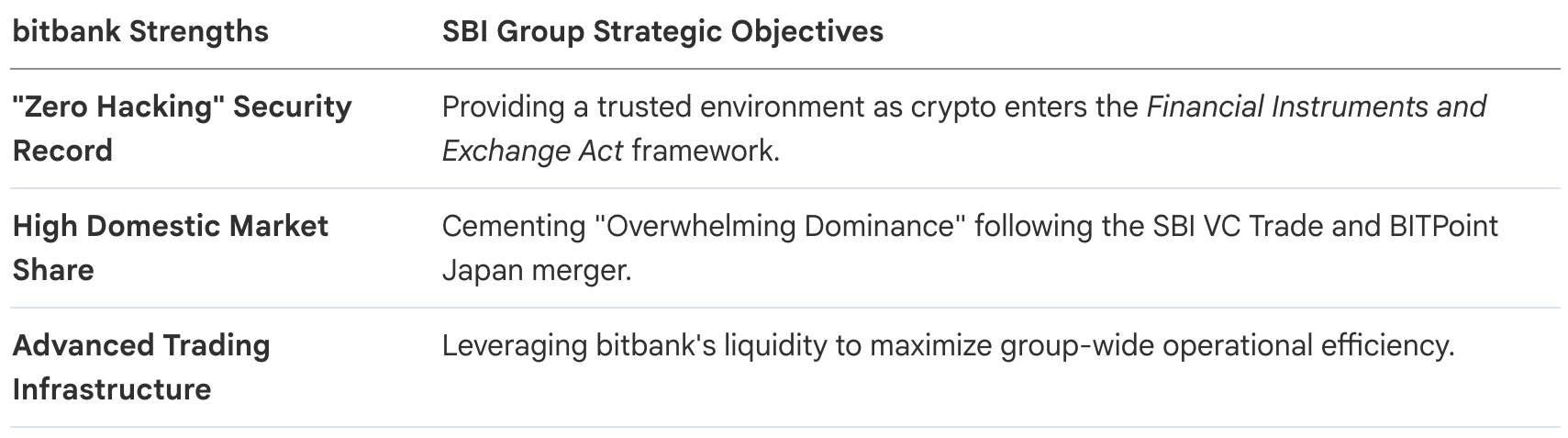
The cornerstone of SBI’s domestic strategy is the proposed acquisition of bitbank, inc. By submitting an LOI to transform bitbank into a consolidated subsidiary, SBI is accelerating market consolidation in the wake of its own internal restructuring. This move follows the April 1, 2026 merger of SBI VC Trade and BITPoint Japan, a consolidation designed to streamline resources and enhance group-wide profitability.
The strategic rationale for bitbank lies in its "zero hacking history" and deep liquidity. More importantly, this move prepares the SBI Group for a significant regulatory pivot: the increasing integration of digital assets into the framework of Japan's Financial Instruments and Exchange Act. By bringing bitbank’s institutional-grade security under the SBI umbrella, the group is effectively "banking-fying" the digital asset space, establishing an "overwhelming dominance" that smaller players will find difficult to challenge.
Global Infrastructure: The Visa Strategic Alliance
Recognizing that domestic dominance requires global interoperability, SBI Holdings has entered into an MOU with Visa Worldwide Japan. This partnership focuses on the nexus of digital finance and global payment ecosystems, with a specific mandate to explore the utility of stablecoins.
This alliance positions Visa’s global network as the "next-generation payment infrastructure" for SBI’s digital ventures. Crucially, the collaboration is framed as a proactive response to the stabilizing global regulatory environment, ensuring that SBI’s settlement systems remain compliant and competitive on an international scale.
Key Collaboration Areas
- Digital Asset Utilization: Assessing the practical application of diverse digital assets within institutional financial frameworks.
- Stablecoin Integration: Investigating the specific role of stablecoins in modernizing cross-border payment and settlement processes.
- Payment Process Sophistication: Utilizing Visa’s global technology to enhance the "settlement ecosystem," focusing on transaction efficiency and security.
The conversion of this high-level infrastructure agreement into a consumer-facing acquisition engine is already evident in the group's latest retail product launch.
Retail Ecosystem Integration: The "SBI VISA Crypto Card"
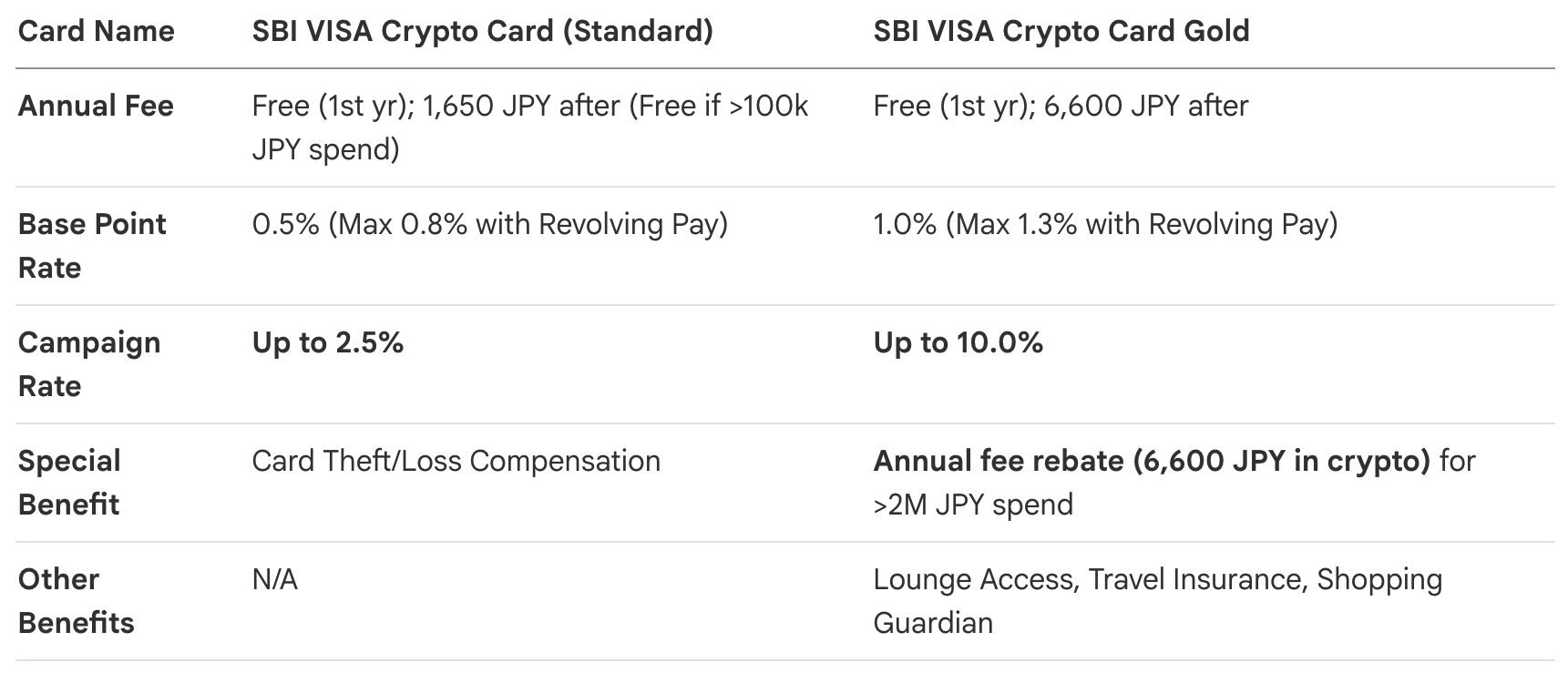
The final layer of SBI’s vertical integration is the launch of the "SBI VISA Crypto Card," a collaborative effort between SBI VC Trade, Aplus, and Visa. This product represents a domestic first: a credit card that rewards users with crypto assets for traditional spending and, significantly, for credit-based investment trust savings via SBI Securities.
By automating the exchange of loyalty points into Bitcoin, Ethereum, or Ripple without transaction fees, SBI is pivoting crypto from a speculative asset into a passive accumulation mechanism for the mass market. The group is leveraging aggressive campaign rates—up to 10%—to capture market share and onboard users into the wider SBI digital ecosystem.
Supported Assets for Automatic Exchange
Upon application, cardholders select one of the following assets for their rewards:
- Bitcoin (BTC): The premier "Digital Gold" and primary target for institutional capital.
- Ethereum (ETH): The leading smart-contract platform offering smart-contract utility and staking potential.
- Ripple (XRP): A high-speed asset optimized for the efficiency of international remittances.
Strategic Outlook: "Financial Innovator" Mandate
These announcements represent the structural realization of SBI’s "Financial Innovator" philosophy. By integrating digital assets across its five core business segments—Financial Services, Asset Management, PE Investment, Digital Assets, and Next-Generation Business—SBI is positioning itself as the architect of Japan’s future financial landscape.
Within this framework, SBI VC Trade remains the group's licensed front-line for crypto exchange and electronic payment services, while Aplus provides the consumer finance engine necessary to scale these products. The overarching goal is the creation of a seamless, customer-centric financial ecosystem that transcends traditional banking boundaries.
 Norbert Gehrke