Daiichi Life Accelerates Toward 2030: A ¥1.5 Trillion Gambit for Global Top-Tier Status

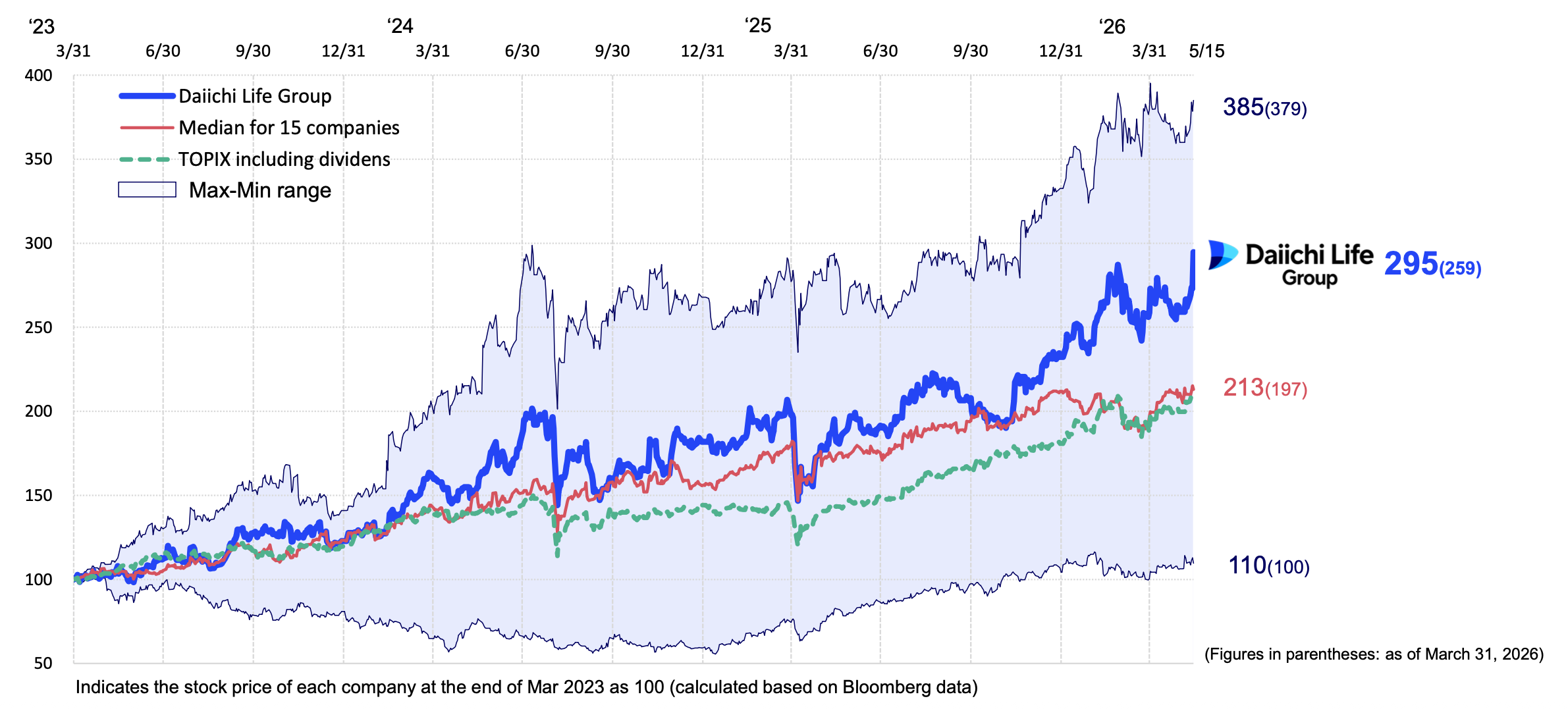
Daiichi Life Group has positioned its recent financial performance as a high-velocity springboard for radical global expansion. By capitalizing on favorable market conditions and aggressive internal restructuring, the company has cleared its previous Medium-Term Plan (MTP) hurdles well ahead of schedule. This early victory provides management the strategic latitude to transition to an offensive global strategy. For investors, the most compelling evidence of this shift is the Group's Relative Total Shareholder Return (TSR): since March 2023, Daiichi Life has ranked 4th among 14 global peers, outperforming the TOPIX by a staggering 195%.
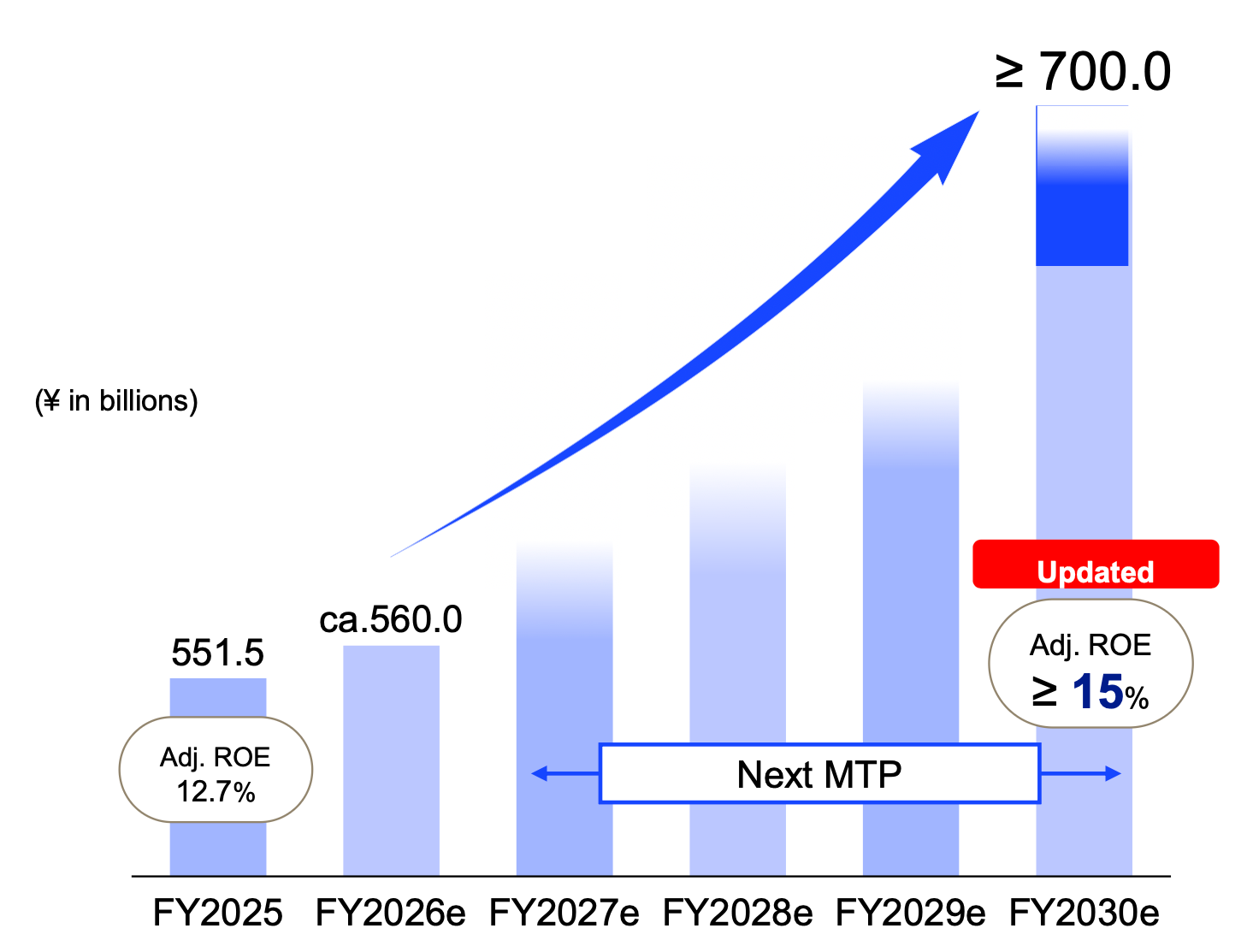
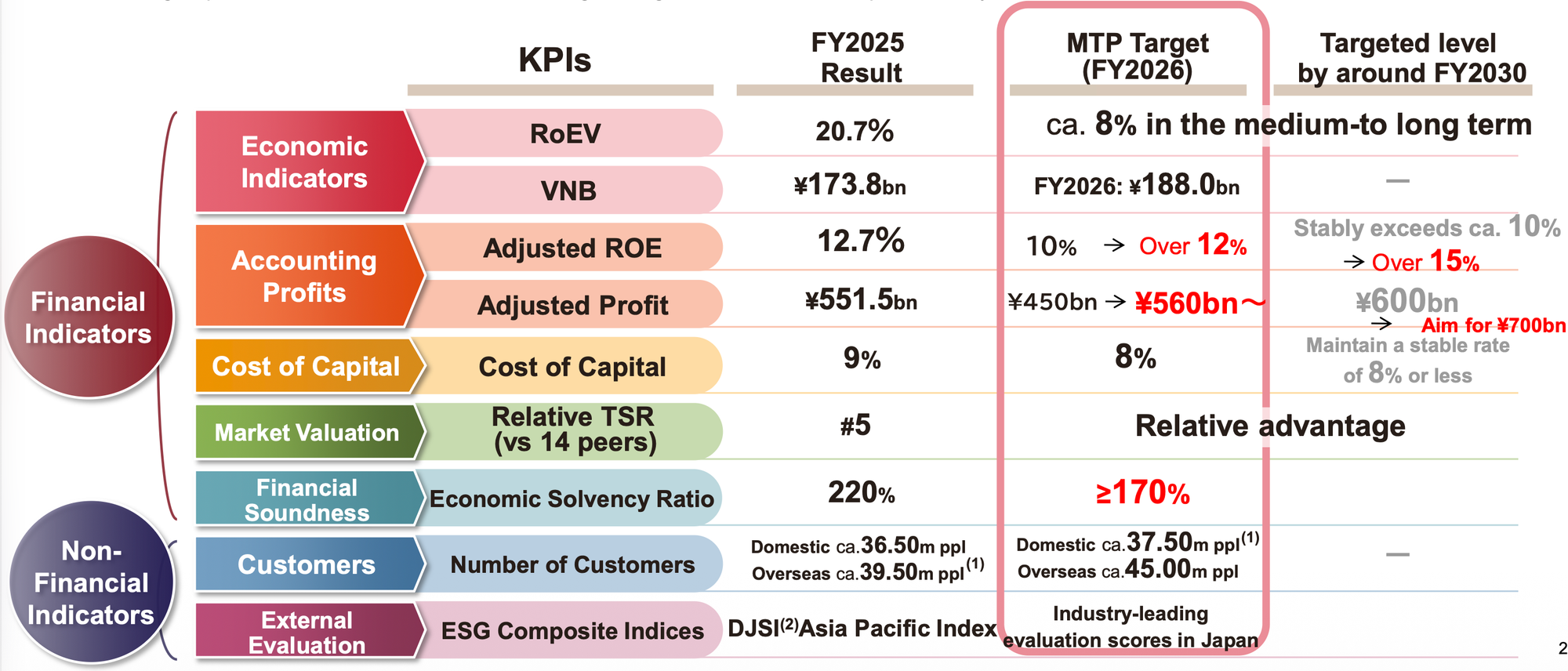
This "ahead of schedule" achievement is anchored by record-breaking financials. The Group reported an FY2025 Adjusted Profit of ¥551.5 billion, comfortably surpassing the initial ¥500 billion target, while Adjusted ROE reached 12.7%. These results were significantly bolstered by domestic interest rate hikes and a robust market environment that expanded positive spreads. Such financial strength justified a major upward revision in shareholder commitments, specifically increasing the dividend payout ratio to 50% effective from the FY2026 interim dividend. Having reached these milestones early, the Group is now looking past its current framework toward a more expansive "Vision for FY2030."
1. Strategic North Stars: Financial Targets for 2030
The "Vision for FY2030" serves as the Group’s new strategic compass, designed to secure a permanent seat among the global insurance elite.
Primary Financial Targets for FY2030:
- Group Adjusted Profit: Target of ¥700.0 billion or more.
- Adjusted ROE: Upward revision to 15% or more.
- Market Capitalization: A milestone target of ¥10 trillion.
The leap from the current market capitalization of approximately ¥6 trillion to the ¥10 trillion goal reflects a massive shift in scale. To achieve this, management is focusing on high-quality growth indicators that prioritize sustainable earning power over one-time market gains.
2. Redefining Profitability: The Shift to "Group Core Profit"
To enhance transparency and enable direct comparison with global peers reporting under IFRS, Daiichi Life is introducing "Group Core Profit." This indicator strips away market volatility—specifically capital gains and losses—to reveal the Group's underlying earnings power. A central component of this transition is the disciplined reduction of market risk; management has set a concrete target to reduce the market value of domestic equities to ¥2.8 trillion or below by the end of FY2026.
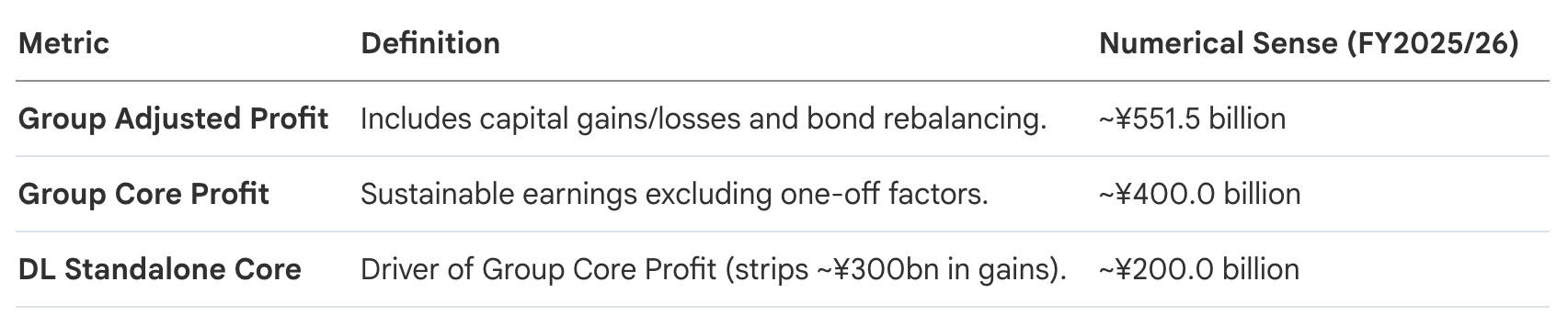
Currently, a significant "Core Profit Gap" exists between Adjusted and Core metrics, largely due to active equity sales and bond rebalancing. The strategic goal is to narrow this gap by 2030. Once the concentrated period of domestic stock sales is finalized, Core Profit is expected to rise and align with Adjusted Profit, proving that growth is fueled by operational excellence rather than portfolio liquidation.
3. The ¥1.5 Trillion Inorganic Growth Engine
Management has identified a ¥100 billion "organic profit gap" between projected growth and the ¥700 billion target for 2030. To bridge this, the Group is deploying a ¥1.5 trillion inorganic growth engine, focusing on "capital-light" acquisitions that prioritize immediate cash flow over long-term value accretion.
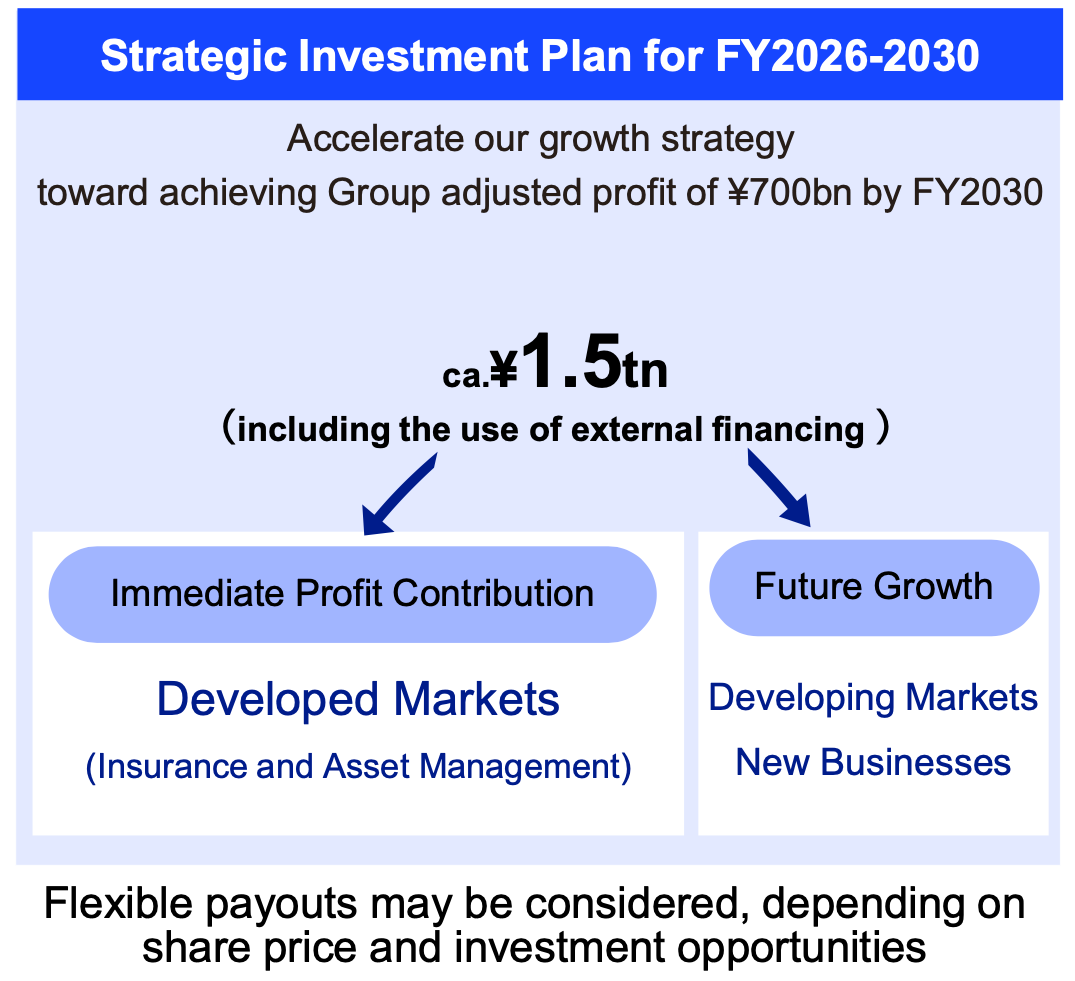
Investment Framework (FY2026–FY2030)
- Total Budget: ¥1.5 trillion.
- Geographic Allocation: 70% to developed markets (US/Oceania) for early monetization; 30% to emerging markets (Asia) and non-insurance domestic areas.
- Deal Structure: Plan for two "anchor" transactions of ~¥500 billion each. Crucially, one is expected in the first half of the five-year period and the second in the latter half.
- Asset Management Growth: Organically, this segment is projected to grow from ¥20 billion to ¥40–50 billion by 2030.
The Group is also focusing on synergy realization. While global insurance synergies are complex, management sees significant potential in the Mekong region due to similar market characteristics and in the Insurance/Asset Management crossover—exemplified by Canyon Partners managing alternative assets for Protective Life (PLC).
4. Operational Excellence: The ¥100 Billion AI and Digital Pivot
Facing a shrinking Japanese market and declining policies in force, Daiichi Life is pursuing a productivity-led transformation of its domestic model. This is positioned as a structural overhaul. The centerpiece is a ¥100 billion investment in AI, data infrastructure, and system modernization over the next five years.
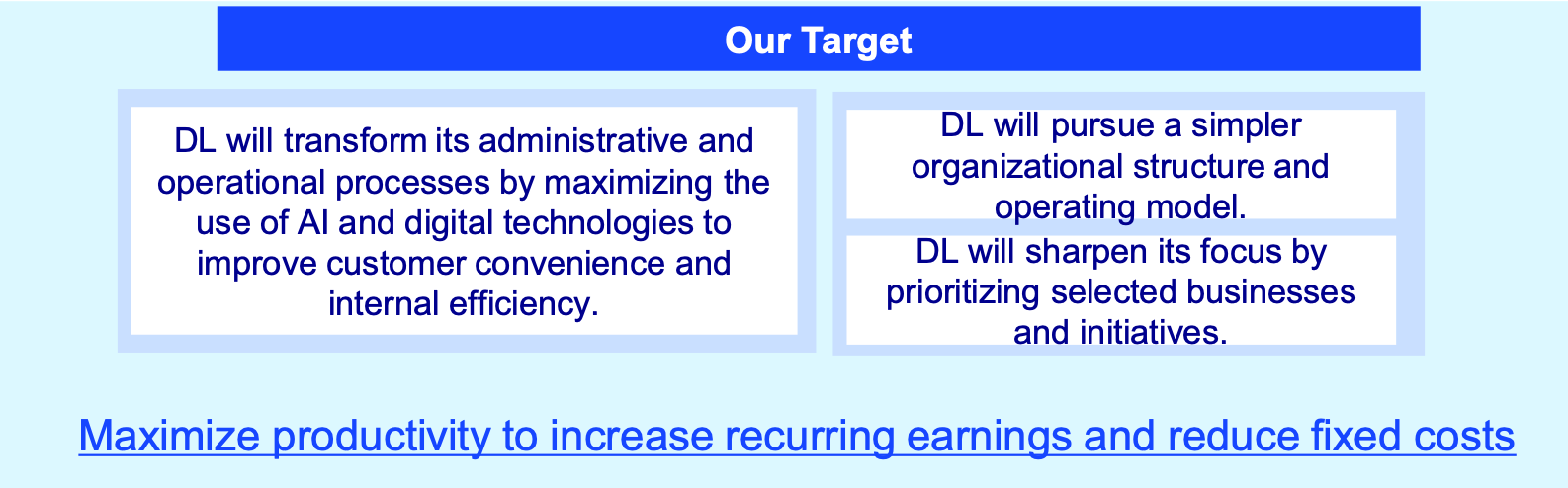
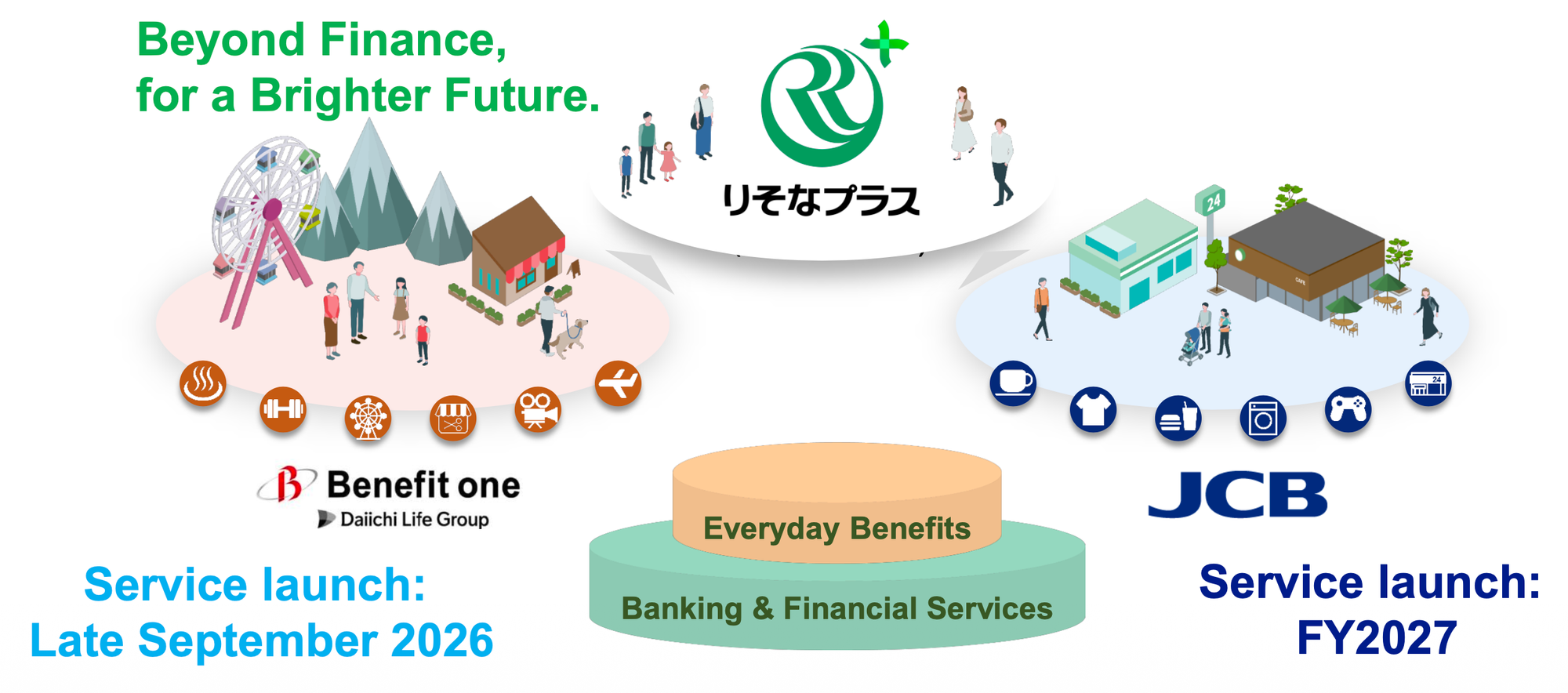
The Group is adopting a "Unit Cost" management approach to visualize efficiency on a per-policy basis. While this front-loaded investment will have a ¥5.0 billion negative impact on the Value of New Business (VNB) and domestic profits in FY2026, the long-term goal is a sustainable annual cost reduction of ¥50 billion (20% of existing costs) by FY2030. Additionally, the Group's non-insurance pivot includes a specific profit target for Benefit One, which is expected to exceed ¥20 billion by 2030.
5. Capital Discipline and Shareholder Value
Daiichi Life’s strategy balances financial soundness with the mandate for a 15% ROE. The primary tool for this balance is the Economic Solvency Ratio (ESR).
Economic Solvency Ratio (ESR) Policy:
- Lower Bound: Firmly maintained at 170%.
- Upper Bound: Explicitly removed. Management expects the ¥1.5 trillion investment to naturally lower the ESR by 30–40 percentage points, making a 200% ceiling a redundant constraint that would hinder large-scale M&A.
- Current Standing: 220% (as of March 2026).
Management views any ESR level above 170% as a "green light" for flexible shareholder returns. In the absence of attractive M&A pipelines, surplus capital will be diverted to opportunistic share buybacks. CEO Tetsuya Kikuta has made it clear: the recent record profits are not the finish line, but the "starting line" for global top-tier status. By 2030, the Group aims to prove that a Japanese insurer can indeed compete—and win—on the global stage.
 Norbert Gehrke