From Balance Sheet Repair to Outward FDI: Ueda Decodes Japan's Persistent External Surplus and Corporate Saving Paradox

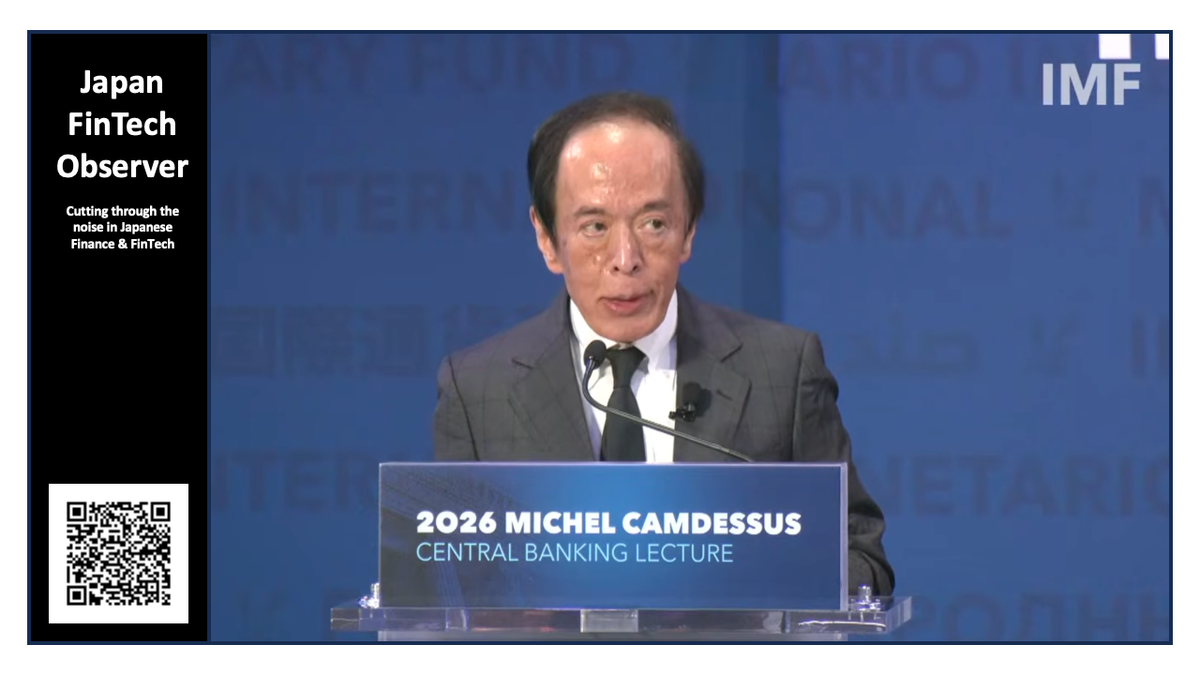
The 13th Michel Camdessus Central Banking Lecture at the International Monetary Fund (IMF) convened against a fraught macroeconomic landscape defined by severe geopolitical tensions, energy supply shocks, an unprecedented global artificial intelligence investment surge, and widening international capital imbalances. Delivered at the IMF headquarters in Washington, D.C., the address by Bank of Japan (BOJ) Governor Kazuo Ueda provided both a historical diagnosis of Japan’s structural external evolution and an insider’s operational assessment of the BOJ's delicate monetary policy normalization.
The relevance of Governor Ueda’s address lies in its deconstruction of how domestic microeconomic balance sheet repair, enterprise saving behaviors, and demographic shifts alter national external accounts over multiple decades. As central banks across advanced economies grapple with stubborn post-pandemic inflation, volatile exchange rates, and structural productivity shifts, Japan’s multi-decade evolution from a merchandise exporter to the world's premier asset creditor offers critical insights for global financial stability.
1. Fischer’s Protégé at the Helm: Ueda’s Institutional Journey
In her welcoming remarks, IMF Managing Director Kristalina Georgieva framed the event by highlighting Governor Ueda’s rare synthesis of rigorous academic theory and practical monetary stewardship. Ueda’s academic foundation includes an undergraduate background in mathematics and economics at the University of Tokyo, followed by a PhD in economics from the Massachusetts Institute of Technology (MIT) in 1980, completed under the supervision of former Fed Vice Chair and IMF First Deputy Managing Director Stanley Fischer. Ueda’s distinguished academic career spanned professorial appointments at the University of British Columbia, Osaka University, and the University of Tokyo from 1989 until his retirement in 2017. His academic achievements earned him dual Professor Emeritus honors—from the University of Tokyo in 2017 and Koritsu Women’s University in 2023.
During his initial appointment to the BOJ’s Policy Board from 1998 to 2005, Ueda was instrumental in crafting pioneering monetary mechanisms to combat entrenched deflation and the zero lower bound (ZLB). His early analytical work established the intellectual framework for conditional forward guidance and unconventional balance sheet management later deployed by global central banks during the 2008 Global Financial Crisis and the COVID-19 pandemic.
Since assuming the governorship on April 9, 2023, Ueda has orchestrated Japan's exit from decades of radical monetary accommodation, guiding the central bank through the termination of negative interest rates and Yield Curve Control (YCC). Georgieva observed that Ueda executed this high-stakes normalization against a backdrop of acute global uncertainty:
"What is so impressive, Governor Ueda, is how your leadership led to the Bank of Japan exiting negative interest rates and Yield Curve Control, successfully navigating one of the most delicate moments in modern central bank history... Times like this require an ability to see through uncertainty and the capacity to adapt—the very qualities he demonstrated in abundance throughout his career." — Kristalina Georgieva, IMF Managing Director
Georgieva highlighted that rising global imbalances pose severe systemic risks, noting that history demonstrates how widening imbalances often precede abrupt capital flow reversals, sectoral dislocations, or full-scale financial crises. She recalled Ueda’s early academic research from the late 1980s, which analyzed Japan’s trade surpluses through the lens of saving-investment identities and fiscal dynamics, demonstrating that exchange rate adjustments alone cannot resolve underlying macroeconomic imbalances. This analytical framework provided the ideal backdrop for Ueda's deep dive into Japan's four-decade transformation.
2. The Presentation: Deconstructing Japan’s Persistent External Surplus
2.1 Re-Examining External Imbalances Beyond Demographics
In his formal presentation, Governor Ueda re-examined the persistent nature of Japan’s current account surplus, looking beyond standard trade balance mechanics and demographic models. Traditional international trade frameworks often explain external surpluses as products of persistent exchange rate undervaluation or demographic aging profiles. However, Ueda demonstrated that the structural transformation of Japan’s external accounts over the past forty years has been fundamentally driven by the evolving balance sheets, cash-flow management, and capital allocation of the non-financial corporate sector. Diagnosing persistent capital flows requires an examination of enterprise-level balance sheet repair and corporate saving persistence.
Japan’s current account trajectory underwent a structural shift in the early 1980s. Prior to that period, the current account swung between net deficits and surpluses across short multi-year business cycles. However, over the subsequent four decades, Japan established a chronic current account surplus ranging consistently between 2% and 4% of gross domestic product (GDP).
While the aggregate current account surplus remained stable over this multi-decade period, its internal composition underwent an absolute structural inversion:
- Merchandise Goods Trade: The merchandise trade balance, which served as the primary engine of Japan's current account surplus in the mid-1980s—peaking at over 4% of GDP—steadily eroded over subsequent decades and ultimately transitioned into a net deficit.
- Primary Income Account: Net primary income earned from overseas direct investments and portfolio holdings was negligible during the mid-1980s. Over the following four decades, it expanded continuously, ultimately exceeding 6% of GDP.
Consequently, foreign investment income replaced merchandise exports as the main pillar of Japan’s external account.
2.2 Historical Parallel: Britain and Japan under the Balance of Payments Stages Hypothesis
To place Japan's transition in context, Ueda drew a historical parallel between modern Japan and the United Kingdom during the late 19th and early 20th centuries. Following the Industrial Revolution, Great Britain initially operated massive trade and current account surpluses as the "workshop of the world." However, as the British industrial economy matured around the turn of the 20th century, its merchandise trade balance shifted into persistent deficit.
Despite this merchandise trade gap, high returns generated by Britain's foreign asset holdings offset the deficit, driving the current account surplus to historic peaks. Around the turn of the 20th century, Britain’s net foreign investment income approached 8% of national income. Modern Japan has followed a structurally congruent path, illustrating the classic Balance of Payments Stages Hypothesis by evolving from an industrial exporter into a global creditor.
2.3 Breakdown of the National Accounting Identity (CA = S - I)
To explain the micro-foundations of this transition, Ueda analyzed the fundamental macroeconomic identity, where the current account surplus (CA) equals gross national savings (S) minus gross domestic investment (I):
CA = S - I
Standard neoclassical growth theory posits that as a nation's population ages, households draw down their life-cycle savings to finance retirement. This household de-saving lowers aggregate national savings and drives the current account toward deficit. In Japan, sector-by-sector empirical data reveals that while households and governments behaved according to theoretical models, the non-financial corporate sector completely upended consensus expectations:
- Household Sector: Japanese households adhered to standard life-cycle models. Household savings, which were the primary driver of the current account surplus through the early 1990s, fell steadily over the subsequent three decades as demographic aging accelerated.
- Government Sector: The public sector accumulated persistent, expanding fiscal deficits, acting as a structural net drain on national savings.
- Non-Financial Corporate Sector: Standard demographic models failed because they overlooked structural changes in corporate behavior. Following the collapse of the domestic asset price bubble around 1990, corporate fixed investment rates contracted sharply over two decades, while corporate savings trended upward.
By the late 1990s, Japanese non-financial corporations flipped from their traditional status as net domestic borrowers to chronic, massive net savers. This enterprise-level saving surplus completely offset household de-saving and public fiscal deficits, preserving the overall national saving surplus. This corporate behavior invalidated consensus predictions made by prominent macroeconomists in the late 1990s and early 2000s that Japan’s current account surplus would swiftly disappear.
3. The Presentation: Corporate Balance Sheet Scarring, Outward FDI, and Turning Points
3.1 The Post-Bubble Hangover and Balance Sheet Repair
To explain why Japanese enterprises became persistent net savers, Governor Ueda examined the structural fallout from the late 1980s asset bubble collapse. The macroeconomic backdrop of the mid-1980s was characterized by severe international trade friction surrounding Japan’s rising merchandise surplus. The 1985 Plaza Accord orchestrated a rapid appreciation of the yen against the US dollar. In response, the Japanese government published the landmark 1986 Maekawa Report, committing to expand domestic demand through expansionary macroeconomic policy, structural reforms, and reduced working hours aimed at boosting domestic consumption. Concurrently, aggressive monetary easing was deployed to offset the drag of yen appreciation.
These expansionary policies inadvertently fueled asset price inflation in domestic equity and real estate markets during the late 1980s. When the bubble burst around 1990, the current account surplus temporarily narrowed as domestic investment collapsed. However, the resulting structural damage to corporate balance sheets altered enterprise financial behavior for decades.
The post-bubble period saw a severe drop in the return on domestic capital, which plummeted during the 1990s and failed to regain its pre-bubble heights—in contrast to the relative stability of capital returns in the United States over the same period. Multiple structural factors contributed to this drop, including the end of the post-war catch-up phase, statutory reductions in working hours, and shifting demographics. However, the asset collapse played the decisive role: falling collateral values crippled both corporate balance sheets and bank solvency, culminating in the late-1990s domestic banking crisis.
When the bubble burst, Japanese enterprises faced an arithmetic crisis: collateral asset values plummeted while nominal debt liabilities remained intact. This forced firms into a multi-decade prioritization of debt reduction over capital expansion:
- Fixed Investment Retrenchment: Domestic business fixed investment contracted continuously from its 1990 peak through 2010.
- Asset Liquidation & Debt Repayment: Corporations curtailed financial asset accumulation and, by the late 1990s, actively liquidated assets to pay down corporate debt. Net corporate liability changes turned positive from the late 1990s through the early 2010s (where positive net liability change denotes net debt repayment).
- Defensive Corporate Risk Culture: By freezing domestic capital expenditures and directing retained earnings toward debt clearance, the non-financial corporate sector generated a massive financial surplus. This risk-averse stance persisted long after corporate solvency was restored and the banking crisis resolved.
3.2 The 2011–2012 Pivot to Outward Foreign Direct Investment
A structural turning point occurred around 2011–2012. While domestic balance sheet repair had wound down in stages through the mid-2000s (a recovery briefly interrupted by the 2008 Global Financial Crisis), domestic investment and corporate borrowing began to recover by 2011. However, corporate savings remained exceptionally high.
Instead of reinvesting cash reserves into domestic projects, Japanese multinational corporations redirected net savings into outward Foreign Direct Investment (FDI) and cross-border M&A:
- Dominance of FDI over Portfolio Flows: Post-2012, outward direct investment eclipsed portfolio investment as the primary vehicle for Japanese capital flight.
- Resilient Overseas Return Yields: Yields on outward FDI remained above 8% for much of the post-2012 period, outperforming domestic capital returns.
- Compounding Primary Income: Earnings generated by foreign affiliates were largely retained and reinvested abroad. Retained overseas earnings automatically expanded Japan’s primary income surplus, while their reinvestment was recorded as fresh FDI.
A 2024 BOJ corporate survey revealed that while debt repayment dominated executive decisions in the 1990s and 2000s, corporate leadership in the 2010s prioritized building precautionary cash buffers and expanding overseas market access. Weak domestic growth expectations—initially formed during post-bubble balance sheet repair—were reinforced by population aging, creating a strategic imperative to deploy corporate capital abroad.
3.3 Empirical Evaluation of the Demographic Argument
Ueda addressed an alternative neoclassical growth and trade model, which asserts that a shrinking working-age population makes physical capital abundant relative to labor. Theoretically, rising domestic real wages depress the domestic marginal product of capital, prompting forward-looking firms to export capital abroad, expanding the primary income surplus.
Ueda noted that while this theoretical model is elegant, it carries a crucial empirical requirement: it requires Japan’s domestic labor market in the 1990s and 2000s to have been exceptionally tight. The historical data demonstrates the opposite:
- The Bank of Japan’s estimated output gap remained negative almost continuously between 1993 and 2012.
- Unemployment averaged above 3% across those two decades—an elevated level by historical Japanese standards.
Consequently, demographic contraction impacted investment dynamics primarily through demand-side expectations. Anticipation of a shrinking domestic market lowered the expected return on domestic capital, accelerating outward FDI decades before physical labor shortages emerged on the factory floor.
3.4 The 2023–2024 Domestic Turning Point
Data from 2023 and 2024 indicates a potential break in domestic capital allocation. In the 2024 BOJ corporate survey, over 70% of Japanese firms reported investing more actively in domestic capital projects in 2023–2024 than in prior years.
This domestic investment resurgence is driven by four structural catalysts:
- Physical Labor Scarcity: Demographics transitioned from a long-term demand expectation to an immediate supply-side constraint, compelling domestic capital deepening and labor-saving automation.
- Strategic Supply Chain Reshoring: Large manufacturing enterprises are reallocating capital to reshore critical production capacity amidst geopolitical realignments.
- Digital Transformation (DX) & Decarbonization: Corporate mandates for digital modernization and green infrastructure are driving domestic capital commitments.
- Credit Expansion: Post-pandemic fixed investment surpassed its mid-1990s peak, supported by commercial bank lending growth exceeding 5%—the fastest pace in three decades—and assisted by Japan's exit from deflation into moderate inflation.
While demographic desaving by households and higher domestic corporate capex exert narrowing pressures on Japan's net national saving surplus, Ueda concluded that Japan’s massive net foreign asset base and the return differential favoring foreign investments ensure that primary income will remain an enduring pillar of Japan’s external balance for years to come.
4. The Q&A Session: Monetary Normalization, Inflation Dynamics, and Policy Tools
Following the lecture, Governor Ueda engaged in an interactive discussion moderated by IMF Managing Director Kristalina Georgieva. The dialogue addressed policy normalization, yen-funded carry trades, inflation targets, historical evaluations of unconventional monetary policy, and systemic cyber vulnerabilities.
4.1 Supply Chain Geopolitics vs. Domestic Reshoring
Addressing Georgieva's inquiry on whether global supply chain fragmentation would force Japanese multinationals to re-shore production, Ueda offered a measured assessment. While global enterprises are restructuring supply chains to prioritize operational resilience over pure cost efficiency, this does not automatically trigger domestic reshoring:
"Many global companies have been trying for some time to adjust their supply chains to make them more resilient at the expense of efficiency for obvious geopolitical reasons. But this doesn't necessarily mean supply chains owned by Japanese companies are adjusted to increase domestic investment. It could just mean more investment in Asian Country A instead of Asian Country B." — Kazuo Ueda, Governor of the Bank of Japan
Concurrently, public policy initiatives—including targeted subsidies framed within the Japanese Diet’s 2027 budget—are designed to stimulate strategic domestic investment in high-tech and energy-transition sectors.
4.2 The 2% Inflation Milestone and Social Norms
Ueda addressed the BOJ’s formal declaration that underlying inflation has reached the long-sought 2% target. When Georgieva asked whether the internal mood at the BOJ was celebratory upon reaching the 2% milestone, Ueda reflected on the atmosphere within the Policy Board:
"I think the general mood within and outside the bank has been that, yes, you reached a significant milestone, but there's a lot remaining—which means it's necessary to keep it there for years to come through appropriate adjustment of monetary policy." — Kazuo Ueda, Governor of the Bank of Japan
Ueda noted that while base wages are growing between 2.5% and 3.0%—a pace consistent with 2% price stability—a 2% inflation environment has not yet fully transitioned into an ingrained "social norm." Japanese households, accustomed to decades of zero inflation, still complain that price increases between 1.5% and 3.0% represent a burden.
Conversely, nominal rate hikes up to the 1.25% policy rate encountered minimal public backlash. Ueda attributed this public tolerance to suppressed real interest rates, which have cushioned borrowers against the impact of rising nominal rates.
Addressing foreign exchange dynamics and yen-funded carry trades, Ueda delivered a concise summary of the central bank's objective:
"We carry out monetary policy normalization in an attempt to achieve price stability. If that's achieved, I would say nominal variables will be less of an impediment to efficient resource allocation, including capital flows. How about that?" — Kazuo Ueda, Governor of the Bank of Japan
4.3 Retrospective on Unconventional Monetary Policy
Ueda offered a candid evaluation of unconventional monetary tools—including Quantitative and Qualitative Monetary Easing (QQE), Negative Interest Rate Policies (NIRP), and Yield Curve Control (YCC)—pioneered during his earlier tenure on the Policy Board and deployed extensively over the past two decades.
Recalling his early warnings from central banking conferences in the late 1990s, Ueda delivered a sharp verdict on the operational realities of the zero lower bound:
"What I said almost 30 years ago in one of the conferences I attended in the United States is still true: I said the situation of a zero interest rate is a lot more painful than you central bankers might think... Unconventional monetary policy tools have had some positive impacts, but they have not been, as many would say, perfect substitutes for rate cuts in positive territory." — Kazuo Ueda, Governor of the Bank of Japan
Ueda stated that while the BOJ does not rule out redeploying unconventional tools should severe economic shocks emerge, any future deployment must be designed to minimize negative side effects, particularly market illiquidity and price distortion.
5. The Q&A Session: Global Spillovers, AI Macroeconomics, Cyber Risks, and Institutional Guidance
5.1 Energy Shocks and International Central Bank Spillovers
Turning to global supply shocks, Ueda analyzed Japan’s vulnerability to energy price volatility. Driven by imported energy costs, headline consumer price inflation in Japan stands around 3%. Assuming energy prices stabilize, the BOJ projects headline consumer inflation will moderate, realigning with underlying inflation near the 2% target by late 2027 or 2028.
Ueda emphasized that the BOJ closely monitors policy shifts by major peer central banks, including the Federal Reserve, the European Central Bank, and the Bank of England. Beyond signaling peer evaluations of macroeconomic conditions, foreign rate adjustments generate immediate spillovers through global asset price recalibrations, yield spreads, and exchange rate movements, all of which directly influence Japanese inflation and growth dynamics.
5.2 Macroeconomic Dimensions of Artificial Intelligence
Ueda categorized the macroeconomic expansion of Artificial Intelligence (AI) into short-term aggregate demand impulses and long-term structural supply uncertainties:
- Short-Term Demand Impulse: In the near term, global AI infrastructure spending represents a positive demand shock, lifting Japanese technology exports, capital equipment manufacturing, and industrial output.
- Long-Term Supply & Productivity Uncertainties: Long-term supply side dynamics remain uncertain. Citing US labor market data, Ueda noted that across AI-adopting corporate sectors, output has expanded while sector employment has declined since 2022–2023, signaling rising capital productivity alongside potential labor displacement.
- Japan's Institutional Paradox: Japan presents a unique structural environment for AI adoption. Severe demographic labor scarcity could allow Japanese firms to deploy AI automation without triggering technological unemployment. Conversely, institutional rigidities and traditional labor market structures could hinder the organizational realignment required to capture potential productivity gains.
5.3 Financial System Cyber Security Risks
Addressing financial stability, Managing Director Georgieva raised concerns regarding cyber threats, referencing European experiences with network security breaches. Ueda confirmed that Japan has faced a sharp escalation in sophisticated cyber attacks over recent months:
"We have had sharp increases in cyber attacks during the last month or two... We've been identifying vulnerable areas and applying security patches. But some sectors, like small firms, small banks, or smaller shared service providers, haven't done enough. These are being attacked and have had larger negative effects on the economy than people thought. We have to support efforts by these institutions to protect their systems." — Kazuo Ueda, Governor of the Bank of Japan
Ueda warned that smaller regional financial institutions and shared service providers represent systemic vulnerabilities, emphasizing the need for coordinated technical safeguards and shared defense infrastructures across the banking system.
5.4 Central Bank Communication and Institutional Stewardship
Addressing central bank communication strategy, Ueda cautioned against both opacity and over-signaling.
Ueda stated that communication must balance reducing information asymmetry against the moral hazard created when central banks over-signal future policy paths. By designating "underlying inflation" as the core anchor for policy normalization, the BOJ aims to provide transparent guidance while preserving market-driven price discovery.
5.5 Career Counsel for Young Macroeconomists
Concluding the session, Georgieva playfully noted that Ueda’s academic credentials—including his dual Professor Emeritus titles—might suggest he was reflecting from the "twilight of his career." Ueda responded with operational advice for aspiring macroeconomists and prospective central bankers:
"I think it's a good thing for people to learn many theories of the economy, markets, and the financial system. But none of the theories fit all circumstances. So you have to be flexible in choosing an appropriate model that fits the circumstances you are in... In many cases, you don't have a very good model to analyze the situation—then try to come up with a refinement of existing models by yourself. In many cases, you can't do so: then exercise good judgment. That's all I can say." — Kazuo Ueda, Governor of the Bank of Japan
As Japan advances through monetary policy normalization, its four-decade macroeconomic transition demonstrates that external adjustments depend on enterprise balance sheet repair, structural capital allocation, and evolving demographic realities—providing an enduring case study for central banks navigating structural transitions in the global economy.
 Norbert Gehrke