Japan’s Capital Markets — Where Next?

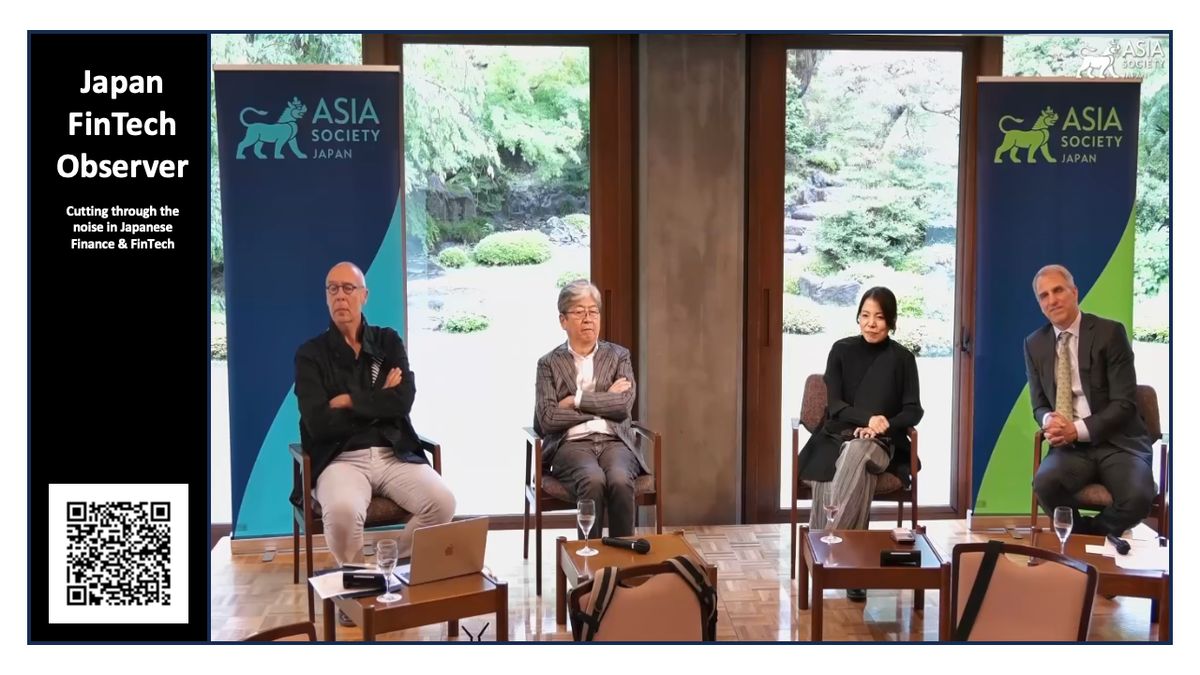
In May, the Asia Society Japan hosted a discussion to examine the forces reshaping corporate Japan, with the following popular panelists participating:
- Jesper Koll (Moderator): A well-known economist, strategist, and prominent "Japan optimist." He has spent decades analyzing Japanese macroeconomics and capital markets. He frames the discussion, focusing on the macro shifts from "insider capitalism" to "outsider capitalism" and the strength of the Japanese economy.
- Oki Matsumoto: A pioneer in the Japanese financial industry with nearly 40 years of experience. He began his career at Goldman Sachs, co-founded the Monex Group (a major online brokerage in Japan), and has served on the board of the Tokyo Stock Exchange and Mastercard. He currently runs a retail-focused Japanese activist fund and provides a unique insider-outsider perspective on leadership changes and fiduciary duties in Japan.
- Asumi Ota: A venture capitalist and expert in the Japanese startup ecosystem. She started her career at Nomura in 2008 before pivoting into the venture capital sector. She provides direct insight into how the startup landscape has matured over the last decade, the influx of government grants, the shifting dynamics of M&A exits, and the challenges founders face with new tax reforms.
- Andrew McDermott: A seasoned international value and activist investor who has been active in Japan for over 20 years, executing over 90 campaigns globally. He is the founder of Mission Value Partners. Andrew offers a critical, boots-on-the-ground perspective, championing the engineering excellence of large Japanese public corporates while being highly critical of over-regulation, the domestic asset management monopoly, and Western-style financial engineering.
The following blog post presents the highlights of the discussion.
The Shift to "Outsider Capitalism"
Japan’s macroeconomic fundamentals remain exceptionally stable, characterized by structural balance of payment surpluses and an expansive pool of private wealth—generating 140 yen of private savings for every 100 yen of public debt. However, a sweeping structural transformation is redefining the capital markets.
The historical model of "insider capitalism," once anchored by deep corporate cross-shareholdings that peaked at 50%, has systematically unwound down to roughly 10%. Taking up the slack, global institutional investors now command a 35% ownership stake in corporate Japan, alongside state-backed asset pools like the Government Pension Investment Fund (GPIF) and the Bank of Japan at 16%. This shift has driven significant improvements in corporate metrics:
- Earnings per Share (EPS): Up nearly four-fold from historical lows.
- Return on Equity (ROE): Reached a structural baseline near 10%.
- Market Scale: The number of listed companies has roughly doubled to nearly 4,000.
- Corporate Control: A newly active market has emerged, with approximately 7% of listed entities receiving takeover bids.
Generational Shift and Activism Accelerating Change
Market experts point to a profound generational transition in corporate leadership as the primary catalyst for modern reforms. The departure of "old guard" executives—hastened by the disruption of the COVID-19 pandemic—has cleared the way for a younger tier of management.
These current CEOs are demonstrably more receptive to direct activist engagement and outsider perspectives. This cultural shift is actively tackling the traditional "conglomerate discount" of Japanese equities, with leadership increasingly willing to carve out underperforming assets and focus corporate strategies on core global competencies.
The Venture Ecosystem and Startup 2.0
Japan’s venture capital space has experienced exponential growth, with domestic funding tracking at approximately 760 billion yen—a four-fold increase over the past decade.
- Incentives and Funding: Large scale government grants (e.g., non-dilutive awards up to $20 million) are anchoring deep tech and engineering innovations. Global VC funds are aggressively opening local branches.
- Exit Environment: The landscape has flipped from historical trends. M&A exits now outnumber IPOs, comprising an estimated 60% to 80% of total venture liquidations as legacy corporations actively acquire startups to inject external innovation into their operations.
- Friction Points: The sector faces structural headwind concerns, notably a new tax reform that elevates the capital gains tax rate to 35% on corporate exits exceeding 340 million yen, which founders warn could trigger talent flight overseas.
The Governance and Regulation Debate
While market performance is broadly viewed with optimism, the institutional mechanisms guiding the next stage of development remain highly contested among asset managers and regulatory bodies:
- TSE Capital Efficiency Mandates: The Tokyo Stock Exchange’s aggressive "Price-to-Book above 1.0" rule has drawn criticism from international asset managers. Skeptics argue regulators should not dictate market valuations or force consolidation, stressing that Japan's deep-value corporate strengths stem from industrial engineering execution and physical asset capabilities rather than strict compliance metrics.
- Fiduciary Gaps and Market Rigging: Panelists highlighted a persistent lack of strict, legal minority shareholder protections (analogous to Western Revlon-type doctrines) on boards, leaving firms vulnerable to undervalued private equity buyouts. Concerns remain elevated over systemic inefficiencies in domestic asset distribution, which continues to be dominated by a consolidated brokerage network.
 Norbert Gehrke