SBI Holdings Completes Acquisition of Cambodia Unit in USD 100m Expansion Push

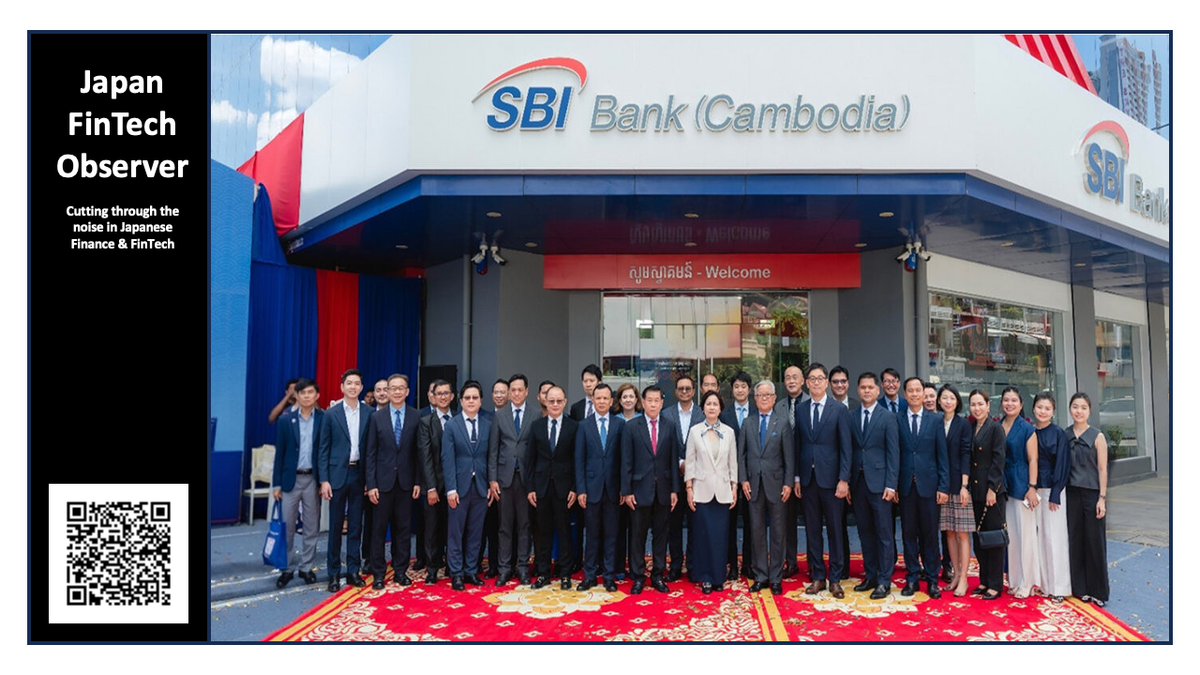
Tokyo-based financial services giant SBI Holdings has finalized its full acquisition of SBI LY HOUR Bank PLC, rebranding the institution as SBI Bank (Cambodia) PLC. The transaction marks the final transition of the former microfinance institution into a wholly owned subsidiary of the Japanese conglomerate, following an initial restructuring phase completed in October 2025.
Capital Injection and Strategic Scaling
To anchor the rebranding and drive long-term growth in the region, SBI Holdings has extended a $100 million credit facility to the Cambodian unit. The capital injection is intended to bolster the bank's capacity for sustainable growth and scale its digital banking pipeline targeting underserved, economically active commercial and consumer segments.
As a consolidated entity, SBI Bank (Cambodia) now reports:
- Total Assets: Surpassing $1.12 billion.
- Physical Infrastructure: A nationwide footprint of 51 domestic branches.
- Operational Mandate: Blending physical branch networks with advanced FinTech and digital banking infrastructure.
Parent Company Balance Sheet and FinTech Pipeline
The acquisition integrates the Cambodian operation directly into SBI Holdings’ global ecosystem, which spans 20 countries and 635 subsidiaries.
- Asset Portfolio: As of December 31, 2025, parent company SBI Holdings managed total assets exceeding $223.8 billion
- Digital Asset Expansion: Operating across five core segments—including financial services, asset management, and crypto-assets—the Tokyo-headquartered group is positioning itself as a first-mover in institutional blockchain applications.
Regulatory Backdrop

At an official inauguration ceremony in Phnom Penh, H.E. Dr. Chea Serey, Governor of the National Bank of Cambodia, formally presented the Commercial Bank License to Shuzo Shikata, Chairman of the Board of Directors for SBI Bank. The entry of a major Japanese institutional shareholder aligns with Cambodia's ongoing efforts to modernize its domestic payment architecture, which previously saw the National Bank of Cambodia collaborate with Japan-based blockchain firm Soramitsu to develop the country's sovereign Bakong payment system.
 Norbert Gehrke