Merger of au Payment and au Financial Services

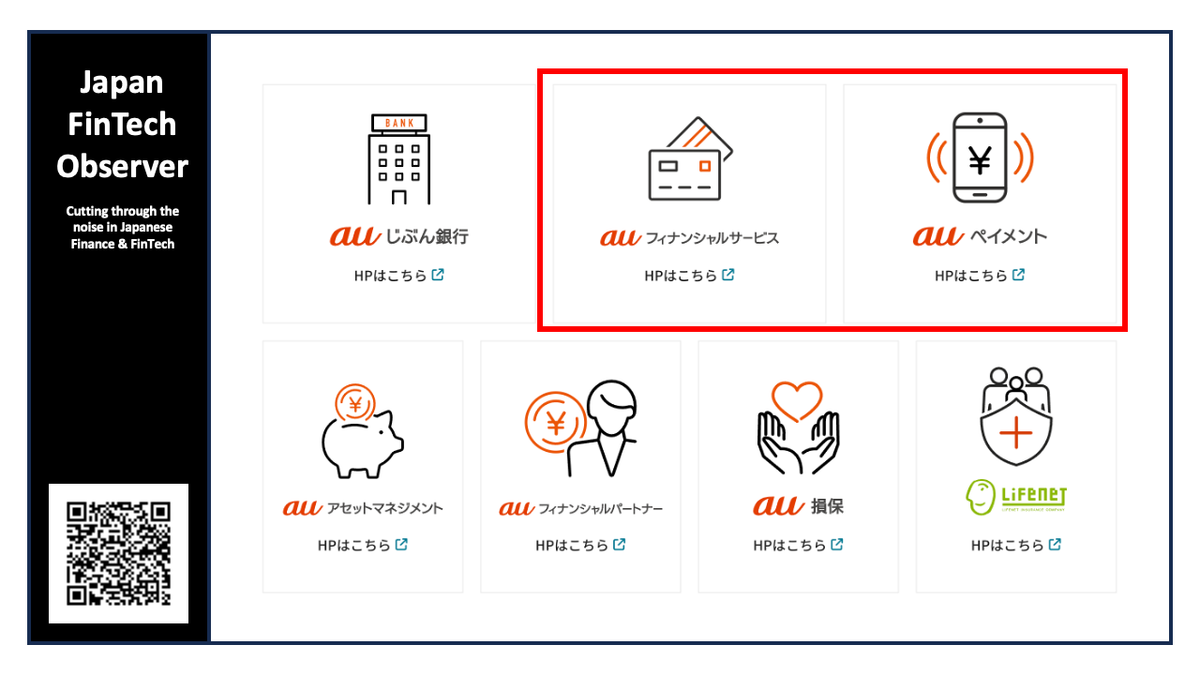
au Payment and au Financial Services, both 100% owned and consolidated subsidiaries of au Financial Holdings, have decided to merge as of July 1, 2026 (scheduled) for the purpose of centralizing payment business strategy and accelerating business promotion. The intent is for an absorption-type merger with au Payment as the surviving company and au Financial Services as the dissolving company.
This merger is premised on implementation after fulfilling procedures required under applicable laws and regulations, where such procedures are necessary.
au Payment Overview
- Business Activities: Fund transfer business and prepaid payment instrument issuing business (electronic money issuance such as au PAY, provision of au PAY point investment services, payment services using electronic money, issuance of international brand prepaid cards), life insurance brokerage, non-life insurance agency, financial instruments intermediary business, banking agency business, advertising business
- Capital: 495 million yen
- Established: 1988
au Financial Services Overview
- Business Activities: Credit card business, payment processing business, loan business, acquiring business, banking agency business, non-life insurance agency business
- Capital: 7,370 million yen
- Established: 2014
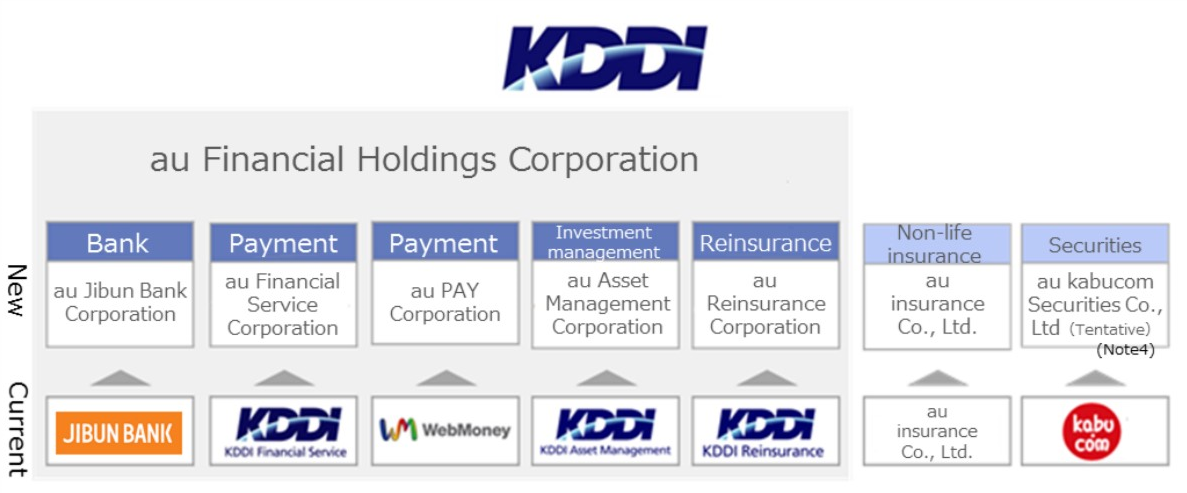
KDDI bundles payments & financial services business in “au Financial Holdings”
As per today’s press release, KDDI will incorporate an intermediate financial holding company, “au Financial Holdings”, in order to…
 Norbert Gehrke