Japan FinTech Observer #184


Welcome to the one hundred eighty-fourth edition of the Japan FinTech Observer.
A few funny encounters on the money/pricing front:
- Musashino City kindly provided us another annual allocation of helicopter money, which really does not make any sense from a social equality perspective; the money has to be spent, locally, by the end of November; since we have been holding onto it so far, they even sent us a friendly reminder to please go and spend it like Beckham
- According to an article in Japan Today (?), there are a few restaurants that now charge for the "fast lane"; so if you fancy your ramen without the wait at a popular shop, you can now pay 500 yen or so to jump the line; the article mentioned a particular incident when a couple paid 4,000 yen per head to avoid the wait; in a culture where raising prices often still feels awkward, this is an efficient way to subsidize the rest of us
- At a recent izakaya visit, the establishment used the QR menu app dinii, which actually prompts you to tip the waiting and kitchen staff (!); so we tried it out, and the receipt came through the regular order printer behind the counter, resulting in a surprised and delighted staffer; it will remain an enjoyable experience for all as long as tipping does not become customary (and expected)
Here is what we are going to cover this week:
- Venture Capital & Private Markets: Sumitomo Mitsui Trust Bank closes JPY 123bn domestic infrastructure fund; HiJoJo Partners and JAMP launch JPY 10bn global unicorn PEIT in Japan first
- Insurance: The Financial Services Agency’s first insurance system working group
- Banking: Never a dull moment - a busy week at SMBC Group; JR West completes USD 590m stake acquisition in Kansai Mirai Bank, accelerates BaaS launch to spring 2027; Japan Post Bank taps AI agent UPWARD to boost corporate sales efficiency
- Payments: Hokkoku Bank launches "Smart Plan" acquiring service built on Infcurion’s cloud platform "Axios"; Mizuho and UBS execute cross-border trials on Swift's shared ledger to advance 24/7 tokenized settlements; SBI DigiTrust partners with South Korean firms to test cross-border stablecoin payments; Japan’s new digital currency body launches full operations to advance tokenized deposits and on-chain finance
- Asset Management: NISA cumulative purchases and number of accounts continue their win streak; J-FLEC panel outlines blueprint for household financial visualization amid inflation and rate normalization
- Digital Assets: Financial heavyweights complete landmark stablecoin settlement pilot for digital securities market; Financial Services Agency launches "On-Chain Finance Forum for the AI Era"; SMBC Nikko and Nethermind partner with Uniswap Labs, Base, and Nyx to launch institutional DeFi gateway in Japan; Financial infrastructure firm Curvegrid expands enterprise web3 push via dual strategic partnerships
- The Last Word: Is Japan Back? Growth and Corporate Governance
Venture Capital & Private Markets
- Sumitomo Mitsui Trust Bank closes JPY 123bn domestic infrastructure fund: Sumitomo Mitsui Trust Bank (SuMiTB) has completed fundraising for its second domestic infrastructure vehicle, Japan Infrastructure No. 2, Limited Partnership, reaching a final closing at ¥123 billion ($830+ million) in total commitments; the fund, which was established on October 1, 2025, targets a wide spectrum of Japanese infrastructure assets, including decarbonization projects, social infrastructure, and digital infrastructure developments; investment advisory services for the general partner, Infrastructure GP are provided by Japan Extensive Infrastructure—a specialized joint venture between SuMiTB and Mercuria Holdings
- HiJoJo Partners and JAMP launch JPY 10bn global unicorn PEIT in Japan first: Tokyo-based asset manager HiJoJo Partners and JAMP Fund Management have launched the HiJoJo Global Unicorn Investment Corporation (HiJoJo PEIT), following a private placement aimed at qualified institutional investors; the Private Equity Investment Trust (PEIT), structured as an investment corporation, has initiated operations with total paid-in capital of approximately ¥10 billion; it represents Japan's first vehicle of its kind dedicated primarily to investing in unlisted equities, including global unicorn companies; under the operational agreement, JAMP Fund Management—a subsidiary of Japan Asset Management Platform Group—serves as the primary asset manager and administrative service provider; investment decision-making and target selection have been delegated to HiJoJo Partners, leveraging its international deal-sourcing pipeline
Insurance
- The Financial Services Agency’s first insurance system working group: On October 1, 2026, the Financial Services Agency (FSA) convened the inaugural meeting of the Insurance System Working Group under the Financial System Council; this landmark regulatory initiative marks a decisive step in Japan’s national strategy to fortify corporate resilience, unlock growth capital, and modernize the domestic financial sector; against a backdrop of compounding global risk exposures and structural shifts in domestic market conditions, the Japanese government has recognized that traditional corporate insurance procurement frameworks no longer suffice to protect balance sheet value or foster long-term enterprise growth; by establishing a dedicated statutory regime for domestic reinsurance captives, the regulatory framework aims to empower Japanese enterprises to manage complex uncertainties proactively, optimize capital allocation, and build global-standard risk management architectures
Banking
- Never a dull moment - a busy week at SMBC Group: Sumitomo Mitsui Financial Group and its operating subsidiaries, led by Sumitomo Mitsui Banking Corporation (SMBC) and Sumitomo Mitsui Card, have executed a series of strategic initiatives, demonstrating an aggressive balance sheet alignment and operational modernization strategy designed to maximize Return on Equity (ROE), rationalize Risk-Weighted Assets (RWA), and establish technical moats across core retail, wholesale, and transaction banking verticals; by restructuring equities operations under a dedicated intermediate holding company, expanding credit and deposit acquisition capabilities across unified digital platforms, establishing real-time enterprise AI risk guardrails, offloading non-core U.S. commercial banking assets, and pioneering on-chain trade settlement infrastructure, SMBC Group is actively fortifying its financial and technological architecture
- JR West completes USD 590m stake acquisition in Kansai Mirai Bank, accelerates BaaS launch to spring 2027: West Japan Railway Co. (JR West) and Resona Holdings announced that JR West has completed its acquisition of a 20.0% stake in Kansai Mirai Bank from Resona Holdings; the transaction, executed on October 1, 2026, following regulatory approval for major bank shareholding, renders Kansai Mirai Bank an equity-method affiliate of JR West; Kansai Mirai Bank will simultaneously remain a consolidated subsidiary of Resona Holdings; under the terms of the deal, JR West acquired 20,000,000 shares of Kansai Mirai Bank from Resona Holdings for a total acquisition cost of ¥90 billion (approximately $590 million); the deal finalizes the capital and business alliance agreement originally announced by JR West, Resona Holdings, and Kansai Mirai Bank on May 1, 2026, aimed at stimulating regional economic growth
- Japan Post Bank taps AI agent UPWARD to boost corporate sales efficiency: Japan Post Bank has deployed "UPWARD," an AI agent tailored for field sales, to enhance the quality of client proposals across its corporate banking division, vendor UPWARD Inc. announced; the decision comes as Japan Post Bank advances its Medium-Term Management Plan (FY2026–2028), which aims to position the institution as a leading comprehensive financial platform tailored to diverse customer needs; under its previous workflow, the bank’s corporate sales team relied on manual entry for post-meeting documentation; this labor-intensive process eroded direct client-facing time and resulted in inconsistent reporting quality across account managers
Payments
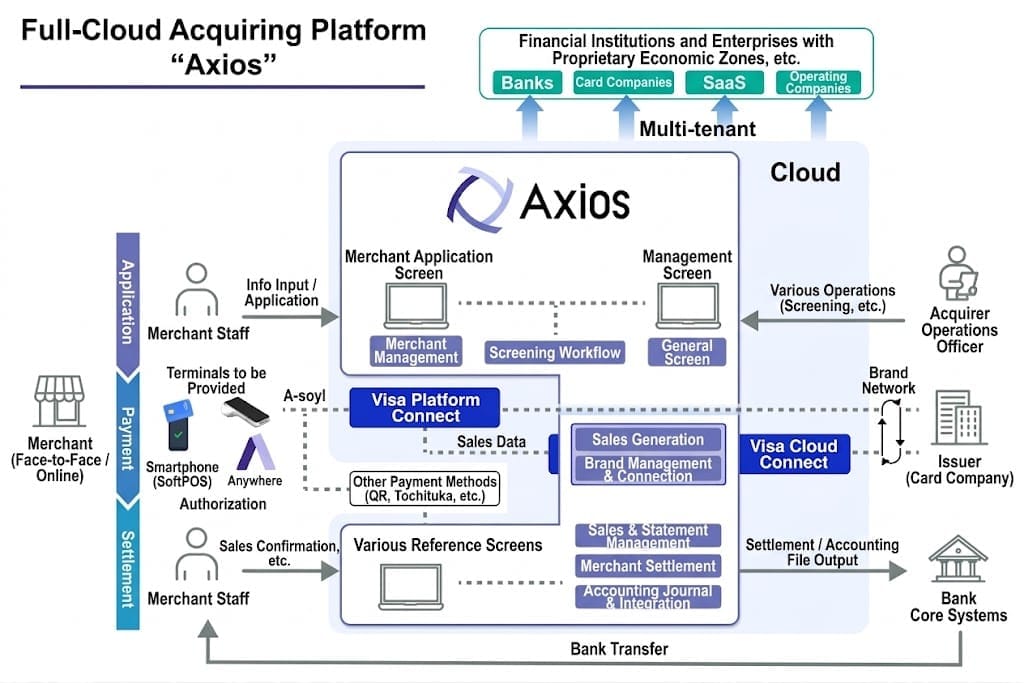
- Hokkoku Bank launches "Smart Plan" acquiring service built on Infcurion’s cloud platform "Axios": Tokyo-based FinTech firm Infcurion, in partnership with CCI Group, announced that regional lender Hokkoku Bank launched its new merchant acquiring service, "Smart Plan," on October 1, 2026; the initiative marks the inaugural commercial deployment of Axios, Infcurion’s next-generation, fully cloud-based acquiring platform
- Mizuho and UBS execute cross-border trials on Swift's shared ledger to advance 24/7 tokenized settlements: Mizuho Bank has completed bilateral test transactions with UBS across the financial messaging cooperative Swift's blockchain-based shared ledger, joining the banking sector's initiative to industrialize tokenized commercial bank deposits for international trade and wholesale finance; the trial environment interconnected Mizuho Bank and UBS to execute cross-border payments across two major reserve currencies: the Japanese yen (JPY) and the Swiss franc (CHF); according to technical disclosures issued by Mizuho Bank, the bilateral exercises verified the end-to-end operational processing for payment handling on the distributed ledger, established technical requirements for institutional node connectivity, and validated standardized financial messaging schemas required for distributed interbank communication; Mizuho Bank stated that the initiative is designed to enhance service levels for cross-border payments by laying the operational foundation for continuous, round-the-clock money movement. The Japanese megabank confirmed it will expand collaborative testing with Swift and other member financial institutions to scale the shared ledger network and accelerate the real-world deployment of commercial bank money in digital form
- SBI DigiTrust partners with South Korean firms to test cross-border stablecoin payments: SBI DigiTrust, a blockchain infrastructure provider under the SBI Group, has entered into an agreement with South Korean payment processor NICE Information & Telecommunication and blockchain infrastructure developer DSRV to conduct joint feasibility testing for cross-border stablecoin transactions between Japan and South Korea; the initiative aims to evaluate the commercial viability of stablecoin-based remittances and retail payments; the primary test scenario focuses on Japanese tourists using QR codes to execute payments at NICE’s merchant network across South Korea; the joint trial is scheduled for completion by the end of December 2026
- Japan’s new digital currency body launches full operations to advance tokenized deposits and on-chain finance: Japan’s newly established Digital Currency Innovation Organization (DCIO) has launched full-scale operations on October 1, 2026, marking an evolution from the original Digital Currency Forum founded in 2020; the Tokyo-based organization aims to build a secure, efficient, and internationally competitive digital payment infrastructure; the DCIO's primary focus will be the deployment of tokenized bank deposits and the advancement of "on-chain finance"—integrating digital settlement systems with supply chains, administrative processes, and commercial transactions; formally established in July 2026, the DCIO was founded by digital payment platform provider DeCurret DCP and GMO Aozora Net Bank; under its Articles of Incorporation, the association operates under a non-profit distribution structure running on an April–March fiscal year; the entity establishes a two-tiered membership structure, distinguishing general participating corporate members from voting members who hold governance rights at the general assembly
Capital Markets
Asset Management
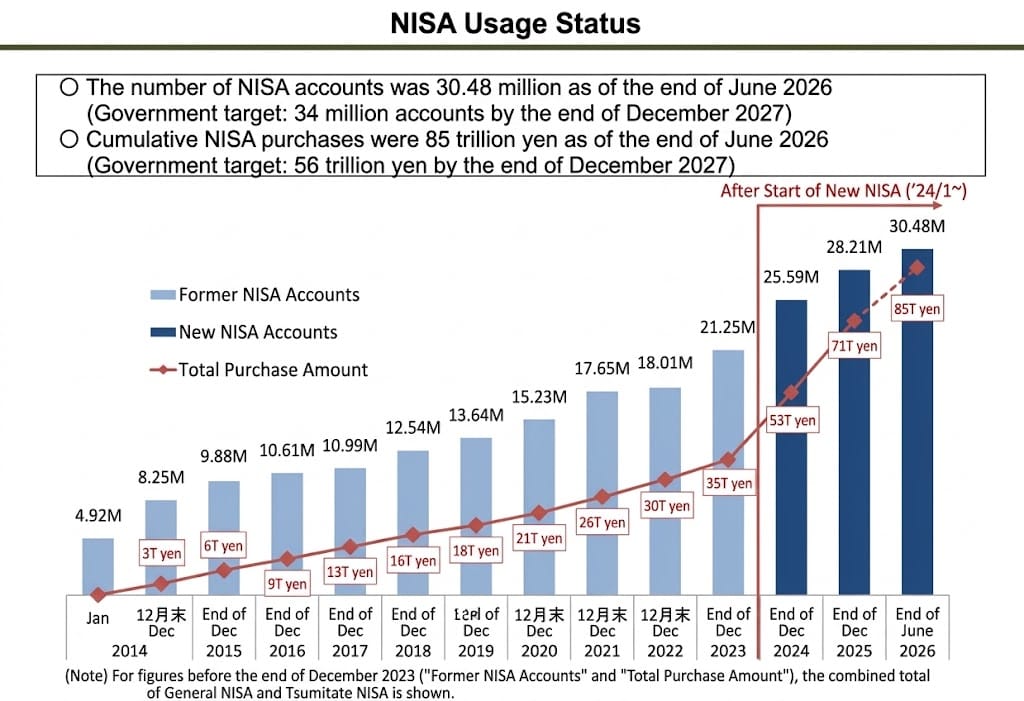
- NISA statistics for mid-year 2026 are out, and show a continued growth picture; as of the end of June, cumulative purchases have reached JPY 85trn, compared to the original government target of JPY 56trn by the end of 2027
- J-FLEC panel outlines blueprint for household financial visualization amid inflation and rate normalization: In response to shifting macroeconomic conditions and an increasingly complex financial landscape, a high-level government-backed advisory body has published a foundational report aimed at fundamentally transforming how Japanese households manage, visualize, and optimize their personal finances; the comprehensive document—titled the Household Financial Visualization Study Panel Report (Kakei no Mieruka Kentei Kaigi Houkokusho)—was compiled by a specialized panel established under the Japan Financial Literacy and Economy Council (J-FLEC); the publication details a long-term strategic framework designed to help individuals transition from passive income tracking to active, life-cycle financial planning; formed in February 2026 pursuant to key cabinet decisions, including the Grand Design and Action Plan for New Capitalism and the Priority Plan for the Realization of a Digital Society, the panel was tasked with evaluating how data aggregation, digital tools, and targeted policy interventions can enhance financial well-being nationwide; the core thesis of the report establishes "financial visualization" as a critical mechanism for alleviating pervasive economic anxiety and enabling individuals to achieve "financial well-being"—defined as the capacity to maintain control over daily finances, absorb financial shocks, pursue life goals, and enjoy financial freedom of choice
Digital Assets
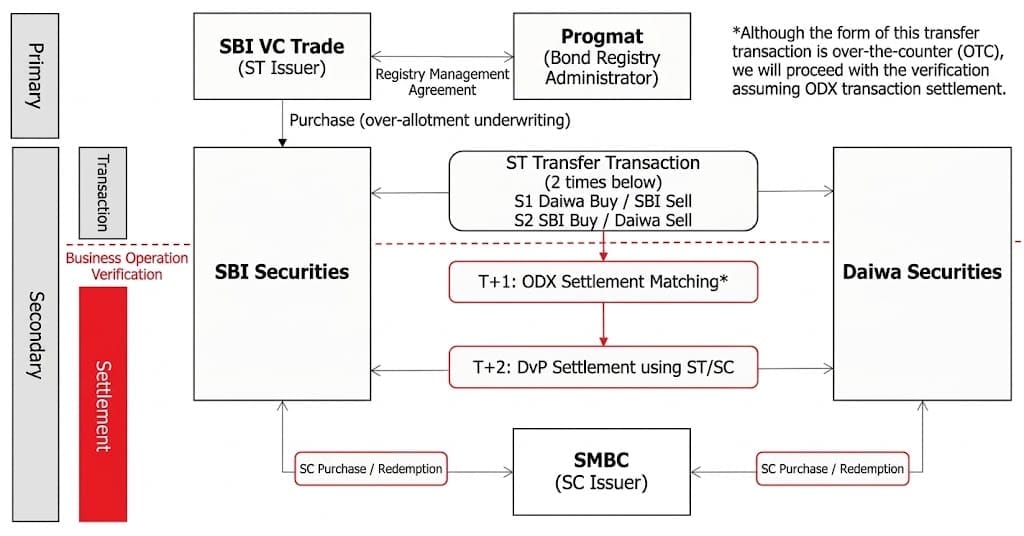
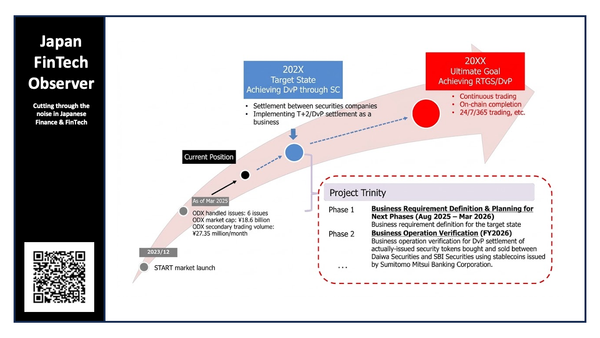
- Financial heavyweights complete landmark stablecoin settlement pilot for digital securities market: A consortium of leading Japanese financial institutions and blockchain technology providers has successfully completed Phase 1 and Phase 2 of "Project Trinity," a joint trial validating Delivery versus Payment (DvP) settlement for secondary market security token transactions using stablecoins; the consortium includes major firms such as Sumitomo Mitsui Banking Corporation (SMBC), Daiwa Securities, SBI Securities, Osaka Digital Exchange (ODX), SBI R3 Japan, BOOSTRY, Progmat, Datachain, and SBI VC Trade.
- Financial Services Agency launches "On-Chain Finance Forum for the AI Era": The global economy is entering an era of "Agentic Commerce," wherein autonomous artificial intelligence (AI) agents conduct 24/7/365 cross-border economic transactions across languages and time zones without manual human intervention; to support this paradigm, financial settlement infrastructure must undergo a structural evolution toward "on-chain finance"—leveraging blockchain technology—integrated in an optimal mix with established off-chain financial infrastructure; domestic inertia in modernizing settlement capabilities risks creating a critical dependency on foreign payment platforms, which would severely erode national financial competitiveness and elevate economic security risks; to drive this transition, the Financial Services Agency (FSA) established the "On-Chain Finance Forum for the AI Era" in Summer 2026, convening its inaugural session on September 30, 2026; the Forum's primary mandate is to deliver an interim summary and a joint public-private roadmap by early 2027 during its second session; to fulfill its leadership role in reforming private-sector fund settlement, the FSA is also evaluating necessary organizational expansions
- SMBC Nikko and Nethermind partner with Uniswap Labs, Base, and Nyx to launch institutional DeFi gateway in Japan: Japanese brokerage giant SMBC Nikko Securities and UK-based blockchain infrastructure firm Nethermind have signed a Memorandum of Understanding with Uniswap Labs, Base, and the Nyx Foundation to build a compliant, institutional-grade decentralized finance (DeFi) liquidity framework for the Japanese market; dubbed the "DeFi Gateway," the project seeks to bridge traditional finance and on-chain markets; the initiative targets a completion date of mid-2027 and aims to establish user-friendly access to automated market makers (AMMs) and liquidity deployment strategies while meeting strict regulatory standards
- Financial infrastructure firm Curvegrid expands enterprise web3 push via dual strategic partnerships: Blockchain infrastructure provider Curvegrid has announced a pair of collaborations aimed at broadening enterprise adoption of digital assets across Asia, targeting cross-border payments in the Philippines and institutional risk management; the Tokyo-headquartered firm has partnered with risk advisory specialist Continuum to address Web3 insurance gaps, while simultaneously joining forces with FinTech startup Salo to explore stablecoin-driven settlement models for remittances between Japan and the Philippines
The Last Word: Is Japan Back? Growth and Corporate Governance

On September 30, 2026, Bruce Aronson (Head of the Japan Center at the US-Asia Law Institute, NYU Law) hosted Dr. Paul Sheard (prominent macroeconomist, former senior executive at S&P Global and Nomura Securities, and author of The Power of Money) to discuss Japan's most profound economic regime shift in three decades—transitioning from twenty-eight years of chronic mild deflation to sustained nominal growth, rising benchmark interest rates, and institutional corporate restructuring.
Evaluating these structural dynamics is essential for global institutional investors, sovereign policymakers, and international trade analysts. The ongoing transformation spans monetary policy normalization, fiscal strategy, firm-level capital allocation, and household balance sheet rebalancing, offering vital insights into how advanced industrial economies can overcome persistent demographic headwinds and structural economic stagnation.
- Monetary Normalization & Deflation Exit Japan has executed a definitive structural exit from the chronic deflationary regime that persisted from the second quarter of 1994 through 2022. During this period, the economy-wide GDP deflator fell by a cumulative 17%, whereas the equivalent US deflator expanded by approximately 54%. Spurred by post-COVID adjustments, yen depreciation, and global supply dynamics, Japan’s GDP deflator has rebounded by 17% since 2022, restoring overall price levels to their 1994 baseline. In response, the Bank of Japan (BOJ) terminated its aggressive Quantitative and Qualitative Monetary Easing (QQE) framework, raising its benchmark policy rate to 1.25%—its highest level in 31 years since 1995. With 10-year Japanese Government Bond (JGB) yields crossing 3%, monetary policy is transitioning from zero-peg accommodations toward market-based rate normalization. This regime shift replaces decades of economic "chill" with warm nominal GDP expansion, directly expanding corporate top-line revenues and boosting government tax collections.
- Policy Continuity vs. Government-Led Industrial Strategy Japanese economic strategy exhibits strong administrative lineage, originating within the Kasumigaseki bureaucracy—principally the Ministry of Economy, Trade and Industry (METI) and the Ministry of Finance (MOF)—in close coordination with business associations like Keidanren. Incoming LDP prime ministers traditionally rebrand these pre-existing bureaucratic plans into signature political slogans. While Abenomics (2012–2020) emphasized aggressive monetary expansion, flexible fiscal policy, and market-oriented corporate deregulation, the contemporary paradigm under "Sanaenomics" pivots toward a state-directed industrial policy framework. Operating under "responsible activist fiscal policy," this strategy targets 370 trillion yen in public-private investment by FY2040 across 17 target strategic sectors, 62 critical technologies and products, and 8 cross-sectoral challenges. By tightly integrating economic security, national defense, cyber capabilities, and supply chain resilience, the framework raises macro-structural critiques regarding whether government direction risks dampening private-sector market dynamism and resource allocation efficiency.
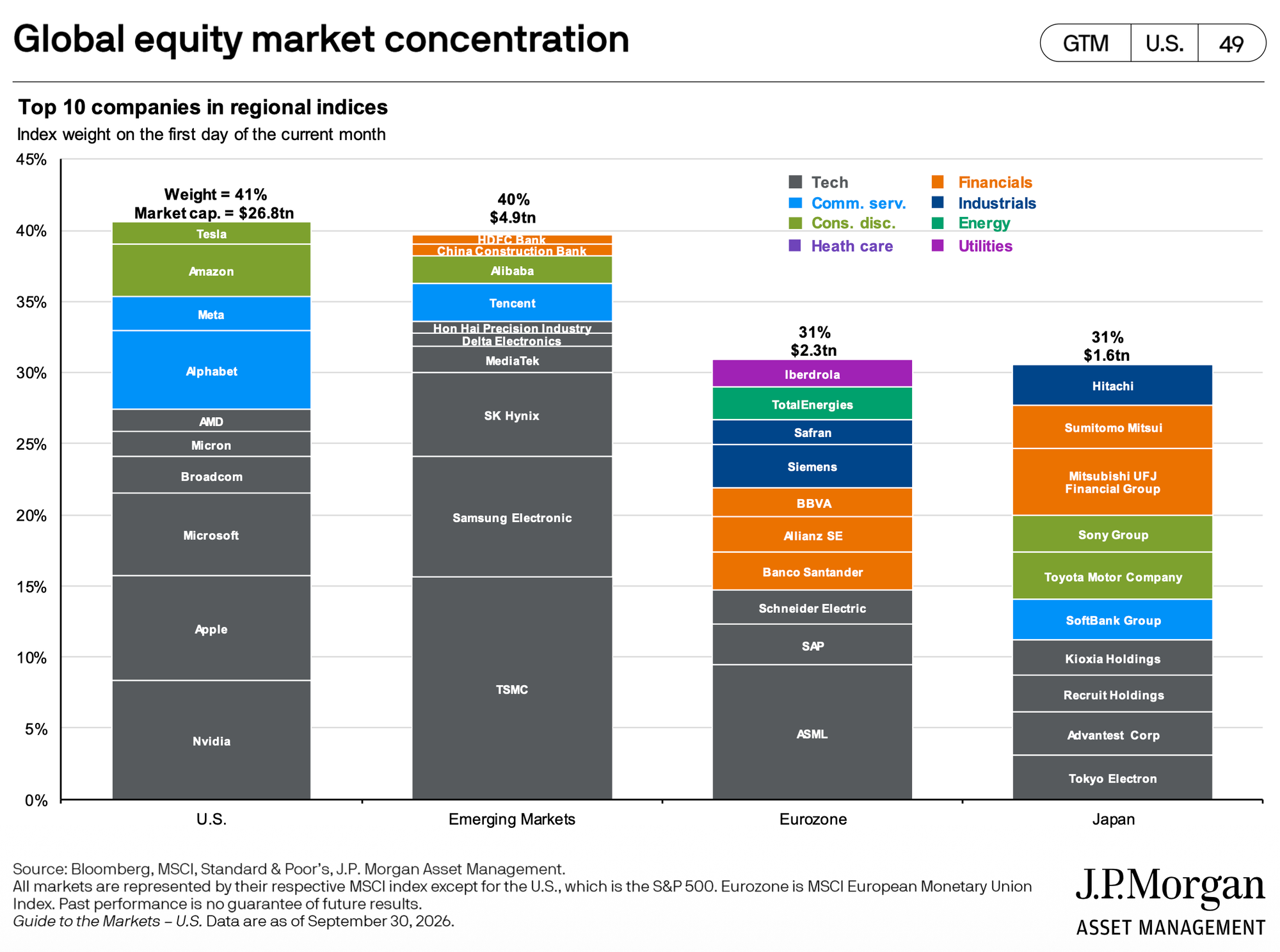
- 35-Year Corporate Governance Evolution & Market Re-Rating The dramatic rally in Japanese equities—highlighted by the Nikkei more than doubling and breaking all-time highs—is supported by a 35-year structural overhaul of corporate governance rather than short-term market speculation. Regulatory milestones include early 1990s asset management deregulation, the mid-1990s legalization of holding companies, share buybacks, treasury stock holding, and late-1990s consolidated accounting. Board structures have evolved from internal statutory auditors toward independent director committee systems (Audit, Nomination, and Compensation), with top-tier firms maintaining majority or half-independent boards. Concurrently, cross-shareholdings held by corporate insiders have inverted from 80% down to 20%, empowering arm's-length institutional investors who demand higher Return on Equity (ROE) and capital discipline. Foreign investors, holding 35% of Japanese equities, act alongside domestic regulators (TSE, FSA, METI) to pressure risk-averse management teams to optimize capital efficiency and return cash hoards to shareholders.
- The Corporate Cash Surplus and Structural Capital Allocation Dilemma Despite macroeconomic revival, Japan's corporate sector presents a primary structural bottleneck: massive cash accumulation on balance sheets. Japan maintains a structural current account surplus of 3% to 5.1% of GDP, representing a net national savings surplus exported globally. On a flow-of-funds basis, while the consolidated public deficit has narrowed to 1.3% of GDP in FY2025, the private sector holds a net savings surplus of 6.3% of GDP, with corporate retained earnings accounting for 4.4 percentage points and households 1.9 percentage points. Because private corporations save rather than fully invest or raise wages, capital allocation has become the central battleground. Private equity funds, activist investors, and regulatory Tokyo Stock Exchange (TSE) price-to-book ratio (PBR < 1.0) mandates are forcing management teams to deploy uninvested cash into high-return capex, wage increases, or share buybacks to recirculate capital back into the broader economy.
- Demystifying Sovereign Debt Through Consolidated Accounting Headline assessments citing Japan's gross public debt at 240% of GDP misinterpret sovereign default risk by evaluating fiscal liabilities in isolation. Analyzing the consolidated government balance sheet—combining the Ministry of Finance and the Bank of Japan—reveals structural stability. Through historical QQE operations, the BOJ purchased nearly 50% of outstanding JGBs, converting traditional fixed-income public debt into central bank commercial bank deposit reserves. These central bank liabilities face no traditional bond maturity schedules or default mechanics. Supported by world-leading net foreign asset holdings built over 45 consecutive years of current account surpluses, Japan remains the world's largest net creditor nation. Rising interest rates increase headline debt-servicing allocations, but these represent internal income transfers to domestic commercial banks and depositors rather than external default risks or national resource depletion.
These core takeaways demonstrate how high-level macroeconomic transformations and sovereign balance sheet structures interact directly with firm-level strategic choices and institutional policy frameworks.
Read our full comments here.
Please follow us to read more about Finance & FinTech in Japan, like hundreds of readers do every day. Our short weekly digest, the “Japan FinTech Observer”, is published on LinkedIn, Medium, Substack, or on our own FinTech Observer website. Only the latter provides you with the option to subscribe to individual news stories as they are published.
Should you wish to further discuss the Japanese (or Asian) FinTech ecosystem, you may book a consultation via Intro - all proceeds flow towards covering the operating cost of the Tokyo FinTech Association, and research for the Japan FinTech Observer.