Japan FinTech Observer #186


Welcome to the one hundred eighty-sixth edition of the Japan FinTech Observer.
The AI infrastructure boom juices Korea's GDP per capita.
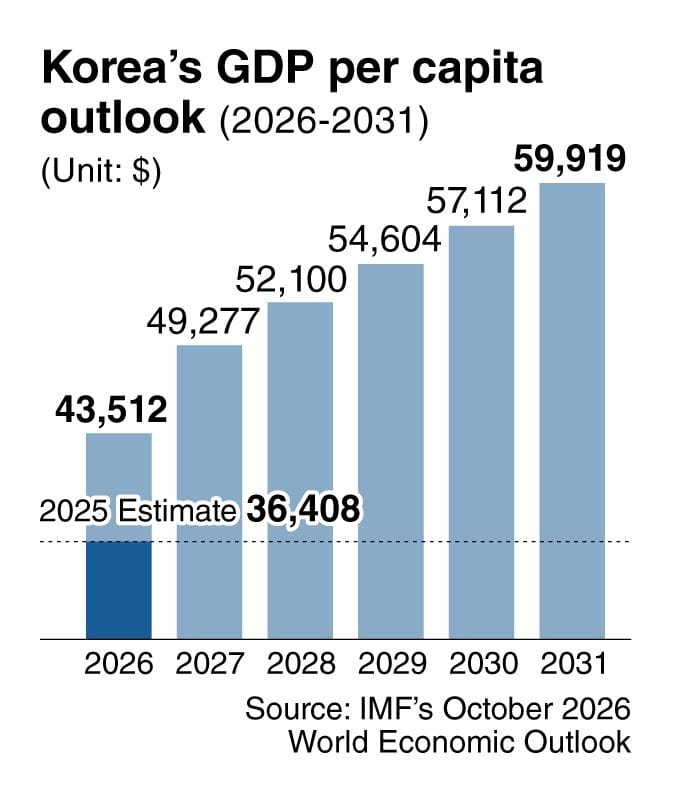
The IMF's October World Economic Outlook database puts Korea's GDP per capita at USD 43,512 this year, up 19.5 percent from an estimated USD 36,408 in 2025. The fund expects the figure to rise to about USD 49,277 next year and exceed USD 50,000 in 2028, reaching USD52,100. By 2031, it is projected to approach USD 60,000.
Korea would remain slightly behind Taiwan this year, with the latter's GDP per capita forecast at USD 43,951. Taiwan overtook Korea last year for the first time in 22 years. While Korea is expected to move ahead next year, IMF projections show Taiwan regaining the lead in 2030. In comparison with Japan, the IMF projects Korea will remain ahead throughout the forecast period.
Here is what we are going to cover this week:
- Venture Capital & Private Markets: Pitchbook and Japan Investment Corporation market updates; Money Forward Venture Partners secures JPY 6.7bn interim close for third flagship fund
- Insurance: an article by the Vice Minister for International Financial Affairs at the Financial Services Agency and an AI whitepaper published by Sompo
- Banking: MUFG's Krungsri completes full acquisition of Vietnam’s SFinance in USD 153m consumer credit push
- Payments: Megabanks complete joint stablecoin trial for cross-border corporate settlements
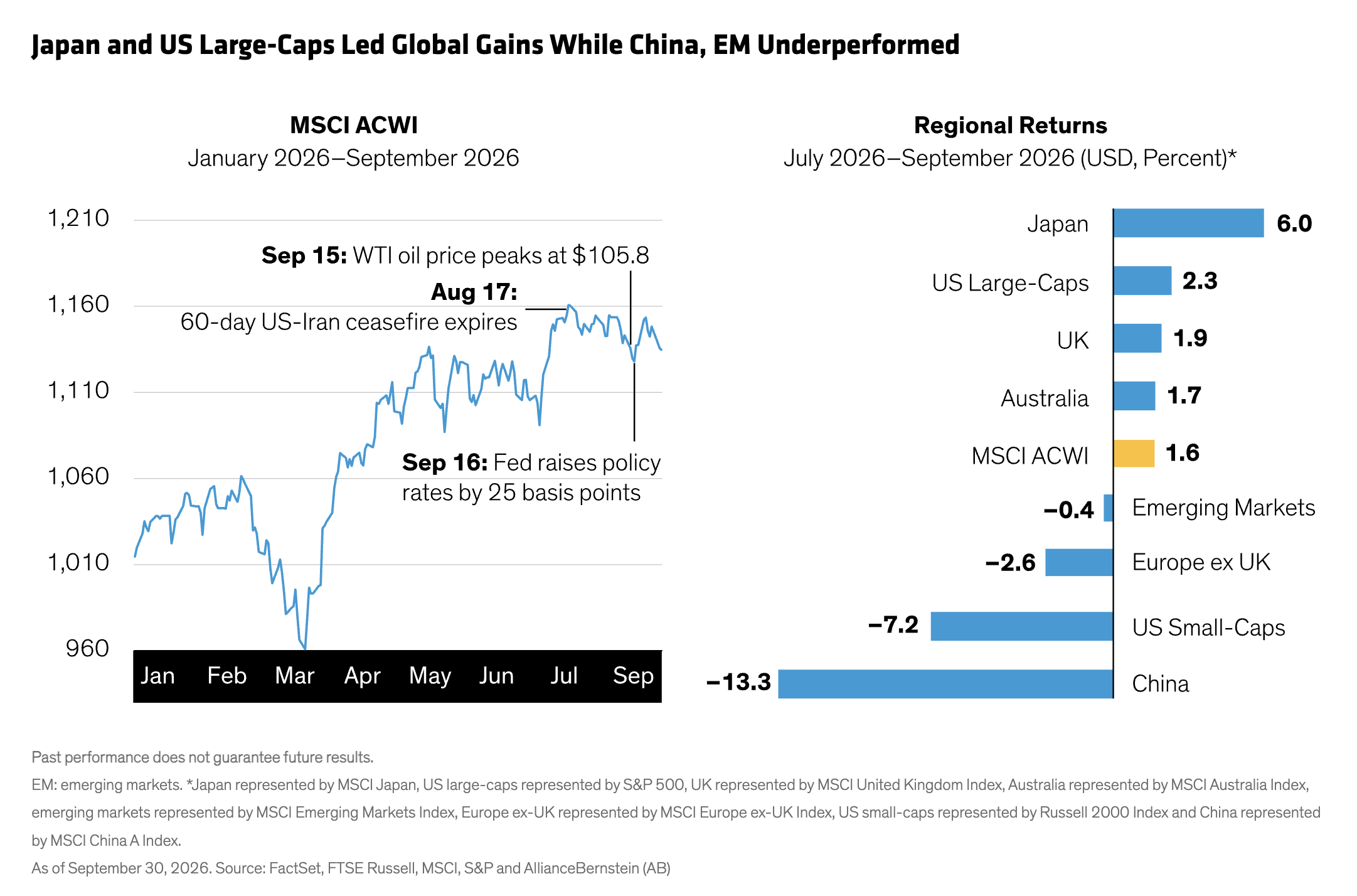
- Capital Markets: Japan was the best performing market in Q3/2026 (in USD terms); Scila has published a whitepaper on surveillance in Japan's power market, and Nishimura & Asahi have written about "Shareholders' Rights and Shareholder Activism"
- Digital Assets: Metaplanet issues JPY 52bn zero-coupon convertible bonds to de-risk Bitcoin collateral and fund massive buyback
- The Last Word: IMF Regional Economic Outlook for Asia and Pacific
Venture Capital & Private Markets
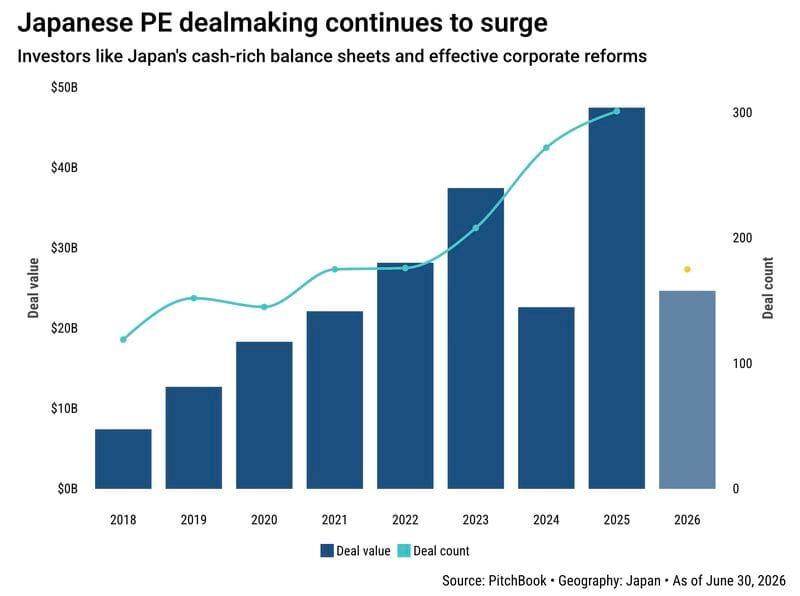
- PitchBook sees global PEs piling into Japan, and asks, "Will it last?": Japan’s M&A activity, cash-rich balance sheets and corporate governance reforms continue to draw institutional investors
- Money Forward Venture Partners secures JPY 6.7bn interim close for third flagship fund: Money Forward Venture Partners, a venture capital subsidiary of Tokyo-listed FinTech firm Money Forward, has reached an interim close for its flagship HIRAC FUND No. 3 Investment Limited Partnership, raising total commitments to approximately ¥6.7 billion; the interim closing added new institutional backing from The Aomori Michinoku Bank and Mizuho Securities, alongside follow-on commitments from existing limited partners, including The Bank of Iwate (returning from HIRAC FUND II) and Sumitomo Mitsui Trust Bank (reinvesting following its participation in the HIRAC FUND I Extension Fund); the Tokyo-based firm confirmed it will continue active capital-raising efforts toward an ultimate target exceeding ¥10 billion
- The Japan Investment Corporation has published its "Japan Venture Capital Market Update H1/2026"
Insurance
- Toshiyuki Miyoshi, Vice Minister for International Financial Affairs at the Financial Services Agency, and Chair of the IAIS - International Association of Insurance Supervisors Executive Committee, contributed an article titled "Structural shifts in life insurance sector: IAIS insights" to the Eurofi magazine; this article discusses structural changes in the life insurance sector, such as increased investment in alternative assets including private credit and the expansion of asset-intensive reinsurance (AIR), the associated risks, and the IAIS's initiatives
- Sompo has published a whitepaper, "Building defensibility in the age of AI": Artificial intelligence is lowering barriers to innovation and making it easier than ever to replicate products, services and capabilities; as technology becomes more accessible, organizations face a critical question: what creates lasting advantage when the technology itself is no longer enough; drawing on a survey of 64 founders, business leaders, investors and practitioners, the report examines how perceptions of competitive advantage are changing in the age of AI; it explores which traditional sources of defensibility may be coming under pressure, and why factors such as trust, customer relationships, implementation expertise, organizational learning and adaptability may become increasingly important; the report also offers practical questions to help leaders assess the durability of their own competitive advantages and build resilience in increasingly competitive markets
Banking
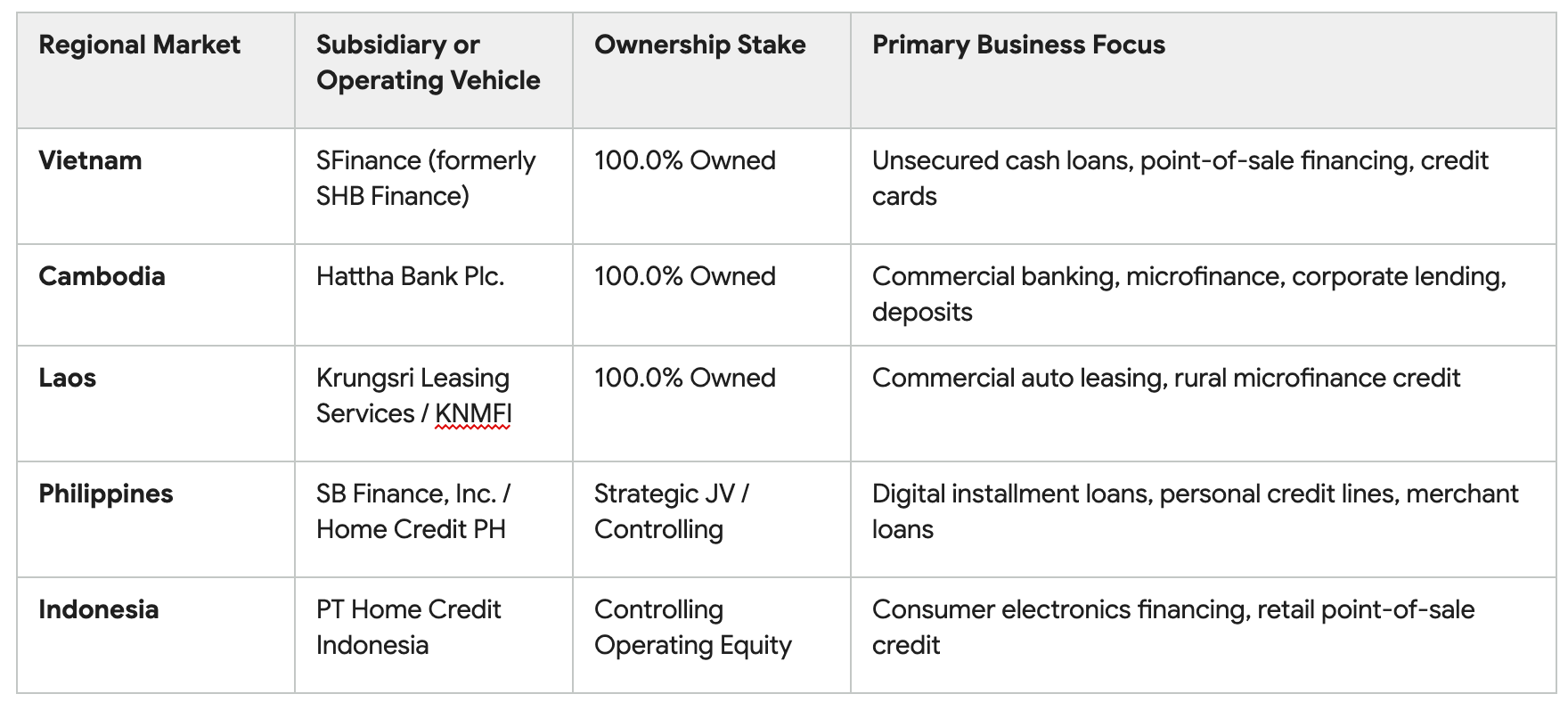
- Krungsri completes full acquisition of Vietnam’s SFinance in USD 153m consumer credit push: Bank of Ayudhya (Krungsri), Thailand’s fifth-largest commercial lender by assets and a consolidated operating unit of Mitsubishi UFJ Financial Group (MUFG), has completed the buyout of the remaining 50% charter capital in SFinance Consumer Credit; the transaction marks the execution of an agreement established on August 25, 2021, between Krungsri and Saigon-Hanoi Commercial Joint Stock Bank (SHB) to acquire full ownership of the Vietnamese consumer credit provider in two equal tranches; tollowing the transfer of the first 50% equity stake in May 2023, the formal closing of the second tranche on October 15, 2026, transfers 100% of the company's equity capital and operational control to the Bangkok-based lender; coinciding with the transaction close, the business has completed its corporate rebranding, transitioning from SHBank Finance Company to SFinance Consumer Credit Finance Company to trade under its new identity
Sustainable Trade Index
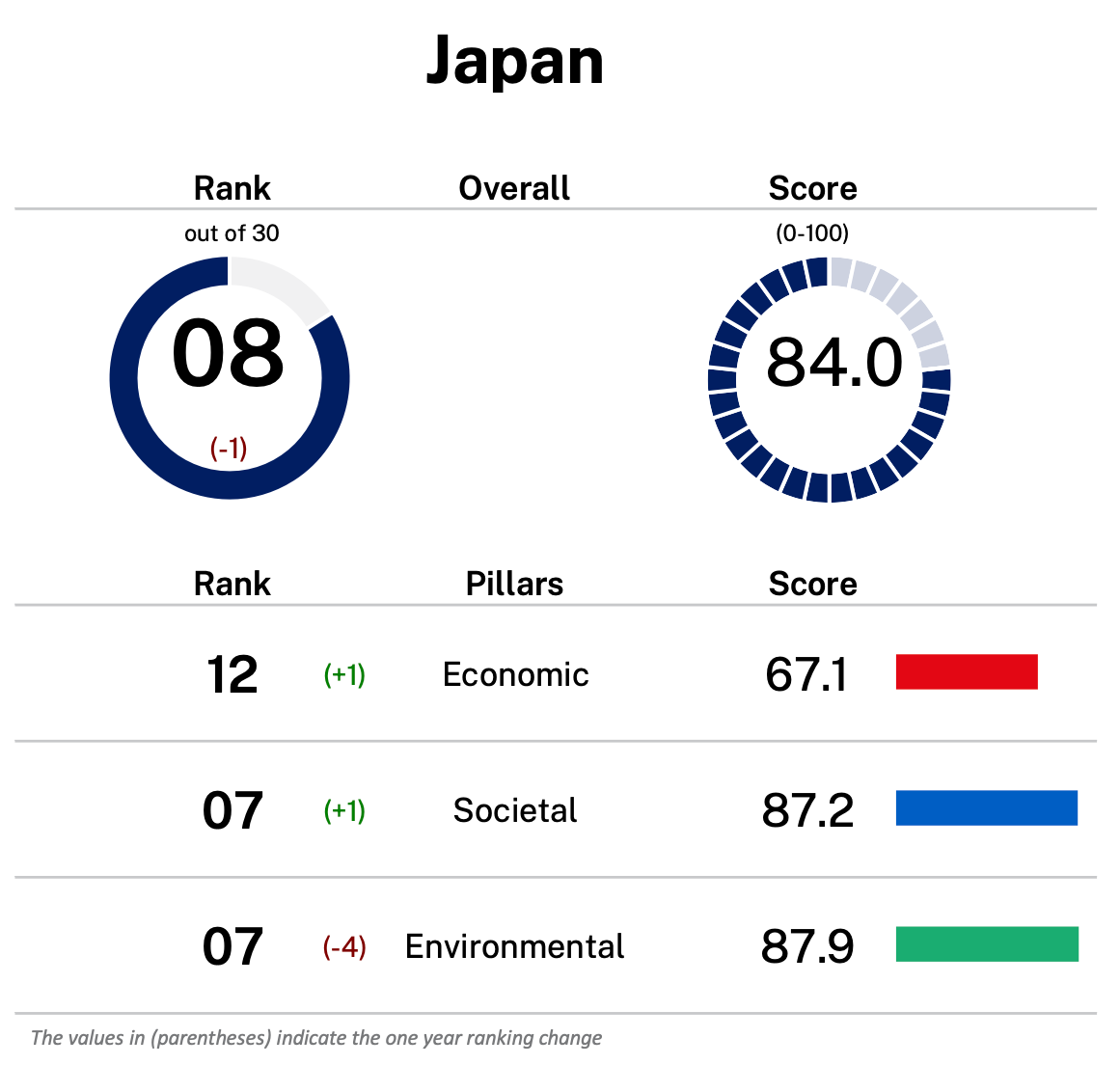
The Hinrich-IMD Sustainable Trade Index measures 30 economies’ readiness and capacity to participate in the global trading system in a manner that supports the long-term goals of economic growth, environmental protection, and societal development.
Payments
- Megabanks complete joint stablecoin trial for cross-border corporate settlements: Japan’s three major banking institutions—Sumitomo Mitsui Banking Corporation (SMBC), Mizuho Bank, and MUFG Bank—alongside Mitsubishi UFJ Trust and Banking Corporation and systems integrator TISI, have successfully conducted a joint proof of concept (PoC) for bank-issued stablecoins and advanced cross-border settlements; the trial stems from an initiative selected in November 2025 under the Financial Services Agency’s "Fintech Proof of Concept Hub / Payment Modernization Project"; the demonstration tested the execution of cross-border transfers between the domestic and overseas offices of major Japanese trading house Mitsubishi Corporation, evaluating operational workflows, technical infrastructure, and regulatory compliance under Japanese financial statutes; under the tested architecture, the digital tokens were issued as "specified beneficial interests in trust" pursuant to Article 2, Paragraph 9 of Japan’s Payment Services Act; Mizuho Bank, MUFG Bank, and SMBC acted as joint settlors (co-trustors), while Mitsubishi UFJ Trust and Banking served as the trustee
Capital Markets
- Scila has published a whitepaper on "Surveilling Japan’s power market": Exchange trading is established in Japan’s power market alongside developed balancing arrangements, financial power trading, and a range of active domestic and international participants; for surveillance teams, this creates a complex environment; trading activity often needs to be assessed alongside market conditions, physical generation, and related exposures, as unusual behaviour cannot always be understood from the transaction alone; as participation broadens, market surveillance plays a role in supporting fair and transparent markets
- Nishimura & Asahi have contributed the Japan chapter to The Chambers' "Shareholders' Rights and Shareholder Activism"
Digital Assets
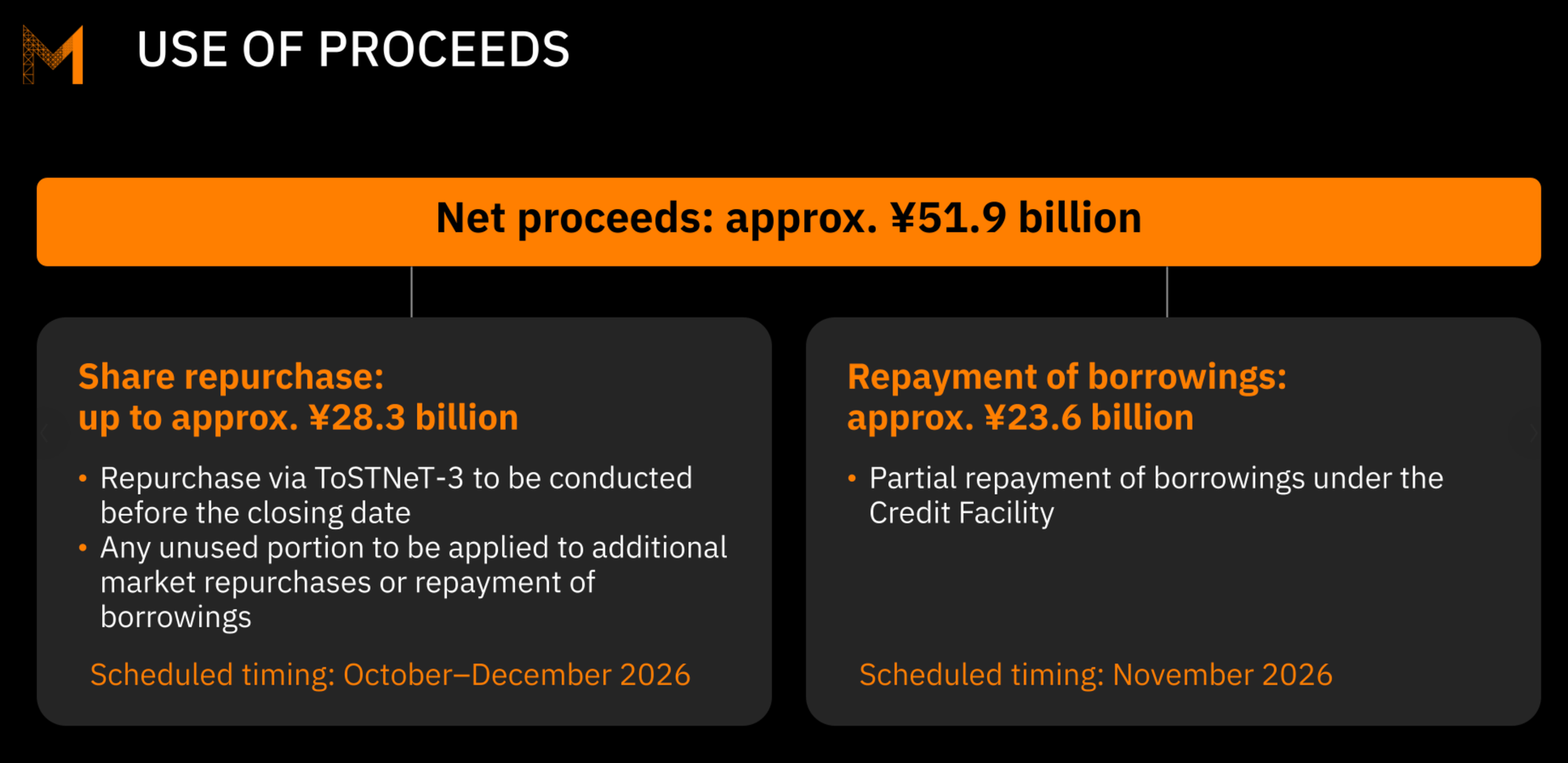
- Metaplanet issues JPY 52bn zero-coupon convertible bonds to de-risk Bitcoin collateral and fund massive buyback: On October 13–14, 2026, Metaplanet announced a comprehensive capital restructuring designed to optimize its balance sheet, de-risk its treasury exposure, and improve equity value per share; by simultaneously tapping international debt capital markets through an overseas convertible bond offering and launching a multi-billion-yen share repurchase program, the company is executing a coordinated dual-track financial strategy; this integrated transaction architecture allows Metaplanet to restructure liabilities accumulated from its primary reserve strategy while actively mitigating potential equity dilution and supporting market demand for its common stock; at the core of this capital package is the issuance of ¥52.0 billion in aggregate principal amount of Zero Coupon Euro-Yen Denominated Convertible Bonds due 2031; while offered at an issue price of 100.0%, the bonds feature an offer price of 102.5%, yielding net proceeds of approximately ¥51.9 billion; concurrently, Metaplanet’s Board of Directors authorized a new share repurchase framework authorizing up to ¥60.0 billion in buybacks, with an initial off-auction transaction deployed immediately following the debt pricing
The Last Word: IMF Regional Economic Outlook for Asia and Pacific
The IMF's October 2026 Regional Economic Outlook for Asia and the Pacific arrives at a critical juncture for the global economy. As global activity navigates severe, compounding external shocks—including acute geopolitical escalation in the Middle East, persistent US tariff barriers, tightening monetary stances across major monetary authorities, and structural sovereign debt pressures—Asia continues to serve as the primary engine of global economic expansion.
The region's dynamic performance reflects a remarkable capacity to adapt to energy supply disruptions and capitalize on powerful structural tailwinds, notably an unprecedented global boom in artificial intelligence (AI) infrastructure and technology trade.
However, beneath this aggregate resilience lies widening economic divergence across sub-regions, sectors, and income groups. While technology-exporting advanced economies and systemic emerging markets have consistently outperformed expectations, low-income developing countries and Pacific Island economies confront severe stagflationary pressures. Managing these contrasting realities requires a rigorous baseline evaluation and a clear understanding of the macroeconomic mechanisms driving Asia's evolving growth path.
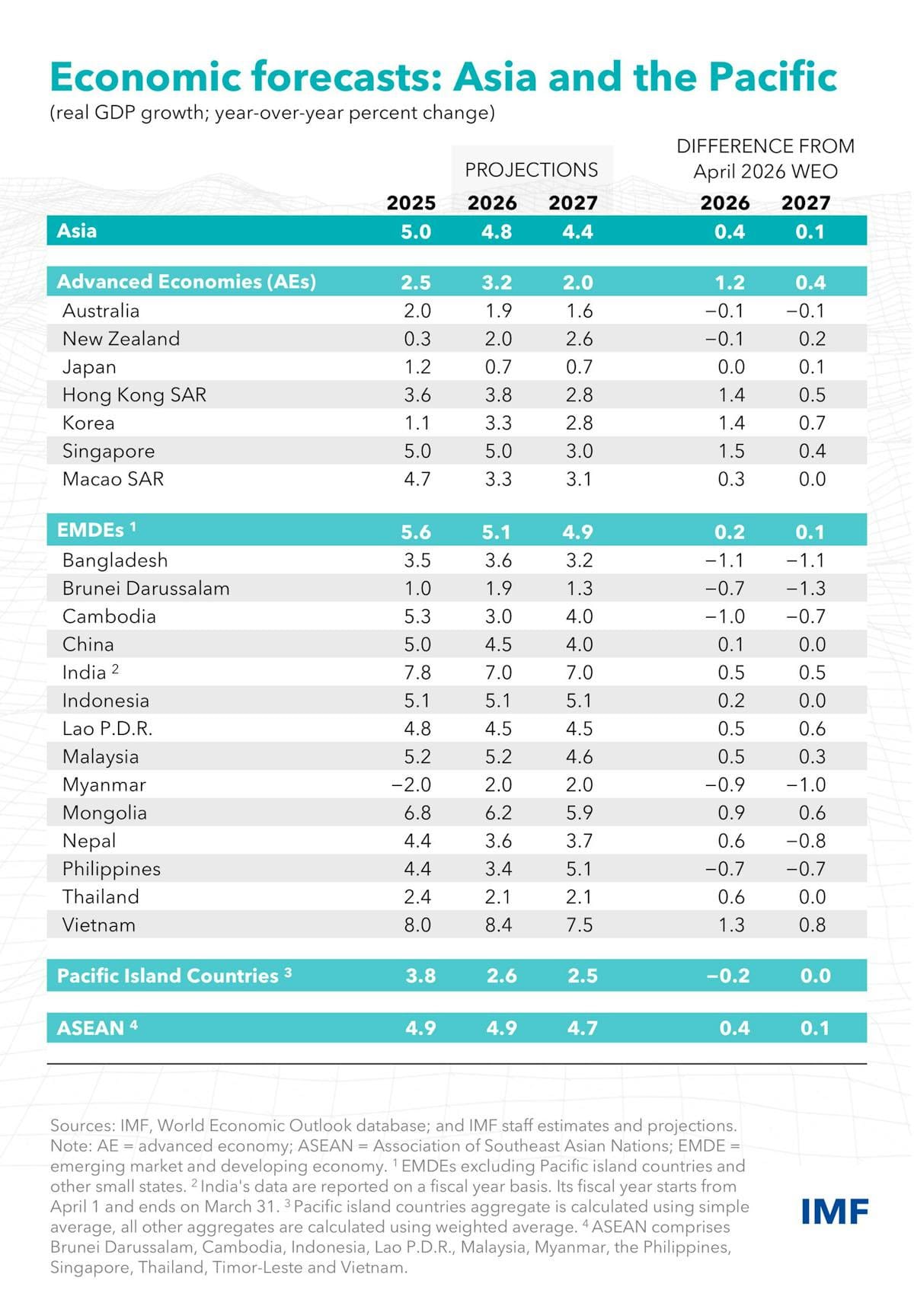
Asia's aggregate growth trajectory demonstrates extraordinary momentum relative to the global economy, even as baseline activity undergoes a planned moderation. Regional real GDP growth is projected to ease from 5.0 percent in 2025 to 4.8 percent in 2026, before further moderating to 4.4 percent in 2027. The 2026 forecast represents a substantial upward revision of 0.4 percentage points compared to the April 2026 World Economic Outlook (WEO) baseline of 4.4 percent, driven by stronger-than-expected first-half performance in technology-exposed advanced economies and major emerging market powerhouses.
Significantly, the Asia-Pacific region is projected to contribute 68 percent—more than two-thirds—of total global economic growth in 2026. This reinforces Asia’s position as the indispensable anchor of global aggregate demand. However, this regional expansion is highly asymmetric. Growth forecasts for advanced economies deeply integrated into the global technology value chain have been marked up sharply, whereas forecasts for vulnerable, energy-dependent, and non-tech economies have suffered severe markdowns.
Please follow us to read more about Finance & FinTech in Japan, like hundreds of readers do every day. Our short weekly digest, the “Japan FinTech Observer”, is published on LinkedIn, Medium, Substack, or on our own FinTech Observer website. Only the latter provides you with the option to subscribe to individual news stories as they are published.
Should you wish to further discuss the Japanese (or Asian) FinTech ecosystem, you may book a consultation via Intro - all proceeds flow towards covering the operating cost of the Tokyo FinTech Association, and research for the Japan FinTech Observer.