Japan’s Financial Plumbing 2.0: Zengin Net and JSCC Unveil Roadmap for Next-Generation Settlement Infrastructure


The Bank of Japan has published a "Summary of the proceedings of the 22nd Payment Systems Forum" that was held on April 17, 2026, a gathering that detailed two essential steps to be taken in the modernization of Japan's financial market infrastructure (FMI). The forum served as an expert discussion group for the Japanese Banks’ Payment Clearing Network (Zengin Net) and the Japan Securities Clearing Corporation (JSCC) to present their respective roadmaps for technical overhaul. In an era where international standards and digital assets are reshaping global finance, this meeting envisioned the transition from maintaining aging, domestic-centric systems to building a globally competitive, token-ready financial architecture.
The forum’s discussions centered on a radical departure from the status quo, moving beyond incremental patches to embrace "Next-Generation" infrastructure:
- 2030 Zengin Launch: Consensus has been reached to build an entirely new settlement system by 2030. While construction is the target, a critical "Go/No-Go" decision regarding the final build will be made within the 2026 fiscal year.
- Adoption of "Atomic Swaps": The JSCC is advancing Distributed Ledger Technology (DLT) to enable simultaneous "Atomic Swaps" of collateral, a move designed to eliminate the liquidity friction and funding costs associated with "double-posting" assets.
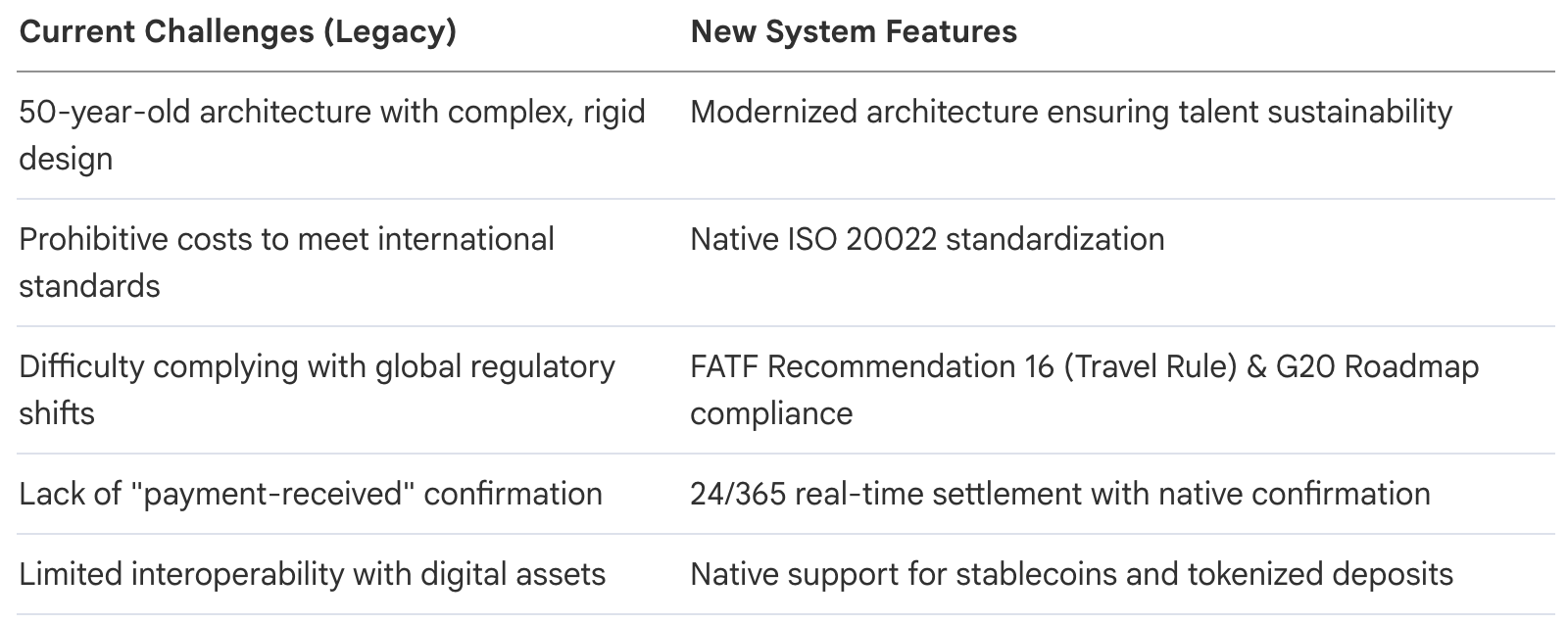
- Technological Convergence: The roadmap integrates ISO 20022 standardization, cloud-native resilience, and Generative AI to move Japan toward a real-time, 24/7 financial ecosystem capable of supporting stablecoins and tokenized deposits.
This strategic vision, supported by the Bank of Japan, underscores a new policy mandate to harmonize safety with technological efficiency.
1. Summary of Opening Remarks: The Mandate for Innovation
The Bank of Japan’s oversight of FMI modernization is governed by a fundamental tension: the necessity of maintaining absolute "safety" while aggressively pursuing "efficiency." In his opening remarks, Kazushige Kamiyama, Executive Director of the BoJ, emphasized that the environment surrounding financial infrastructure has shifted dramatically. He argued that the mere adoption of new technology is insufficient; the objective must be the creation of a "new financial ecosystem" that is as resilient as the legacy systems it replaces.
Kamiyama stressed that for new services to be viable, they must prove to be at least as safe and efficient as current systems. This transition requires unprecedented collaboration across a broad spectrum of stakeholders, including system operators, industry participants, and regulatory authorities.
To achieve this, the BoJ identified three core technological pillars:
- Cloud Utilization: Transitioning to cloud infrastructure to enhance both system security and operational flexibility.
- Artificial Intelligence (AI): Implementing AI under a robust framework of AI Governance. It is essential that the logic behind machine-driven decisions is transparent, allowing humans to verify and validate the basis of AI judgments.
- DLT and Tokenization: Exploring Distributed Ledger Technology to facilitate the issuance and movement of digital assets, thereby increasing the resilience and reach of the settlement network.
The BoJ’s high-level vision provides the regulatory framework necessary for the Zengin Network to execute its ambitious transition from legacy hardware to a real-time future.
2. The New Zengin Network: Transitioning from Legacy to Real-Time
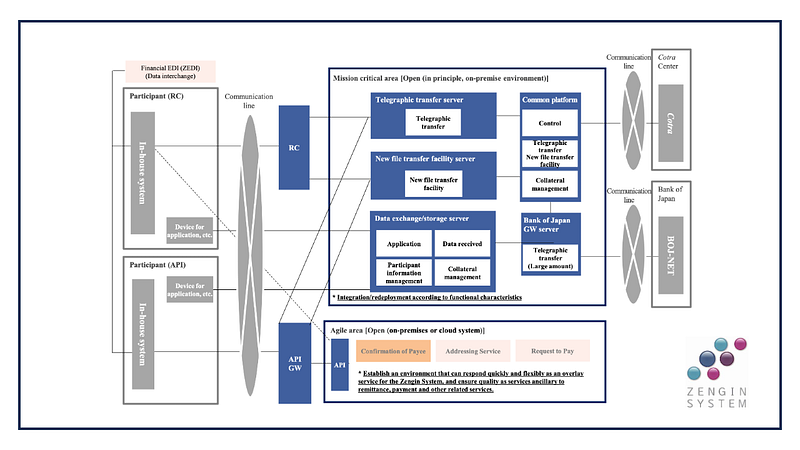
The Zengin System has supported Japan’s economic activity for more than half a century, but the consensus from the "Future Image Study Group" (SG) is that the 50-year-old architecture has reached its rational limit. The group concluded that building a new system is more rational than patching the old one, which faces rising costs for international compliance and an inability to meet modern user demands.
The Multi-Phased Roadmap
The transition is planned in three distinct stages to ensure stability while scaling functionality:
- Day 1 (2030 Target Launch): The new system goes live focusing on real-time settlement and mobile-number-based remittances. To manage risk during the initial phase, remittance amounts will be subject to a cap (limit). The system will run alongside the current Zengin architecture.
- Day 2 (Circa 2033): Expansion of functionality to include "Request to Pay" (RtP), QR code payments, and potential interconnection with international real-time systems like Project Nexus.
- Day 3 (Circa 2038): Full role reassessment, where the new system may partially or entirely replace the 8th-generation Zengin system to reduce total societal costs.
To manage this transition, Zengin Net has established the "Next-Generation Funds Settlement System Preparatory Office" in 2026. This office is tasked with finalizing system requirements and coordinating with the now-permanent Future Image SG to ensure the infrastructure can support emerging technologies like tokenized deposits.
3. Japan Securities Clearing Corporation (JSCC): DLT, AI, and Collateral Efficiency
While Zengin Net focuses on funds, the JSCC is leading the charge in optimizing the clearing of securities and futures through DLT and AI to maximize capital efficiency in global markets.
DLT in Commodity Futures
Since January 2023, the JSCC has utilized DLT for rubber futures settlement, replacing physical "Delivery Orders" with digital tokens. While the JSCC is preparing to expand this to precious metals, the move is currently pending legal reform. Under Commercial Law, "Warehouse Receipts" for precious metals are classified as valuable instruments (securities), which complicates their immediate tokenization compared to non-securities commodities.
Optimizing Liquidity via "Atomic Swaps"
In a significant joint proof-of-concept with the DTCC, the JSCC demonstrated the power of digital asset collateral management through the "Atomic Swap" mechanism.
- The Current Challenge: Under existing risk management rules, collateral cannot drop below required levels. To swap assets (e.g., replacing Cash with JGBs), participants must often "double-post" collateral—depositing the new asset before withdrawing the old one—creating high funding costs.
- The Digital Effect: Smart contracts enable the simultaneous exchange of digital assets. This optimizes liquidity for the 15 trillion yen in initial margin held by the JSCC. On a global scale, where CCPs hold approximately 300 trillion yen ($2 trillion) in initial margin, the potential for liquidity optimization through these swaps is massive.
Standardization and AI Integration
The JSCC is the first clearinghouse globally to announce production-parallel operation of Digital Regulatory Reporting (DRR), utilizing the Common Domain Model (CDM) to standardize data and processes across the transaction lifecycle.
Furthermore, the JSCC has integrated Generative AI into its operations. Since October 2024, GenAI has been used to analyze system alerts for more efficient monitoring. In August 2025, the JSCC conducted experiments using AI to generate market volatility simulations for stress-testing, though there are currently no plans to use AI for calculating actual initial margin requirements.
4. Conclusion
The collective advancements presented by Zengin Net and the JSCC represent a fundamental rebuilding of Japan’s financial plumbing. By integrating DLT for collateral efficiency and building a new, real-time funds network, Japan is positioning its infrastructure as a resilient, standard-compliant foundation capable of hosting the next generation of stablecoins and tokenized deposits.
 Norbert Gehrke