Japan FinTech Observer #167

Welcome to the one hundred sixty-seventh edition of the Japan FinTech Observer. This week, we are excited to have new subscribers join us from Nomura, Nippotica Corporation, the Central Bank Of Tunisia, the Ministry of Finance, Saudi Arabia, and the Australian Government, among others 🙏
As we were compiling this digest, Nikkei had a breaking story, suggesting that the Bank of Japan would raise the policy rate to 1% at next week's Monetary Policy Meeting, something almost every economist on record was predicting at this point. However, Nikkei also reported that the reduction in the quarterly JGB buying would be halted come April 2027, while the majority of the market as we see it would have wished (although not necessarily predicted) for the JGB buying to be further shrunk. In the meantime, the Japanese Yen remains stuck at 160 to the US Dollar.
Here is what we are going to cover this week:
- Venture Capital & Private Markets: Nippon Life and Blackstone forge massive JPY 1.5trn multi-asset alliance; Advantage Partners hits JPY 300bn hard cap on eighth Japan buyout fund; GenerativeX, a Tokyo-based AI consulting firm, has successfully raised approximately ¥650 million; Tokenz, a Tokyo-based provider of next-generation global Merchant of Record (MoR) platforms, has successfully raised ¥1 billion
- Insurance: Prudential Life Japan net income halves amid employee fraud scandal and sales suspension
- Banking: Mizuho becomes first Japanese bank to adopt SAP multi-bank connectivity, targeting global corporate treasury market; WaveBL and TradeWaltz have signed an integration agreement that has linked their digital trade platforms
- Payments: Central banks and the future of money; the BOJ CBDC roadmap - from pilot to framework
- Capital Markets: How FinTechs navigate the path to U.S. public markets
- Asset Management: Fujitsu, Daiichi Life partner on quantum computing to optimize JPY 30trn asset portfolio
- Digital Assets: Tech giant NEC teams up with Crypto Garage for sovereign institutional crypto custody architecture; Bitcoin Japan does not buy Bitcoin (yet)
- The Last Word: The beautiful game
Venture Capital & Private Markets
- Nippon Life and Blackstone forge massive JPY 1.5trn multi-asset alliance: Nippon Life Insurance Company has signed a memorandum of understanding for a comprehensive strategic partnership with Blackstone, the world's largest alternative asset manager; the alliance focuses heavily on private credit and real estate, aiming to enhance Nippon Life’s asset management capabilities, optimize its risk-return profile, and secure high-quality investment opportunities for its policyholders; a central pillar of the agreement is a massive capital deployment into the private credit sector. Nippon Life plans to commit approximately ¥1.5 trillion ($9.6 billion) to Blackstone over the next five years, specifically targeting investment-grade private credit and structured credit strategies
- Advantage Partners hits JPY 300bn hard cap on eighth Japan buyout fund: Tokyo-based private equity firm Advantage Partners has finalized its Fund VIII Series Funds, reaching its hard cap of ¥300 billion ($1.9 billion) in total commitments; the fundraising round saw intense investor appetite, with aggregate demand significantly outstripping both the initial ¥250 billion target and the ultimate ¥300 billion hard cap; the capital injection came from a broad institutional base, including insurance companies, sovereign wealth funds, asset management firms, banks, pension funds, and private wealth channels; a majority of the commitments were driven by returning Japanese and international LPs from the firm's previous funds
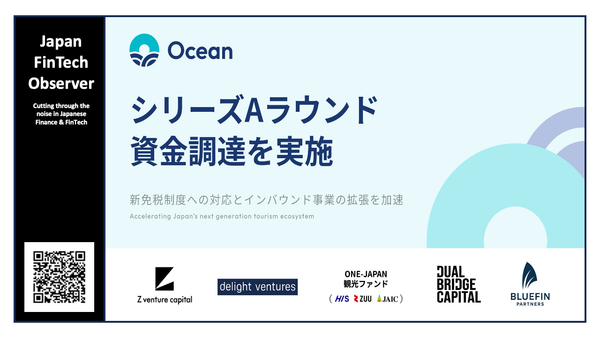
- GenerativeX, a Tokyo-based AI consulting firm, has successfully raised approximately ¥650 million (approx. $4.1 million USD) in a Series A funding round; the capital injection was executed through a third-party allotment of shares led by Nissay Capital; other participating investors in the round include Salesforce Ventures, Angel Bridge, Deepcore, and SMBC Venture Capital
- Tokenz, a Tokyo-based provider of next-generation global Merchant of Record (MoR) platforms, has successfully raised ¥1 billion in a Series A funding round; the capital injection, completed via a third-party allotment of shares, was led by Headline Asia; new institutional backers including SBI Investment and New Commerce Ventures participated in the round, alongside existing investors Coral Capital, Cherubic Ventures, New Enterprise Associates (NEA), and the Shinhan-GB Future Flow Investment Limited Partnership
Insurance
- Prudential Life Japan net income halves amid employee fraud scandal and sales suspension: Prudential Life Insurance (Japan) concluded its fiscal year ending March 31, 2026, under the shadow of a self-inflicted operational crisis that has severely eroded its bottom line; while the insurer’s massive foundation of existing policies provided a veneer of "steady growth," the fiscal year was defined by a precipitous decline in profitability and a near-total collapse of its new business engine; this contraction is the direct result of internal misconduct involving the mishandling of funds by sales employees, which triggered a voluntary—and costly—suspension of all new sales activities starting February 9, 2026; management’s attempt to frame the results as "sufficient" cannot mask the strategic tension between preserving its 45.74 trillion yen book of business and navigating the reputational wreckage of an internal integrity breach; the headline figures for FY2025 reveal a business in retreat; while external market conditions provided significant tailwinds, the company’s internal failures resulted in net income and ordinary profit falling by nearly half year-over-year
- FinTech giant PayPay to acquire majority stake in T&D Financial Life in strategic push into InsurTech: PayPay has entered into a definitive agreement to acquire a 70.2% majority stake in T&D Financial Life Insurance from T&D Holdings; this landmark acquisition marks the formal entry of Japan’s dominant cashless payment provider into the life insurance market, signaling another step from a high-frequency payment utility to a comprehensive "super-app" ecosystem; the transaction is underpinned by a dual-track strategy: a multi-billion yen capital acquisition and a high-level comprehensive business alliance involving T&D Holdings and the technological resources of SoftBank; by converging a digital-native platform with a traditional insurance powerhouse, PayPay aims to navigate the demographic challenges of Japan’s "100-year life era" through advanced UI/UX and data-driven financial protection
Banking

- Mizuho becomes first Japanese bank to adopt SAP multi-bank connectivity, targeting global corporate treasury market: Mizuho Bank has entered into a strategic alliance with enterprise application giant SAP with a view of scaling its corporate transaction banking capabilities; the agreement makes Mizuho the first Japanese financial institution to adopt the SAP Multi-Bank Connectivity solution; the partnership is designed to embed Mizuho’s banking services directly into the existing treasury ecosystems of global corporate clients; under the new framework, corporate entities utilizing SAP's network can access Mizuho through a single, standardized channel, eliminating the traditional friction associated with managing multiple separate banking relationships
- WaveBL and TradeWaltz have signed an integration agreement that has linked their digital trade platforms and has expanded access to trade finance connectivity in Japan; the deal has enabled users on TradeWaltz, including Japanese banks and corporates, to access WaveBL’s global network of carriers, banks and corporates; it has allowed electronic structured bank presentations and bills of lading to be consumed from the WaveBL platform, supporting fully digital document presentation for letters of credit and collection transactions
Payments
- Central banks and the future of money: to architect the future of digital finance, we must first master the lessons of its history; as Governor Shin observed, "the further you want to look ahead, the further you have to look back"; this historical lens reveals that money is a fundamental social institution—a coordination device comparable to a common language; trust is the essential syntax of this language; for a monetary system to facilitate the division of labor and economic efficiency, users must maintain absolute confidence that a received payment can be seamlessly re-deployed; this blog post captures the opening session of the Bank of Korea International Conference, held on June 1, 2026, featuring Governor Shin's opening address, Isabel Schnabel's keynote, as well as a policy dialogue between the two
- The BOJ CBDC roadmap - from pilot to framework: as of May 2026, the Bank of Japan's CBDC Forum has migrated from a research-intensive phase to a social (real world) implementation framework; this transition marks the evolution from the initial Working Group (WG) structure—designed for theoretical discovery—to a streamlined Discussion Group (DG) model focused on the practical engineering and institutional requirements of a national rollout; by moving into this implementation-centric phase, the CBDC Forum is moving beyond proving technical viability to defining the "minimum necessary functions" required to integrate a retail CBDC into the existing financial fabric without disrupting the "Singleness of Money"
Economics
- The new macroeconomic paradigm - navigating Japan’s supply-constrained frontier: the Ministry of Economy, Trade and Industry (METI) has published "The 5th Interim Report of the Subcommittee on New Economic and Industrial Policy, Council for the Industrial Structure", outlining a comprehensive Japanese economic strategy for 2026, focusing on industrial restructuring and sustainable growth; METI aims to address domestic labor shortages and capital constraints through strategic investment in AI, robotics, and green transformation; to maintain global relevance, METI identifies five distinct winning patterns for Japanese firms, emphasizing the transition from simple manufacturing to high-value, data-driven service models; it also stresses the importance of economic security and supply chain resilience amidst rising geopolitical tensions and fluctuating energy prices; ultimately, the framework seeks to bridge the gap between industrial innovation and consumer revitalization to foster a robust economic cycle
- Junko Koeda has been a Member of the Policy Board of the Bank of Japan since March 2025; during the opening address of the Bank of Korea International Conference on June 1, 2026, she was asked by Governor Shin to comment on the monetary policy situation given the current geoeconomic challenges; her comments might help you read the tea leaves as to what to expect from the Bank of Japan's Monetary Policy Meetings in June (and July)
- The NLI Research Institute has published "Japan's Economic Outlook for FY 2026 & 2027"
- Natixis Corporate & Investment Banking has published "Navigating a steep JGB curve amid the Bank of Japan's cautious normalization"
Capital Markets
- How FinTechs navigate the path to U.S. public markets: when SoftBank-backed Japanese FinTech PayPay debuted on the Nasdaq Global Select Market on March 12, 2026, it marked a defining milestone in its evolution into one of Japan’s leading digital payment platforms; by listing in the United States through an American Depositary Receipt (ADR) program, PayPay unlocked access to deep pools of global capital, enhanced its international profile, and positioned itself for its next phase of growth; the decision reflects a broader strategic consideration facing high-growth FinTechs worldwide; as companies scale and mature, accessing public markets is a natural progression, but determining the most effective route is critical; non-U.S. companies need to balance investor reach, regulatory requirements, operational readiness and long-term strategic flexibility; PayPay’s experience illustrates how ADRs can provide a viable route to U.S. public markets, as they allow U.S. investors to access international companies through a familiar and established structure while reducing some of the operational complexities associated with cross-border offerings
Asset Management
- Fujitsu, Daiichi Life partner on quantum computing to optimize JPY 30trn asset portfolio: Tech giant Fujitsu and financial services heavyweight Daiichi Life Group have launched a joint research initiative to deploy quantum computing technology within asset management operations; the year-long project, which commenced in April 2026 and is scheduled to run through March 2027, aims to modernize asset allocation strategies for Daiichi Life Insurance; as one of Japan’s leading institutional investors, Daiichi Life manages a massive portfolio valued at approximately ¥30 trillion; hence an improvement of just a single basis point in Daiichi Life’s portfolio returns via quantum optimization would yield an additional ¥3 billion in investment income
Digital Assets
- Tech giant NEC teams up with Crypto Garage for sovereign institutional crypto custody architecture: Japan’s financial infrastructure is preparing for an institutional shift into digital assets; Tokyo-based technology conglomerate NEC Corporation and blockchain financial services firm Crypto Garage announced a joint partnership to develop a domestic digital asset custody system tailored for institutional investors, financial institutions, and corporate treasuries; the venture aims to address a critical vulnerability in Japan’s emerging Web3 ecosystem: a heavy reliance on foreign custody solutions; domestic institutions currently face operational hurdles with overseas platforms, including language barriers, misalignments with local regulatory compliance, Japanese business practices, and supply chain vulnerabilities; the joint initiative is timed to capitalize on impending regulatory overhauls; development is slated to begin by the end of 2026, with the goal of deploying the platform immediately following the implementation of Japan’s revised Financial Instruments and Exchange Act, which is anticipated to take effect in 2027
- Bitcoin Japan purchased a listed company, went through the hassle of renaming and rebranding it, only to not invest in Bitcoin (at the moment); we believe that requires an explanation; CEO Phillip Lord provides it
The Last Word: The beautiful game

Goldman Sachs let their algorithms generate FIFA World Cup predictions. As usual, the quarter-final would turn into a European Championship plus Argentina and/or Brazil. Germany would make it further than the last two World Cups, but then run into the French brick wall. Japan, oh well, let's hope it is not going to be Brazil in the Round of 32. I still have my hopes up that a German coach finally brings soccer home - how ironic would that be?
Please follow us to read more about Finance & FinTech in Japan, like hundreds of readers do every day. Our short weekly digest, the “Japan FinTech Observer”, is published on LinkedIn, on Medium, Substack & Paragraph, or here on our own FinTech Observer website. Only the latter provides you with the option to subscribe to individual news stories as they are published.
Should you wish to further discuss the Japanese (or Asian) FinTech ecosystem, you may book a consultation via Intro - all proceeds flow towards covering the operating cost of the Tokyo FinTech Association, and research for the Japan FinTech Observer.